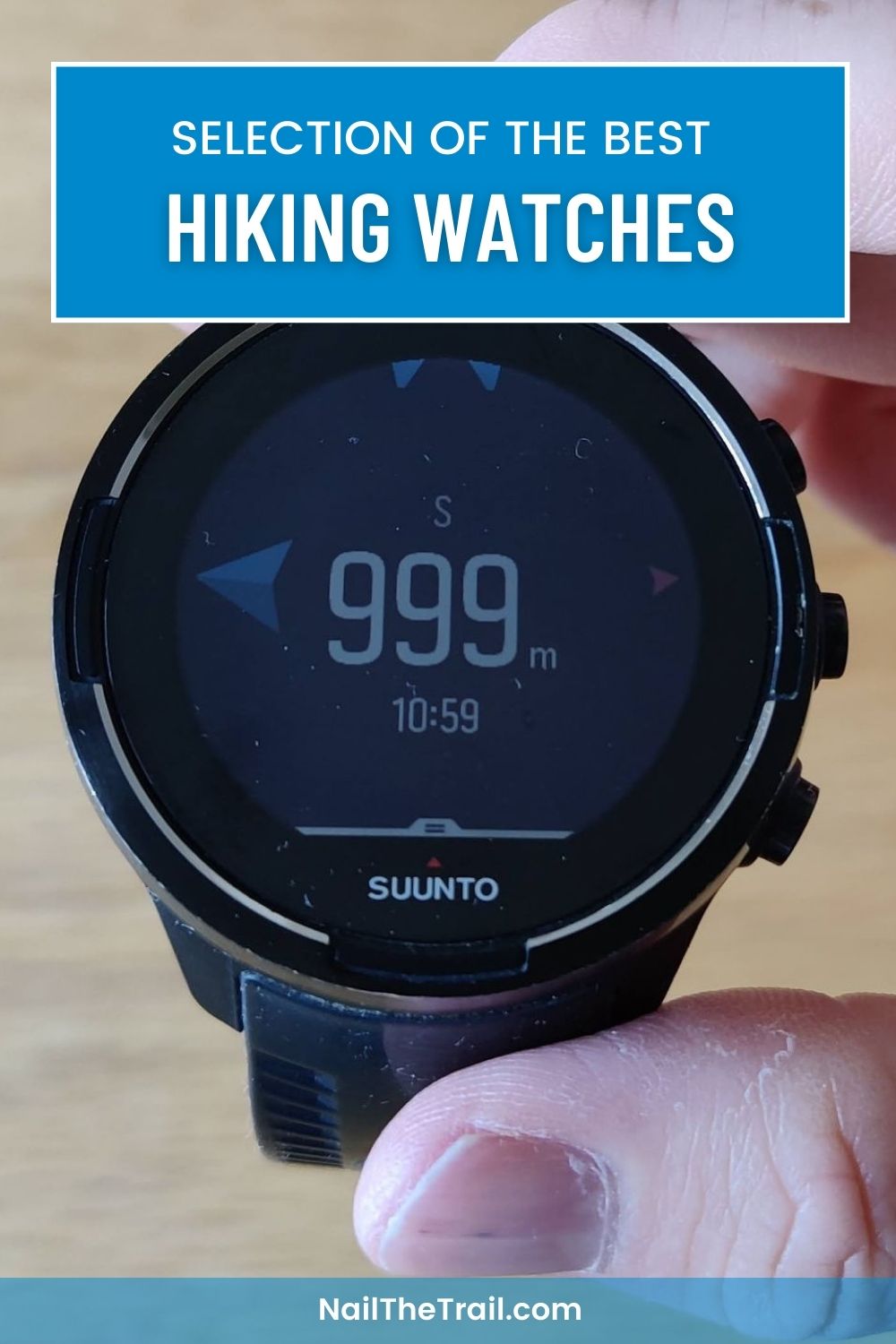
Best Hiking Watches
A good hiking watch doesn’t just show time and date. It also provides altitude, location, air‑pressure trends, navigation assistance and sunrise/sunset times. Theis information helps with planning, route finding and predicting the weather. GPS‑enabled watches have become extremely popular in recent years, but non‑GPS watches still appeal to some users because of their simple interface and extremely long battery life. Here we reviewed the best hiking watches ranging from full‑featured smartwatches to minimalist ABC (altimeter-barometer‑compass) models.
While GPS certainly has its advantages, some do prefer a watch without GPS because because of longer battery life, less complicated user interface, and lower price. Nevertheless, we’re big fans of GPS watches because they’re so useful for navigation along the trails. All the watches in this selection are equipped with a compass, altimeter and barometer – features that we consider essential for activities such as hiking, trekking, mountaineering, and backpacking. Since new models of hiking watches are regularly released, we continuously update this selection to always recommend you the best products available. Nevertheless, below, you’ll find some tried-and-true classics that haven’t been beaten in terms of functionality – yet.
Updated Content
We regularly update our reviews and selections to always recommend you the best products on the market.
Expert Selections
We only list top-tier products. Read how our selections of best hiking products differ from others here.
Links
We use affiliate links and may receive a small commission on purchases at no extra cost to you.
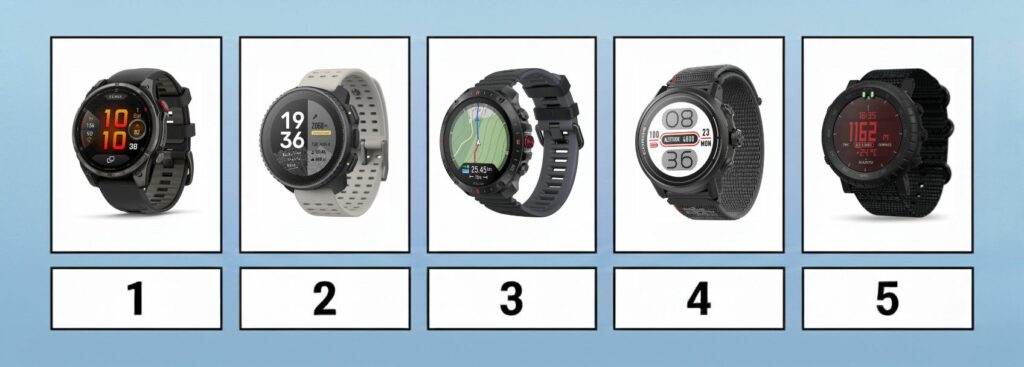
1. Our Hiking Watches Picks
Best Hiking Watches
2. Comparison of Hiking Watches

| Feature/Product | Garmin Fenix 8X PRO | Suunto Vertical Titanium Solar | Polar Grit X2 PRO | Coros Apex 2 | Suunto Core Alpha |
|---|---|---|---|---|---|
| Weight | 3.17 oz. | 2.61 oz. | 2.78 oz. | 1.9 oz. | 2.36 oz. |
| Weight (Metric) | 90 g | 74 g | 79 g | 53 g with silicone band | 67 g |
| Case Size | 2.0 x 2.0 x 0.6 in. | 1.9 x 1.9 x 0.5 in. | 1.9 x 1.9 x 0.5 in. | 1.7 x 1.7 x 0.5 in. | 1.9 x 1.9 x 0.5 in. |
| Case Size (Metric) | 5.1 x 5.1 x 1.6 cm | 4.9 x 4.9 x 1.4 cm | 4.9 x 4.9 x 1.3 cm | 4.3 x 4.3 x 1.3 cm | 4.9 x 4.9 x 1.5 cm |
| GPS | Yes + GLONASS & Galileo & BeiDou | Yes + GLONASS & Galileo & BeiDou & QZSS | Yes + GLONASS & Galileo & BeiDou & QZSS | Yes + QZSS, GLONASS, Galileo & BeiDou | No |
| Display Type | AMOLED or MicroLED | Color Touch Screen | AMOLED Color Touch Screen | Color Touch Screen | Matrix |
| Glass Material | Sapphire Glass | Sapphire Glass | Sapphire Glass | Sapphire Glass | Mineral Crystal |
| Strap Material | Silicone | Silicone | Silicone | Silicone or Nylon | Silicone |
| Water Resistance | 100 m | 100 m | 100 m | 100 m | 30 m |
| Battery | Rechargeable lithium-ion | Rechargeable lithium-ion | Rechargeable lithium-ion | Rechargeable lithium-ion | CR2032 |
| Battery Life | Up to 27 days in smartwatch time mode | Up to 60 days in smartwatch time mode | Up to 10 days in smartwatch time mode | Up to 13 days in smartwatch time mode | 12 months with normal use |
| Altimeter | Yes (GPS and Barometric) | Yes (GPS and Barometric) | Yes (GPS and Barometric) | Yes (GPS and Barometric) | Yes (Barometric) |
| Barometer | Yes | Yes | Yes | Yes | Yes |
| Thermometer | Yes | Yes | Yes | Yes | Yes |
| Compass | Yes | Yes | Yes | Yes | Yes |
| Sunrise and Sunset Times | Yes | Yes | Yes | Yes | Yes |
| Storm Alarm | Yes | Yes | No | Yes | Yes |
| Bluetooth | Yes | Yes | Yes | Yes | No |
| Smartphone Notifications | Yes | Yes | Yes | Yes | No |
| Vibration Alerts | Yes | Yes | Yes | Yes | No |
| Heart Rate Belt Support | Yes | Yes | Yes | Yes | No |
| Wrist Heart Rate | Yes | Yes | Yes | Yes | No |
| GPS Navigation | Yes | Yes | Yes | Yes | No |
| GPS Tracking | Yes | Yes | Yes | Yes | No |
| Track Back | Yes | Yes | Yes | Yes | No |
| Planning Software | Garmin Connect | Suunto App | Polar Flow | Coros App | None |
| Mobile App | Yes (Garmin Connect) | Yes (Suunto App) | Yes (Polar Flow) | Yes (Coros App) | None |
3. The Selection
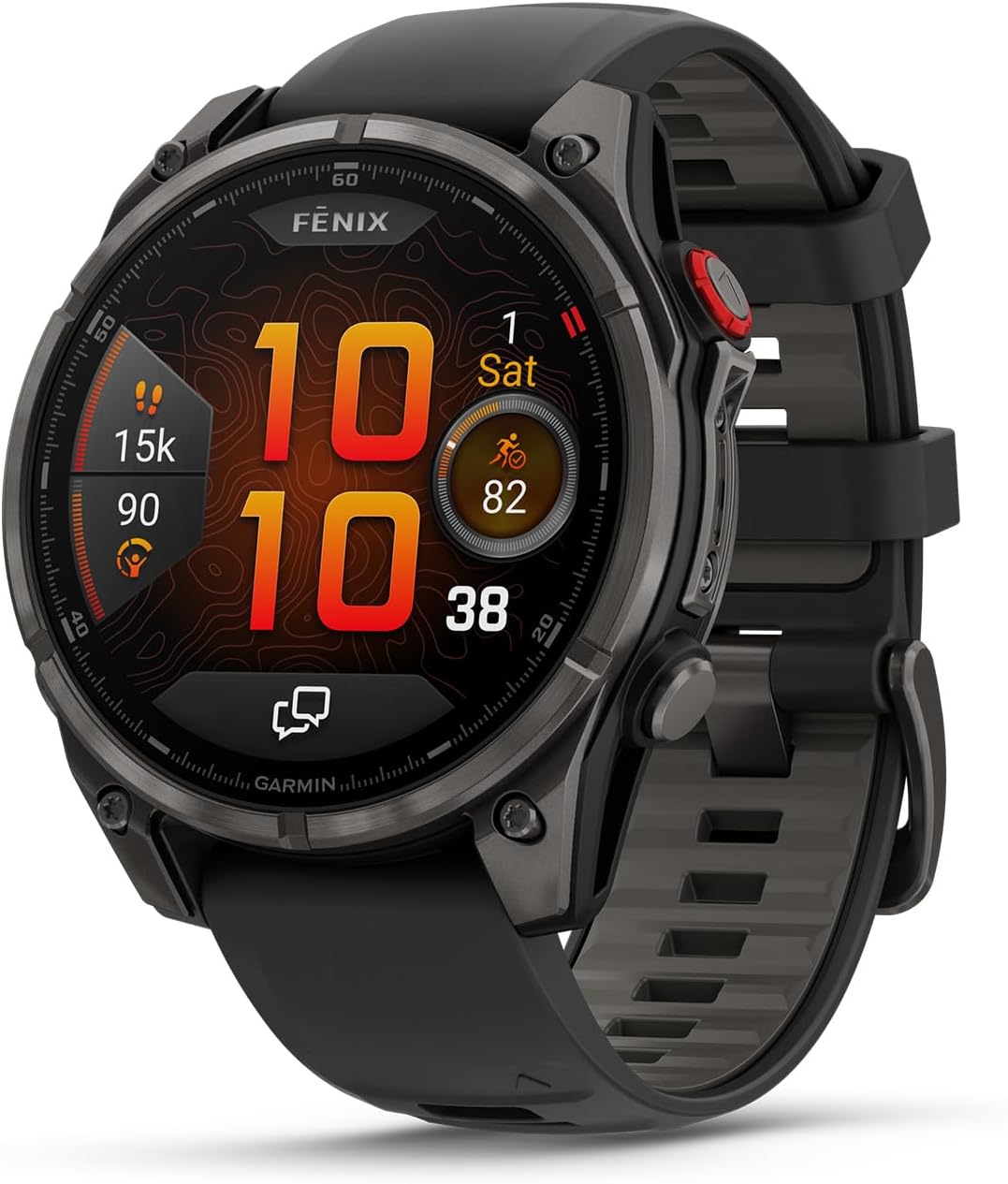
Garmin Fenix 8 Pro
Garmin Fenix 8 Pro
Flagship GPS watch with LTE and satellite messaging
Best for:
- Adventurers who want the most feature-rich outdoor smartwatch available
- Users who want satellite messaging directly from their wrist
- Athletes who need advanced mapping, navigation and training tools
The Garmin Fenix 8 Pro is currently one of the most advanced outdoor smartwatches on the market. Garmin refined almost every aspect of the already excellent Fenix platform and added LTE and satellite communication functionality, making this watch a serious safety tool for backcountry travel. Through Garmin’s inReach technology you can exchange two-way text and voice messages directly from the watch, even outside cell coverage, although an active subscription is required.
The Fenix 8 Pro comes in AMOLED and micro-LED variants. The AMOLED versions are available in 47 mm and 51 mm sizes, while the brighter micro-LED display is only available in the 51 mm model. The AMOLED versions offer better battery life, while the micro-LED version provides incredible brightness and visibility in harsh sunlight. Battery life remains excellent overall, ranging from roughly 15 to 27 days in smartwatch mode depending on model and display type.
Garmin’s mapping and navigation ecosystem is still class-leading. The watch includes preloaded TopoActive maps, ski maps, route navigation, multi-band GNSS support and highly accurate sensors including compass, altimeter and barometer. The training ecosystem is equally impressive with detailed recovery metrics, stamina tracking, training readiness and sport profiles for almost every activity imaginable. The downside is price. The Fenix 8 Pro is extremely expensive, especially the micro-LED model, and some users may find the huge number of features overwhelming. Nevertheless, if you want the most complete GPS watch available, this is it.
Performance Score
The Advantages
- Satellite messaging and LTE connectivity
- Excellent mapping and navigation tools
- Very accurate multi-band GNSS
- Huge selection of training and sport features
- Premium AMOLED and micro-LED display options
- Outstanding Garmin ecosystem and app support
The Considerations
- Very expensive
- Large and relatively heavy
- Satellite messaging requires subscription
- Interface can feel overwhelming for beginners
Video

Suunto Vertical Titanium Solar
Suunto Vertical Titanium Solar
GPS watch with unmatched battery life
Best for:
- Hikers and mountaineers who prioritize long battery life
- Users who want a rugged but elegant GPS watch
- Backpackers and expedition travelers spending many days away from charging
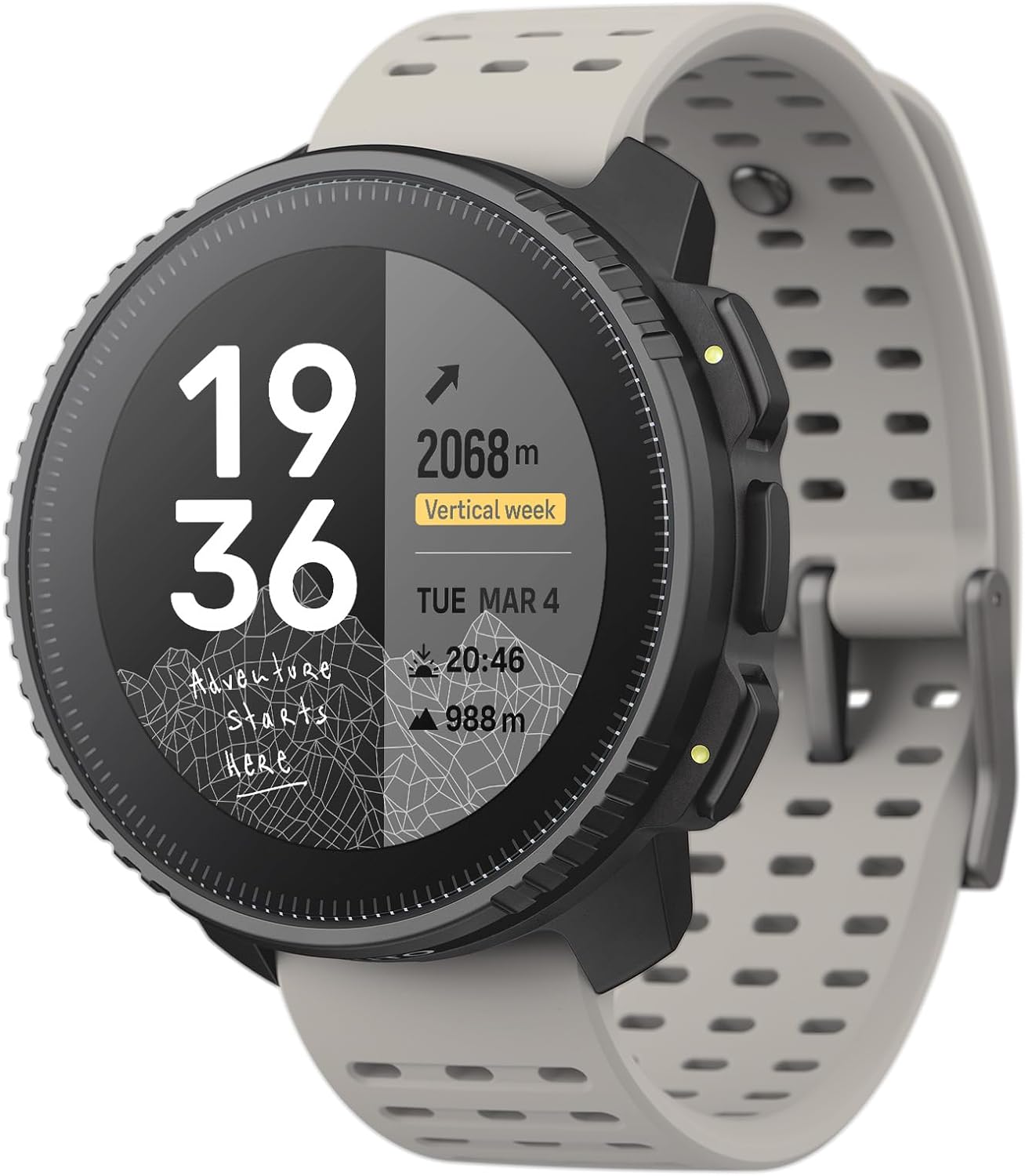
The Suunto Vertical Titanium Solar stands out primarily because of its exceptional battery life and beautifully rugged construction. The solar-assisted titanium version can deliver up to 85 hours of GPS recording in the most accurate mode and up to 500 hours in battery-saving tour mode. In standard smartwatch use, battery life can stretch to several weeks or even months depending on solar exposure and usage patterns. That makes it one of the best watches currently available for long-distance trekking and expeditions.
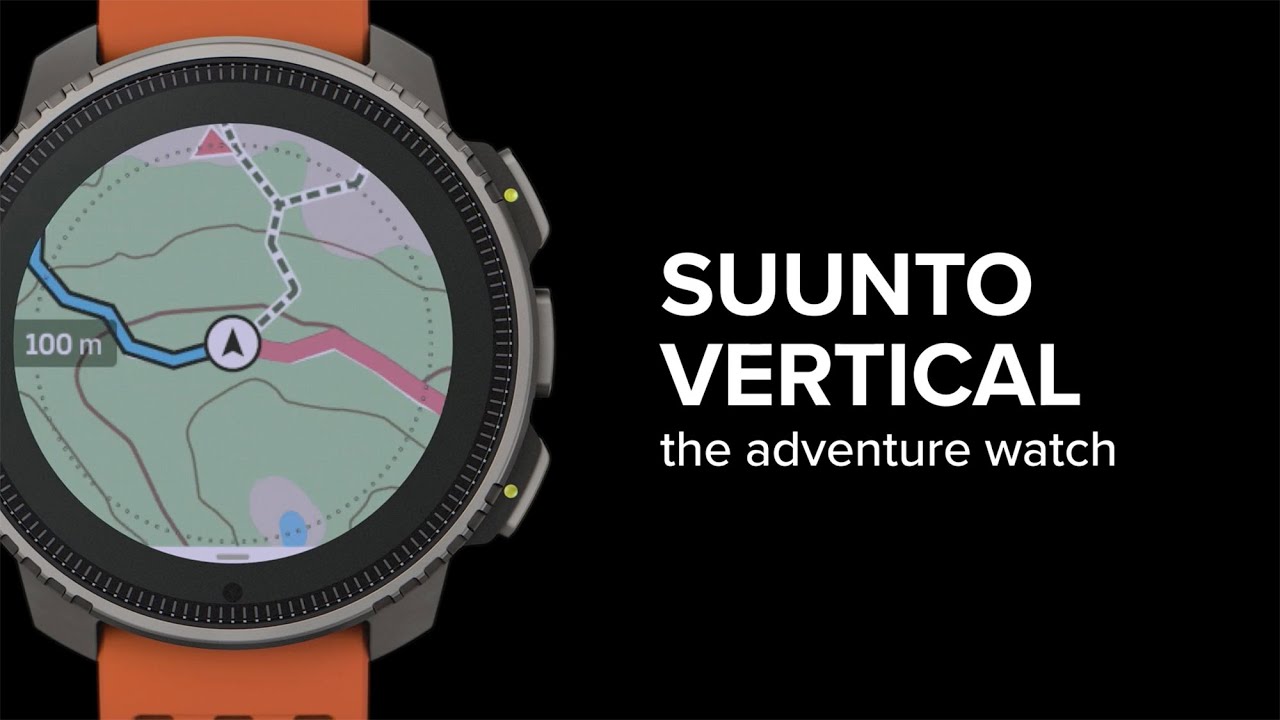
Suunto also did an excellent job with the hardware. The watch uses a titanium bezel, sapphire crystal glass and a highly durable 49 mm case that strikes a very good balance between screen size and comfort. Navigation features are very solid and include offline maps, breadcrumb navigation, route guidance and turn-by-turn instructions. We especially like Suunto’s clean app design and route-planning functionality.
Accuracy is another strong point. The watch uses dual-band GNSS and performed extremely well in GPS testing. The optical heart rate sensor is also more accurate than earlier Suunto watches. While the feature set has improved substantially through firmware updates, the Vertical still feels more minimalist than Garmin’s flagship models. There are fewer advanced smartwatch functions and training tools, and the interface takes some time to learn. However, for users who value reliability, durability and long battery life over endless features, the Suunto Vertical is outstanding.
Performance Score
The Advantages
- Exceptional battery life with solar charging
- Very durable titanium and sapphire construction
- Excellent GPS accuracy
- Offline maps and navigation tools
- Clean and well-designed companion app
- Comfortable despite large size
The Considerations
- Large 49 mm case may not suit everyone
- Fewer smartwatch features than Garmin
- UI takes time to learn
- Expensive
Video
3. The Selection
Garmin Fenix 8 Pro
Garmin Fenix 8 Pro
Flagship GPS watch with LTE and satellite messaging
Best for:
- Adventurers who want the most feature-rich outdoor smartwatch available
- Users who want satellite messaging directly from their wrist
- Athletes who need advanced mapping, navigation and training tools
The Garmin Fenix 8 Pro is currently one of the most advanced outdoor smartwatches on the market. Garmin refined almost every aspect of the already excellent Fenix platform and added LTE and satellite communication functionality, making this watch a serious safety tool for backcountry travel. Through Garmin’s inReach technology you can exchange two-way text and voice messages directly from the watch, even outside cell coverage, although an active subscription is required.
The Fenix 8 Pro comes in AMOLED and micro-LED variants. The AMOLED versions are available in 47 mm and 51 mm sizes, while the brighter micro-LED display is only available in the 51 mm model. The AMOLED versions offer better battery life, while the micro-LED version provides incredible brightness and visibility in harsh sunlight. Battery life remains excellent overall, ranging from roughly 15 to 27 days in smartwatch mode depending on model and display type.
Garmin’s mapping and navigation ecosystem is still class-leading. The watch includes preloaded TopoActive maps, ski maps, route navigation, multi-band GNSS support and highly accurate sensors including compass, altimeter and barometer. The training ecosystem is equally impressive with detailed recovery metrics, stamina tracking, training readiness and sport profiles for almost every activity imaginable. The downside is price. The Fenix 8 Pro is extremely expensive, especially the micro-LED model, and some users may find the huge number of features overwhelming. Nevertheless, if you want the most complete GPS watch available, this is it.
Performance Score
The Advantages
- Satellite messaging and LTE connectivity
- Excellent mapping and navigation tools
- Very accurate multi-band GNSS
- Huge selection of training and sport features
- Premium AMOLED and micro-LED display options
- Outstanding Garmin ecosystem and app support
The Considerations
- Very expensive
- Large and relatively heavy
- Satellite messaging requires subscription
- Interface can feel overwhelming for beginners
Video
Suunto Vertical Titanium Solar
Suunto Vertical Titanium Solar
GPS watch with unmatched battery life
Best for:
- Hikers and mountaineers who prioritize long battery life
- Users who want a rugged but elegant GPS watch
- Backpackers and expedition travelers spending many days away from charging
The Suunto Vertical Titanium Solar stands out primarily because of its exceptional battery life and beautifully rugged construction. The solar-assisted titanium version can deliver up to 85 hours of GPS recording in the most accurate mode and up to 500 hours in battery-saving tour mode. In standard smartwatch use, battery life can stretch to several weeks or even months depending on solar exposure and usage patterns. That makes it one of the best watches currently available for long-distance trekking and expeditions.
Suunto also did an excellent job with the hardware. The watch uses a titanium bezel, sapphire crystal glass and a highly durable 49 mm case that strikes a very good balance between screen size and comfort. Navigation features are very solid and include offline maps, breadcrumb navigation, route guidance and turn-by-turn instructions. We especially like Suunto’s clean app design and route-planning functionality.
Accuracy is another strong point. The watch uses dual-band GNSS and performed extremely well in GPS testing. The optical heart rate sensor is also more accurate than earlier Suunto watches. While the feature set has improved substantially through firmware updates, the Vertical still feels more minimalist than Garmin’s flagship models. There are fewer advanced smartwatch functions and training tools, and the interface takes some time to learn. However, for users who value reliability, durability and long battery life over endless features, the Suunto Vertical is outstanding.
Performance Score
The Advantages
- Exceptional battery life with solar charging
- Very durable titanium and sapphire construction
- Excellent GPS accuracy
- Offline maps and navigation tools
- Clean and well-designed companion app
- Comfortable despite large size
The Considerations
- Large 49 mm case may not suit everyone
- Fewer smartwatch features than Garmin
- UI takes time to learn
- Expensive
Video
Polar Grit X2 Pro
Polar Grit X2 Pro
GPS watch with AMOLED display and advanced sensors
Best for:
- Outdoor athletes who want a premium AMOLED adventure watch
- Users who prioritize recovery and sleep tracking
- Hikers who want detailed maps and strong GPS accuracy
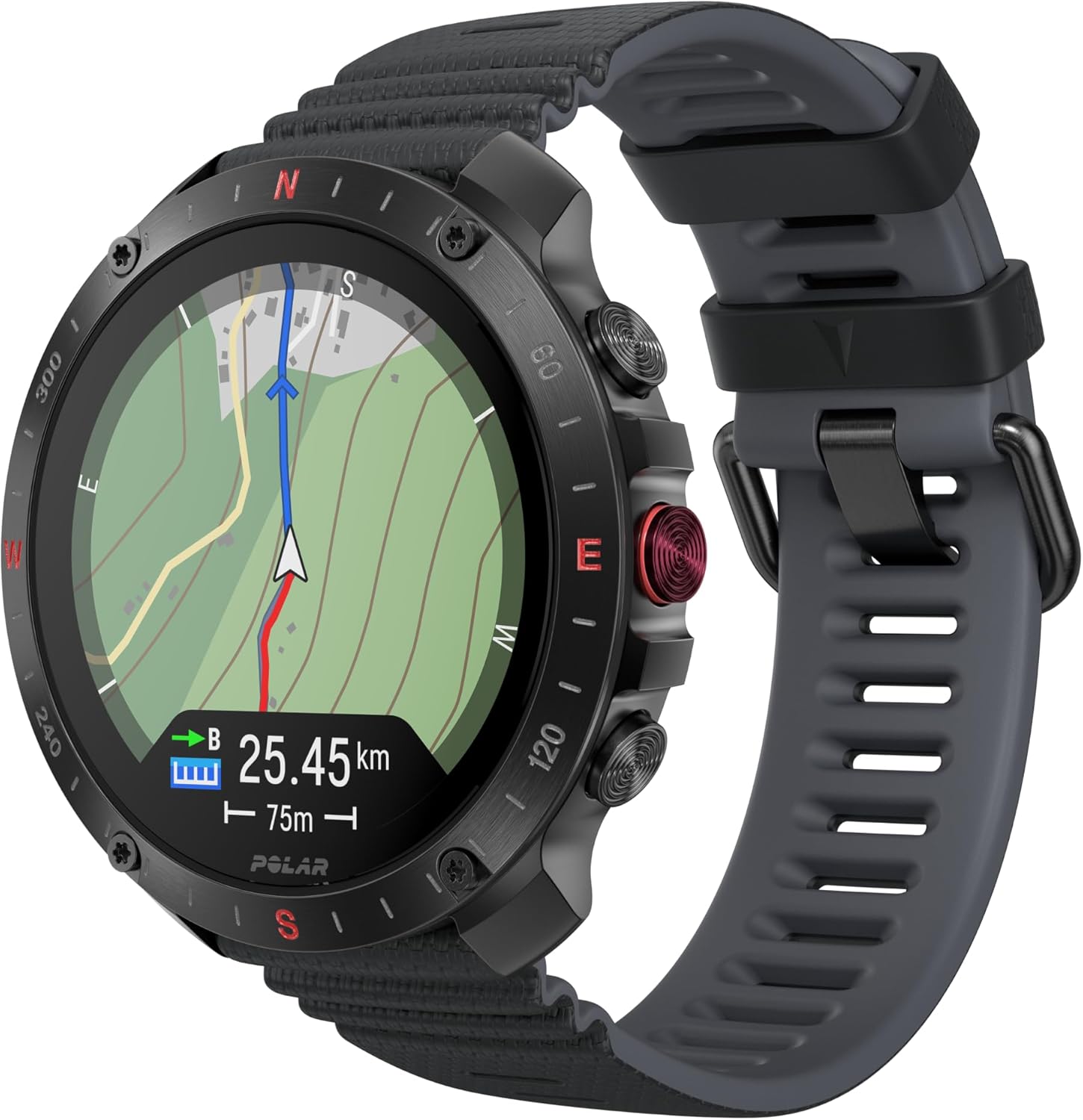
The Polar Grit X2 Pro is Polar’s flagship outdoor multisport watch and a major upgrade over the previous Grit X Pro. It combines a bright 1.39-inch AMOLED display with sapphire glass, military-grade durability and substantially improved navigation features. Polar also redesigned the GPS antenna and added dual-frequency GNSS support, which noticeably improves tracking accuracy compared to earlier Polar watches.
The watch includes offline maps with downloadable regions, route navigation, breadcrumb tracking and turn-by-turn guidance when using supported route platforms. The AMOLED display looks excellent outdoors and makes maps much easier to read than on older MIP displays. Polar also added many new health and recovery features including ECG functionality, nightly skin temperature tracking, advanced sleep analysis and improved optical heart-rate algorithms.
Battery life is respectable for an AMOLED watch. Polar rates it for around 43 hours in full GPS mode and up to 140 hours in eco mode. The Grit X2 Pro also supports over 150 sport profiles and detailed training analysis through the Polar Flow ecosystem. However, while Polar has improved significantly in navigation and smartwatch functionality, there are still some missing features compared to Garmin. Music storage and contactless payments are absent, and the navigation interface can occasionally feel clunky. Even so, the Grit X2 Pro is one of the most capable adventure watches Polar has ever made.
Performance Score
The Advantages
- Bright AMOLED display with sapphire glass
- Very accurate dual-band GNSS
- Excellent recovery and sleep tracking
- Offline maps and route navigation
- Strong build quality and MIL-STD durability
- Improved optical heart-rate sensor
The Considerations
- Expensive
- No onboard music storage
- No contactless payments
- Navigation workflow can feel cumbersome

Video

Coros Apex 2
Coros Apex 2
Compact GPS watch with excellent value
Best for:
- Trail runners and hikers who prefer a smaller watch
- Users looking for strong battery life at a lower price
- Athletes who want a simple but highly effective training watch
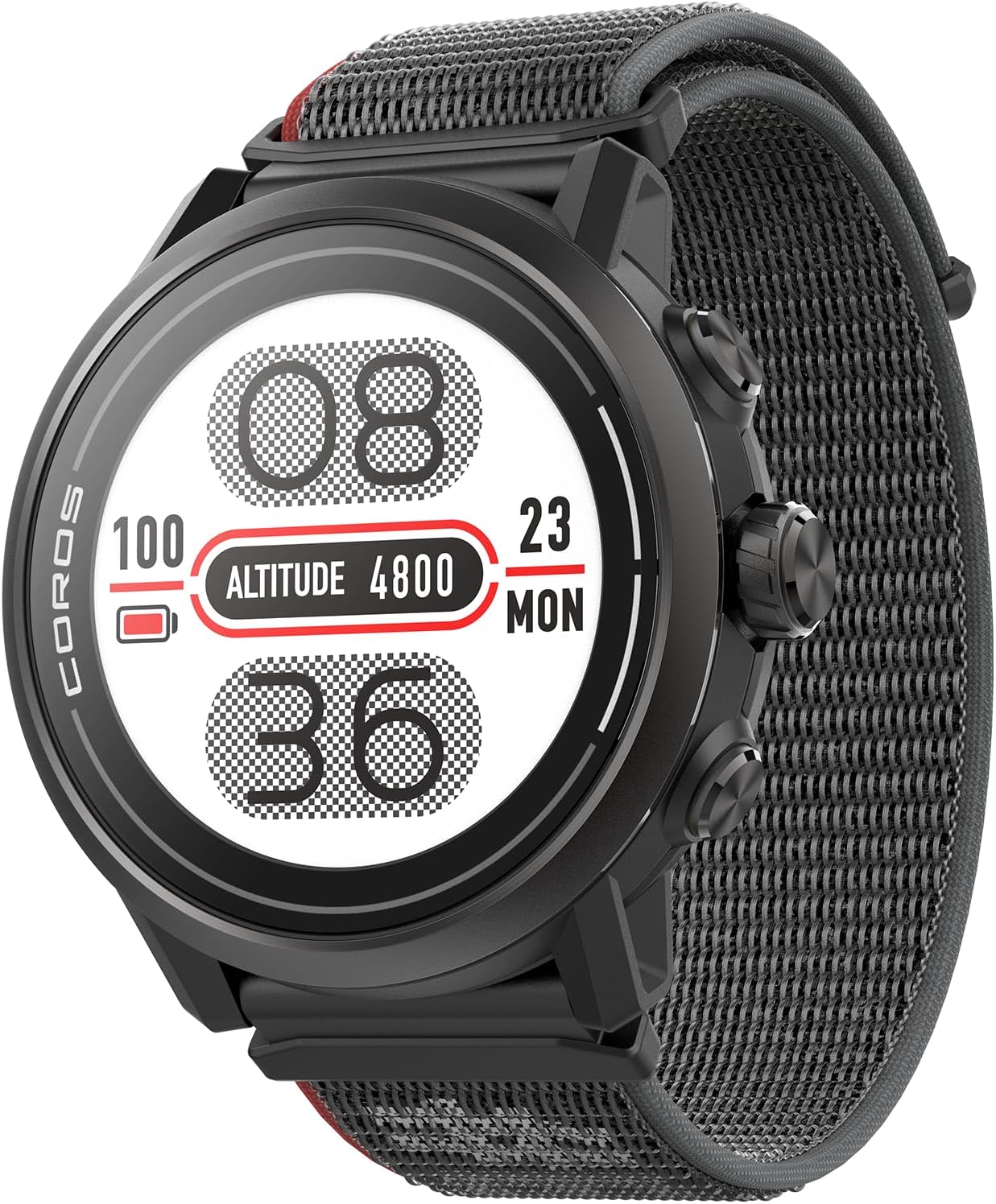
The Coros Apex 2 is one of the best compact outdoor watches currently available. Unlike many premium GPS watches that use huge 49–51 mm cases, the Apex 2 uses a comfortable 42 mm design that works very well for smaller wrists while still offering excellent battery life. Coros improved battery performance dramatically compared to the previous generation, and the watch now delivers up to 40 hours of GPS tracking.
The watch includes detailed navigation, breadcrumb maps, touchscreen support and dual-frequency GNSS. GPS accuracy is very good and comparable to much more expensive competitors. We also really like Coros’s companion app which remains one of the cleanest and easiest-to-use training apps on the market. Firmware updates have also expanded the watch’s sport profiles and health features considerably.
Despite its strengths, the Apex 2 does have limitations. The smaller screen can feel cramped when navigating detailed routes or displaying many data fields, and the optical heart-rate accuracy is not quite as strong as the best Garmin or Polar watches. The smartwatch functionality is also fairly basic. However, considering the price, lightweight design and battery life, the Apex 2 offers tremendous value for hikers, trail runners and multisport athletes.
Performance Score
The Advantages
- Compact and comfortable 42 mm design
- Excellent battery life for size
- Very good GPS accuracy
- Great companion app
- Good value for money
- Frequent firmware updates
The Considerations
- Smaller screen limits navigation usability
- Heart-rate accuracy is average
- Limited smartwatch features
- Navigation works better as backup than primary mapping tool
Suunto Core Alpha
Suunto Core Alpha
Best non-GPS hiking watch
Best for:
- Hikers who prefer simplicity and long battery life
- Hunters, mountaineers and backcountry travelers
- Users who do not need smartwatch or GPS functionality
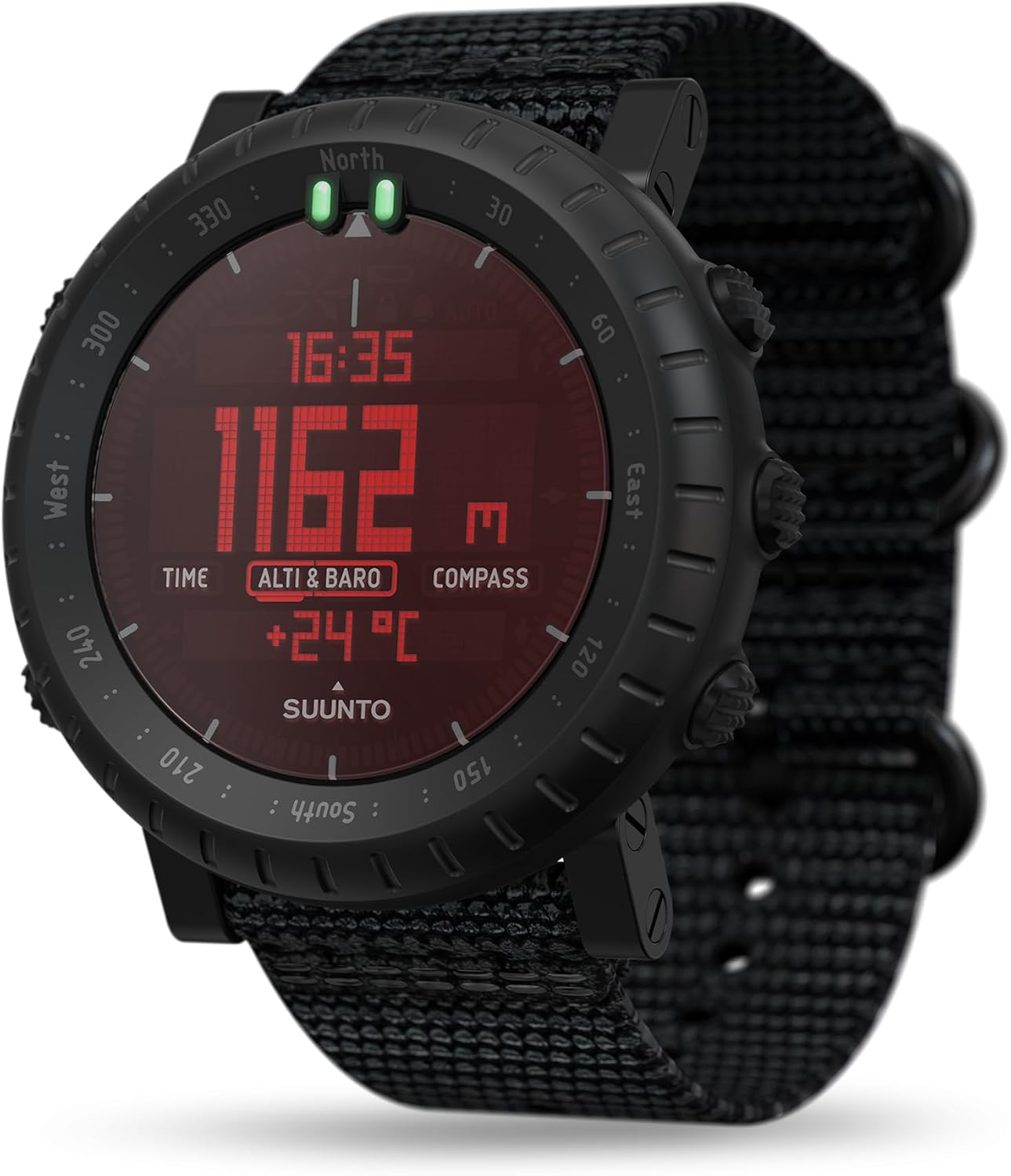
The Suunto Core Alpha proves that not every great hiking watch needs GPS, maps and endless smart features. This watch focuses on reliability, simplicity and core outdoor functionality. It includes an altimeter, barometer, compass, storm alarm, sunrise/sunset data and weather tracking in a very durable and lightweight package.
The Core Alpha is especially popular among hunters and mountaineers because of its excellent battery life and simple interface. The red backlight preserves night vision and is compatible with night-vision devices, while the physical-button interface works reliably in cold weather and wet conditions. Unlike modern smartwatches that require frequent charging, the Core Alpha runs for roughly a year on a replaceable CR2032 battery.
The watch is also surprisingly rugged. It passed MIL-STD-810 testing and handles rough outdoor use extremely well. Of course, there are compromises. There is no GPS, no heart-rate tracking, no smartphone ecosystem and no advanced sport analysis. However, many hikers still appreciate the simplicity, reliability and freedom from constant charging. If you want a straightforward outdoor watch with classic ABC functionality, the Suunto Core Alpha remains an excellent choice.
Performance Score
The Advantages
- Extremely long battery life
- Simple and reliable interface
- Useful ABC functions and storm alarm
- Very durable construction
- Night-vision compatible red backlight
- No charging required for months
The Considerations
- No GPS functionality
- No heart-rate tracking
- No smartwatch features
- Limited sport tracking capabilities

5. Hiking Watch Buying Advice – What is important?
Hiking Features:
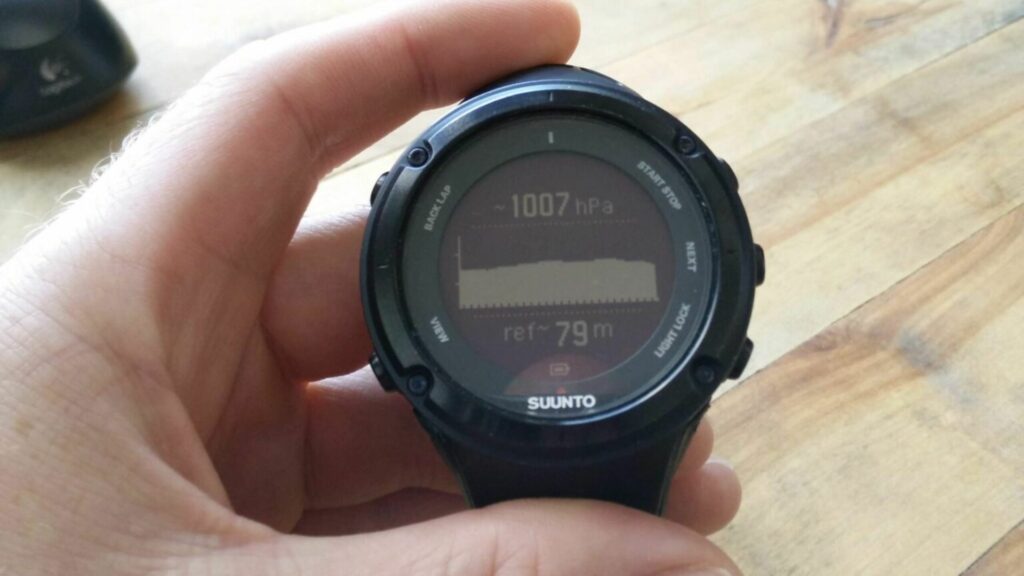
Hiking Features: Hiking watches are equipped with compass, altimeter and barometer
Every hiking watch should feature altimeter, barometer and compass functions. Watches with these features are often called ABC watches. So, why it’s so important that a hiking watch has these three features? Let’s explain.
Barometer
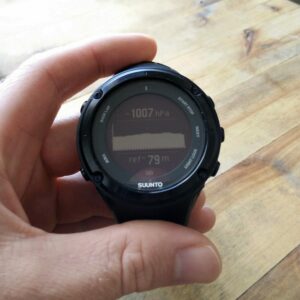
The barometer detects changes in the atmospheric pressure and thus allows you to easily predict the weather; if the atmospheric pressure is increasing, the weather will improve and reversely; if the atmospheric pressure is falling, the weather will worsen (clouds, rain etc.). A rapid drop in the atmospheric pressure normally indicates a storm rising. All watches listed in this review show the atmospheric pressure and its tendency graph (how the atmospheric pressure has changed in the last hours). Furthermore, they also all have a storm alarm feature which warns you if the atmospheric pressure drops significantly. This might save your life if you are on an exposed mountain side. Read more about barometer feature in watches in our article How to use barometer on a Suunto watch to predict the weather.
Altimeter
An altimeter shows you how high above sea level you are and is based on the barometric pressure or GPS data. A GPS altimeter is much more precise than a barometric altimeter and doesn’t require any calibration. The altimeter feature comes in handy for navigation – it is easier to find your location on a map if you know how high above the sea level you are.
Compass
A compass shows you the four cardinal directions (North, East, South and West) as well as bearing and is thus crucial for navigation. With the compass feature and a proper map, you can easily do triangulation to determine your current location.
Thermometer
Some hiking watches are also equipped with a thermometer which comes in handy on multiday trips. We often use thermometer on the watch to measure the temperature outside the tent to appropriately plan and layer our clothes before we set out on the trail again. However, it is important to note that the thermometer will normally measure temperature most accurately when the watch is not on your wrist as your body heat affects the measurements.
GPS:
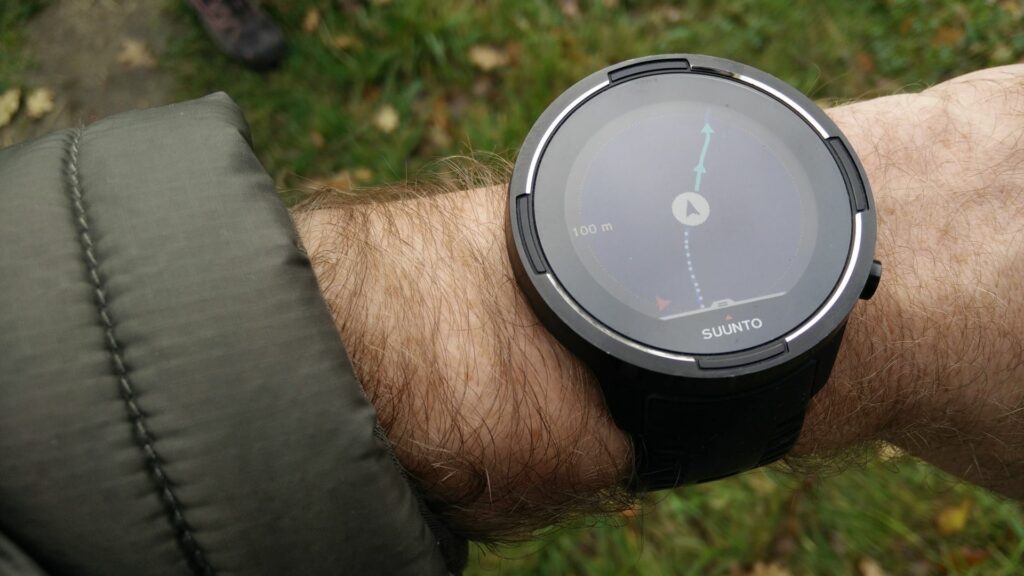
Hiking watches with GPS help you with the navigation
Most hiking watches support GPS which is currently the best solution for navigation and tracking. Some GPS watches also support alternative positioning systems like GLONASS, Galileo etc. A GPS watch allows you to instantly get the coordinates of your current location. Furthermore, it can also show current speed, distance, ascent, descent, and other GPS-based information. You can import routes in GPX or similar formats to most GPS watches. These routes can then be used for navigation as the watch shows your current location in relation to the GPX route.
GPS watches also track (record) your activities and allow you to export the details (duration, distance, average speed, total ascent, total descent and other parameters) to web or mobile apps such as Suunto App or Garmin Connect for analysis. However, GPS watches have a shorter battery life than watches without GPS. This downside is somewhat mitigated by GPS watches being equipped with rechargeable batteries. On off the grid backpacking trips, a solar charger enables you to recharge your GPS watch.
Durability and Weight
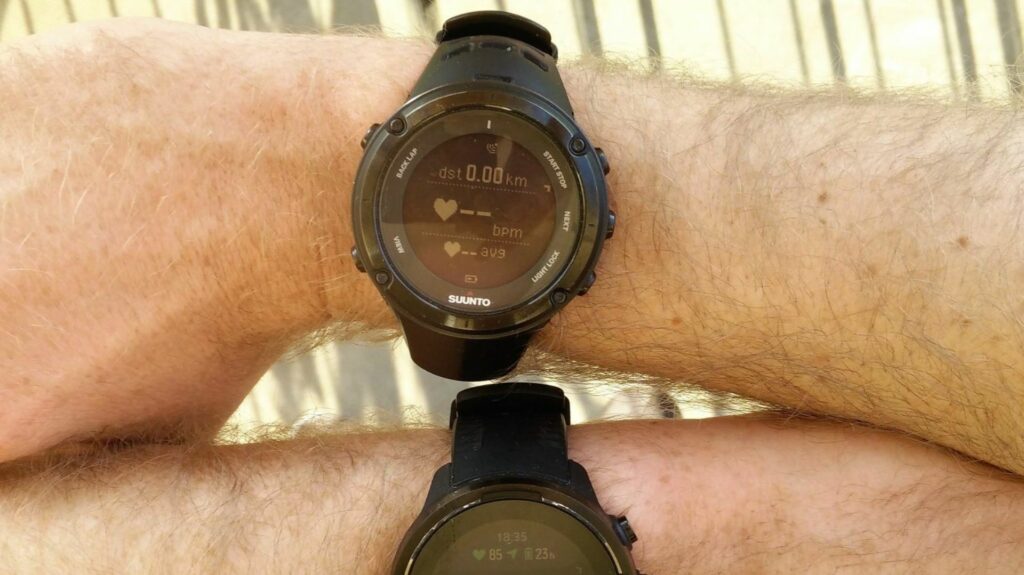
Durability and Weight: Watch for hiking must be robust and sturdy
A hiking watch must be sturdy and robust. However, the watch also shouldn’t be too heavy so you can wear it comfortably for longer periods. Therefore, hiking watches are typically made of fiber-reinforced polymers and sometimes feature a rear cover made of metal. The straps are typically made of silicone and less often from textile. Textile straps are harder to maintain because they must be washed regularly in order not to get smelly. Some watches come with Sapphire glass lenses for increased resistance against scratches. Sapphire glass provides superior scratch resistance in comparison to the more common mineral crystal. However, watches with Sapphire glass lenses are also significantly more expensive. Therefore, Sapphire glass is often an optional feature.
Heart Rate Monitor
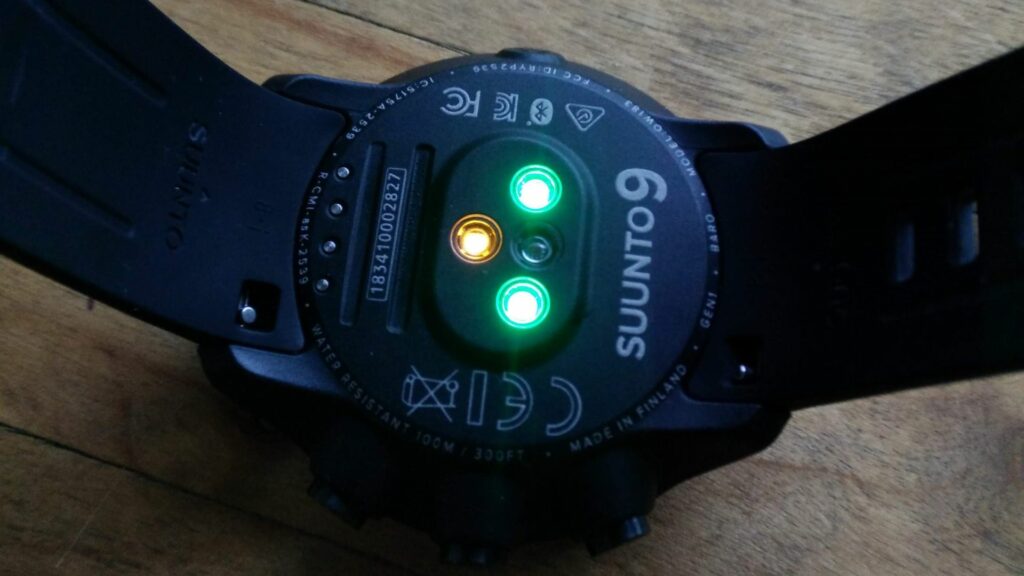
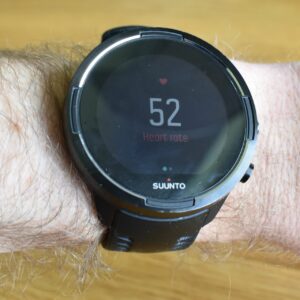
Heart Rate Monitor: New hiking watches are equipped with wrist heart rate monitors
Many hiking watches come with heart rate monitor functionality. Thereby, the watch can be connected to chest strap heart rate monitor which transfer heart rate data to the watch. Premium models of hiking watches have wrist heart rate monitors in addition to the option to connect a chest strap heart rate monitor. A wrist based heart rate monitor don’t require any extra device as they are part of the watch. They measure heart rate directly on your wrist by shining light into your blood vessels and detecting changes in blood volume. Wrist heart rate monitors are surprisingly accurate except for activities that involve a lot of pressure on hands (weightlifting, biking and such). Read more about the accuracy of wrist-based heart rate monitors here.
Connectivity
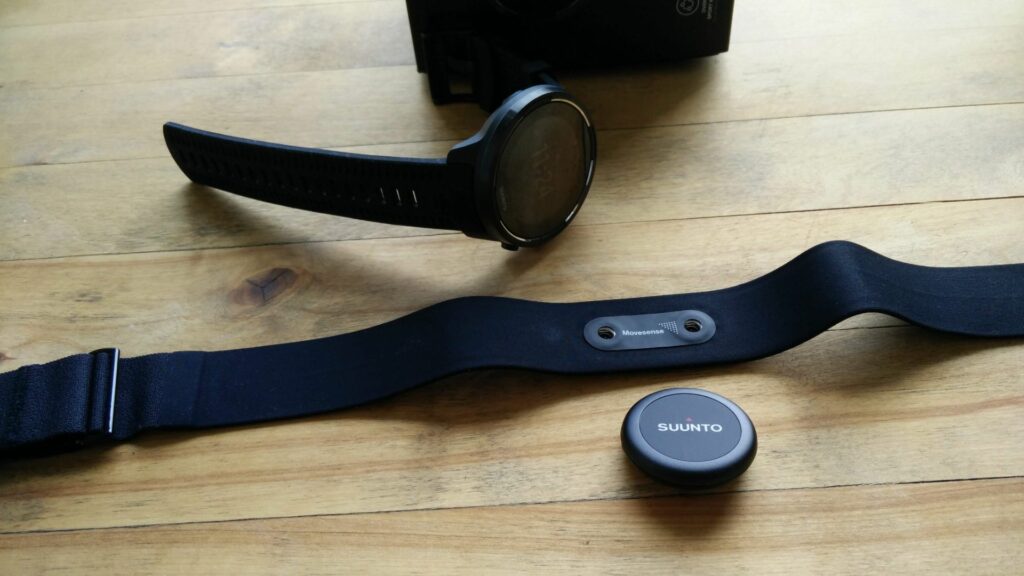
Connectivity: Bluetooth allows you to connect external devices such as chest strap heart rate monitor on the image above
Most hiking watches can be connected to external devices such as heart rate monitors, foot PODs, temperature sensors, smartphones and even action cameras. Three protocols are used for connectivity: ANT+, Bluetooth and Wi-Fi. ANT+ is an outdated protocol which was widely used years ago. New watches typically don’t support ANT+. Nowadays, watches mostly employ Bluetooth for connectivity and some are also equipped with Wi-Fi. The Bluetooth chip is the most important because it enables you to connect the watch to your smartphone. The Smartphone can then work as an intermediate device through which the watch has access to the internet. Wi-Fi enabled watches such as Garmin Fenix 7 can connect directly to the internet without first connecting to your smartphone. That is useful for transferring large amount of data to the watch, such as music.
Battery Life and Battery Modes
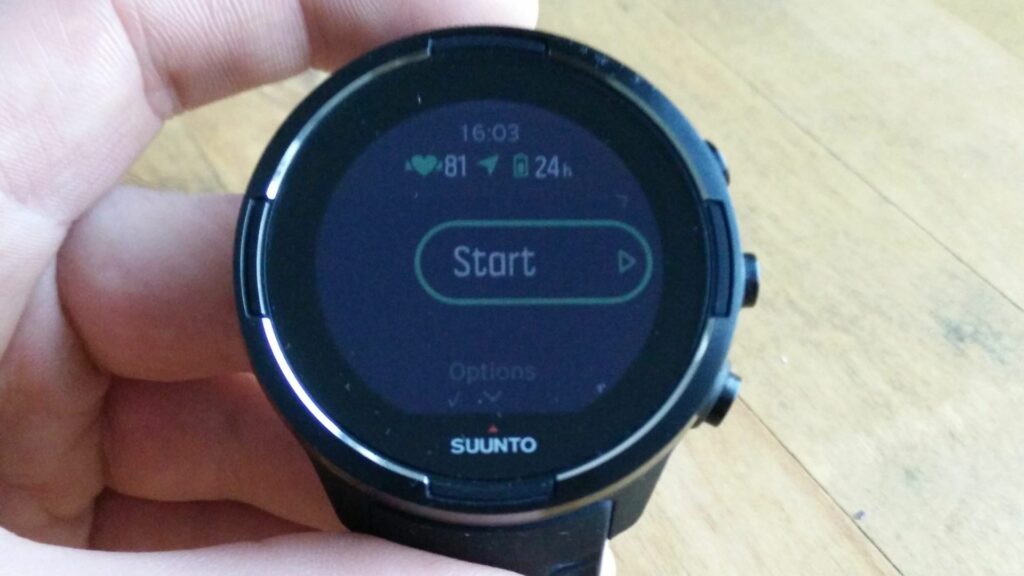
Battery Life: Battery of a GPS watch lasts for a few weeks in time mode but much less in GPS tracking mode
GPS watches are equipped with rechargeable batteries which last for up to two months in time mode. Nevertheless, a hiking watch is rarely used only for checking time and thus the battery life is much shorter in practice. The GPS and wrist HR features put the most strain on the battery. The battery of a hiking watch rarely last more than 30 hours in GPS mode (high accuracy). Nevertheless, most watches allow you to choose different battery modes for GPS tracking. For example, Suunto 9 has four battery modes: Performance, Endurance, Ultra and Tour. The Tour mode delivers up to 170 hours of GPS tracking time which is indeed great.
Watches without GPS use replaceable batteries which typically last for around a year, depending on the use of the watch.
Sunrise and Sunset Times
Sunrise and sunset times are not a must be they are useful because chances are that you’ll forget to check this before heading out. Knowing when the sun goes down enables you to return back before the nightfall and thus keeps you safe.
Interface
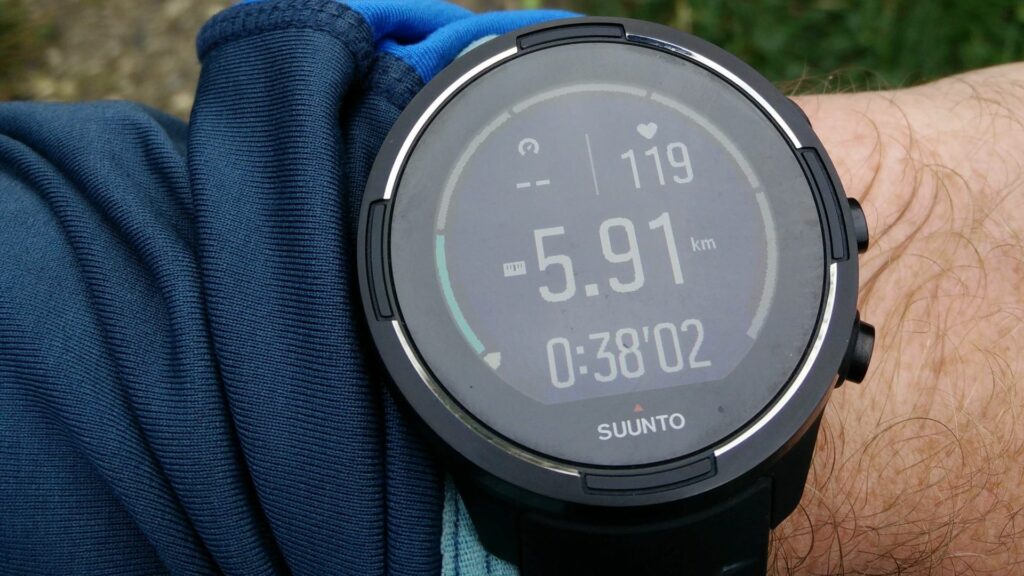
Interface: It’s important that the watch has buttons so you can use with sweaty hands and gloves
Watches are either equipped with a touch screen, buttons or both. Watches that only have a touch screen are not the best option for hiking and sports because they are hard to use with gloves, in rainy weather and with sweaty hands. Therefore, most sports watches are equipped with both buttons and touch screen. During activities the touch screen is usually locked so that the watch doesn’t trigger by the touch of clothes, gloves etc.