Osprey Talon 6 Lumbar Waist Pack
On shorter hikes with stable weather you might feel a little silly bringing a huge backpack (which has to be packed sufficiently to provide stability) only to carry some water and a snack in it. On the other hand, you will always want to have your hands free rather than carrying water bottles, accessories etc. This is where a lumbar waist pack will serve you superbly. If you have back or shoulder problems, a lumbar waist pack can be recommended as the weight of the pack and its content will be carried by your hips rather than your shoulders. You will thus have a better balance and it will be easier to walk with a healthy straight posture. Carrying a waist pack rather than a backpack will also prevent you from getting a sweaty and sticky back which even the most superbly ventilated backpacks cannot completely avert. On warm summer days especially women will also appreciate the possibility of wearing tank tops with thinner straps as a lumbar waist pack, unlike a backpack, will not rub against the bare skin on the shoulder blades.
A lumbar waist pack of course has its limitations; it is not for every hiking trip – or for everyone. If you prefer to bring nearly everything you own for hiking, climbing or mountaineering trips, a waist pack is not for you. Carrying a waist pack truly means lightweight hiking, where you bring what you need and nothing else. A precondition for bringing a waist pack rather than a backpack is stable weather – whether it being good or bad. You can of course tie a light rain jacket or sweater around your shoulders or hips if you don’t need it, but otherwise it is not advisable to only bring a waist pack along if you expect to be changing between layers of clothing for varying weather conditions.
Below we have chosen the five best lumbar waist packs available. We have steered clear of “fanny packs” – which are waist/hip packs carried on your front rather than back, as they are too small to carry water bottles etc. without being in the way.
Updated Content
We regularly update our reviews and selections to always recommend you the best products on the market.
Expert Selections
We only list top-tier products. Read how our selections of best hiking products differ from others here.
Links
We use affiliate links and may receive a small commission on purchases at no extra cost to you.
1. Our Picks of Waist Packs for Hiking
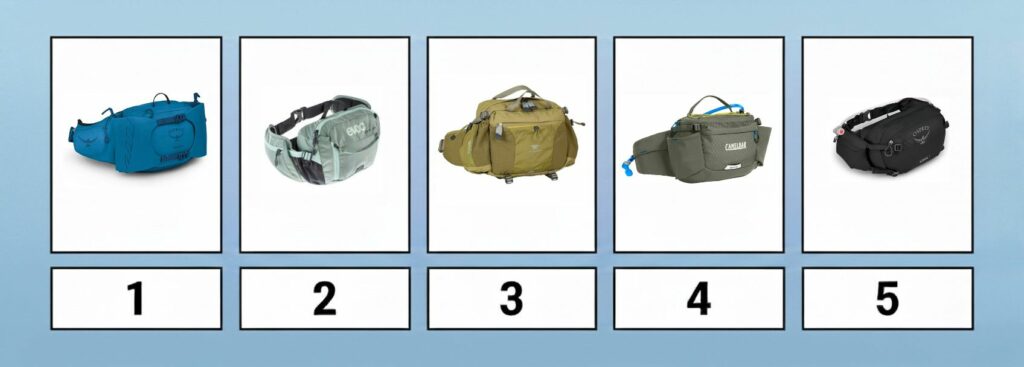
Best Lumbar Waist Packs
- Osprey Tempest/Talon 6 Lumbar Waist Pack
- Evoc Hip Pack 3L Hydration Waist Pack
- MountainSmith Tour Lumbar Waist Pack
- CamelBak M.U.L.E. 5 Waist Pack
- Osprey Seral 7 Hydration Waist Pack
2. Comparison of Hiking Waist Packs

| Feature/Product | Osprey Tempest/Talon 6 | Evoc Hip Pack 3l | MountainSmith Tour | CamelBak M.U.L.E. 5 | Osprey Seral 7 |
|---|---|---|---|---|---|
| Dimensions | 8.27 x 9.84 x 5.91 in. | 11 x 7 x 3 in. | 10 x 11.5 x 5 in. | 9.5 x 10.2 x 5.1 in | 8.5 x 12.5 x 6 in. |
| Dimensions (Metric) | 21 x 25 x 15 cm | 28 x 18 x 8 cm | 27 x 29 x 12.7 cm | 24.13 x 29 x 13 cm | 21.5 x 32 x 15 cm |
| Weight | 0.9 lbs | 12.3 oz. | 1 lb. 12 oz. | 1 lb. 2 oz. | 1 lb. 3.2 oz. |
| Weight (Metric) | 408 g | 350 g | 795 g | 510 g | 524 g |
| Capacity | 6 liters | 3 liters | 9 liters | 3.5 liters + 1.5 liters for reservoir | 7 liters |
| Size of included water reservoir | / | 1.5 liter hydration reservoir | / | 1.5 liter hydration reservoir | 1.5 liter hydration reservoir |
| Fits waists/hips | 24 – 44 in. (Tempest) 25 - 50 in. (Talon) | n/a | 28 – 48 in. | 26 - 42 in. | 26-50 in. |
| Fits waists/hips (Metric) | 61 – 112 cm (Tempest) 64-127 (Talon) | n/a | 71 – 122 cm | 66-106 cm | 66 cm -127 cm |
3. The Selection
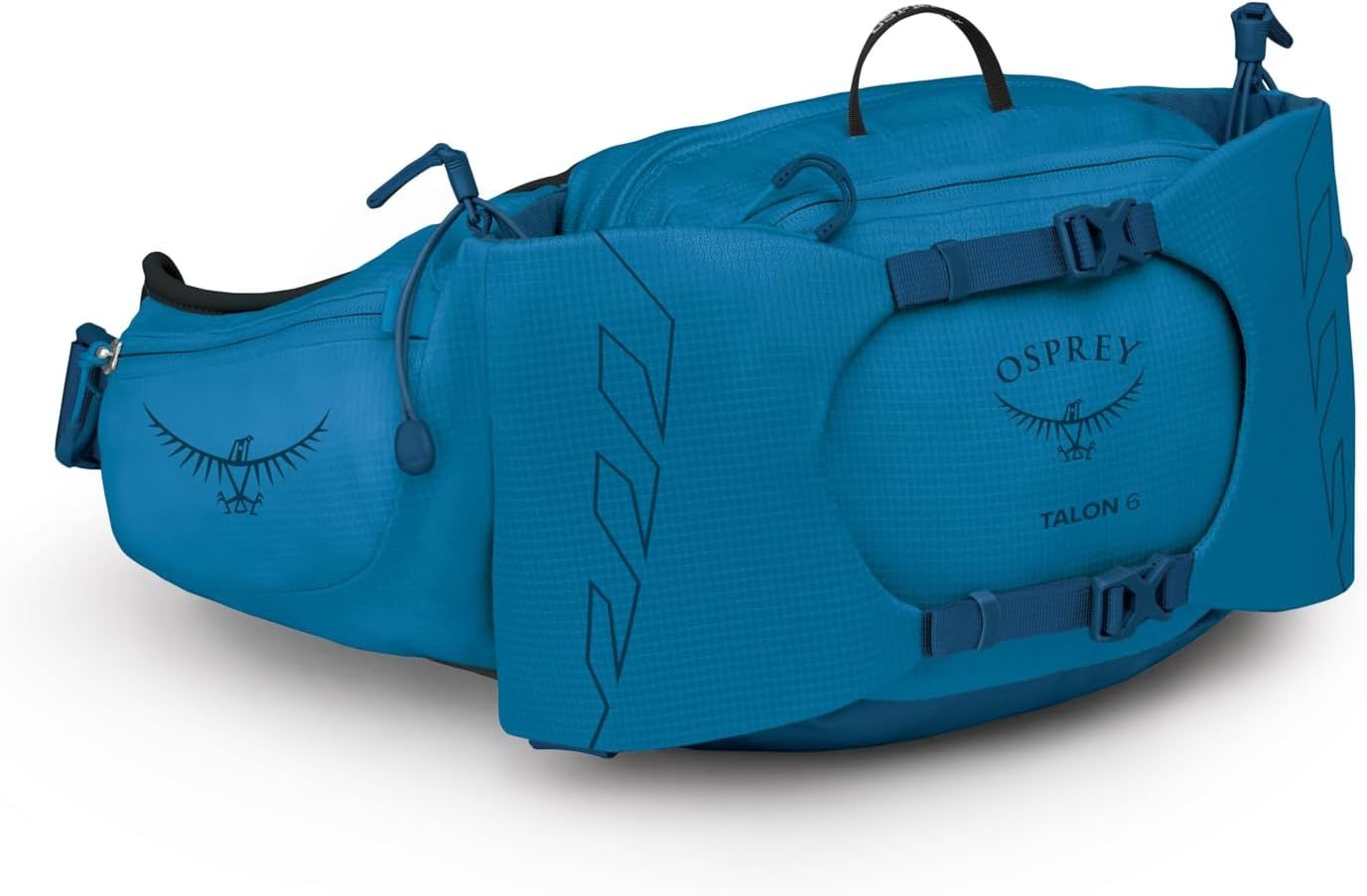
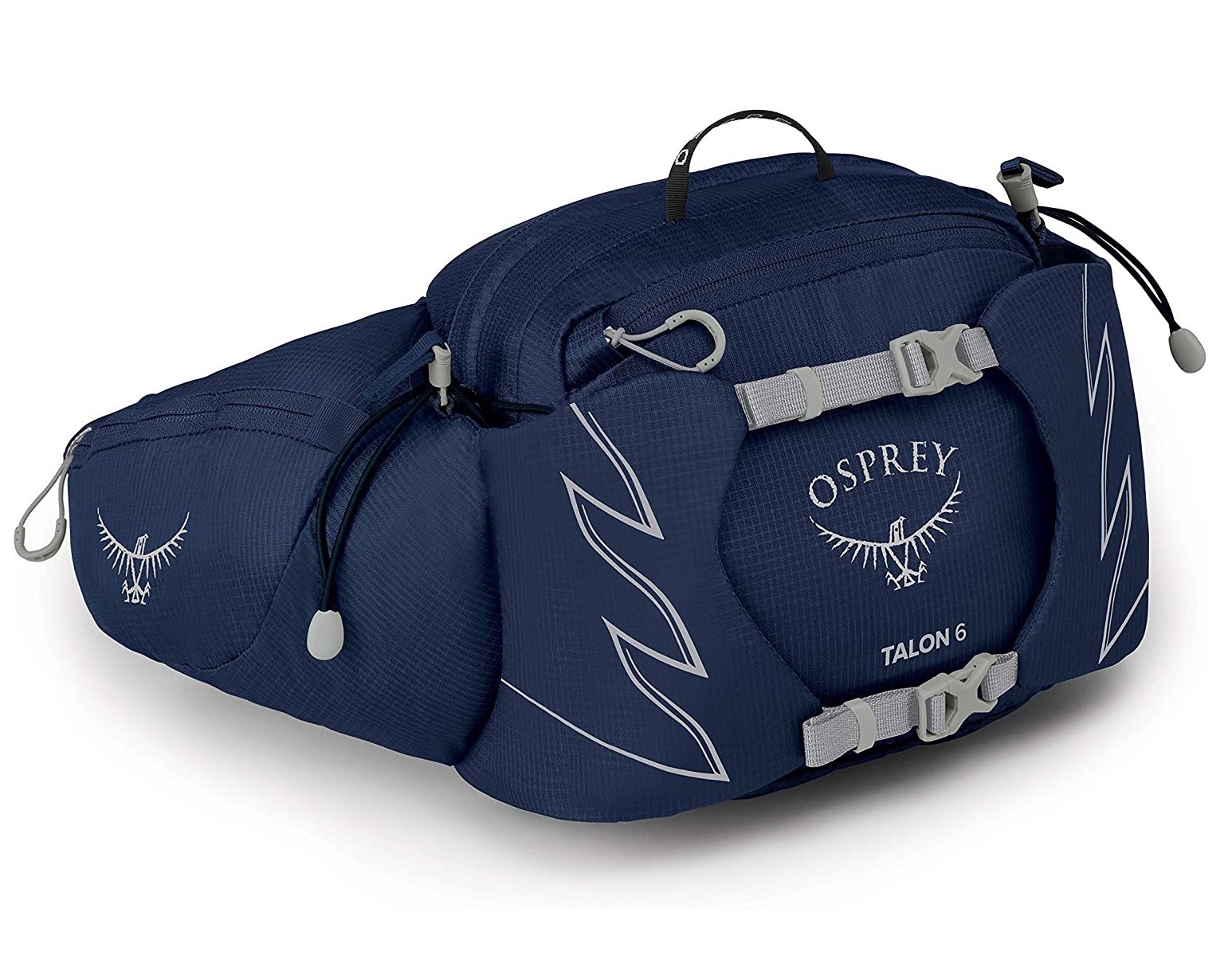
Osprey Talon 6
Osprey Tempest 6 and Talon 6
Suitable for:
- Hiking
- Mountaineering
- Climbing
- Running
- Cross country skiing
- Mountain biking
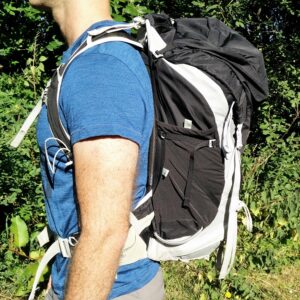
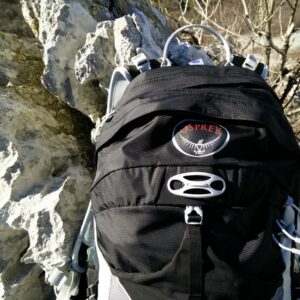
The Osprey Tempest 6 and Talon 6 remain among the most versatile lumbar waist packs for hiking thanks to their lightweight construction, excellent stability and very functional layout. Osprey still offers separate men’s and women’s versions, with the Tempest fitting slightly narrower hips and waists than the Talon. The latest generation uses recycled bluesign-approved fabrics with a PFC-free DWR treatment, making the packs more environmentally friendly without compromising durability.
The AirScape backpanel and BioStretch hipbelt provide excellent ventilation and a close-to-body fit that feels very stable while hiking, scrambling or running. The Horizontal StraightJacket compression system helps stabilize loads effectively, even when the pack is only partially filled. Storage is also very well thought out for a 6-liter lumbar pack. The Talon and Tempest feature dual zippered hipbelt pockets, a front shove-it pocket and side bottle sleeves with bungee retention straps.
Unlike older versions, the water bottles are no longer included which is disappointing considering the relatively high price. Nevertheless, the Talon and Tempest 6 continue to stand out as some of the best all-around lumbar waist packs for hikers who prioritize comfort, low weight and versatility.
Performance Score
The Advantages
- Excellent stability and comfort for hiking and running
- Very breathable AirScape backpanel
- Lightweight yet durable construction
- Versatile storage layout with multiple pockets
- Compression system keeps loads stable
- Sustainable recycled materials and PFC-free treatment
The Considerations
- Water bottles no longer included
- Relatively expensive
- Limited water carrying capacity compared to hydration packs
- Less comfortable for aggressive mountain biking when fully loaded

Video
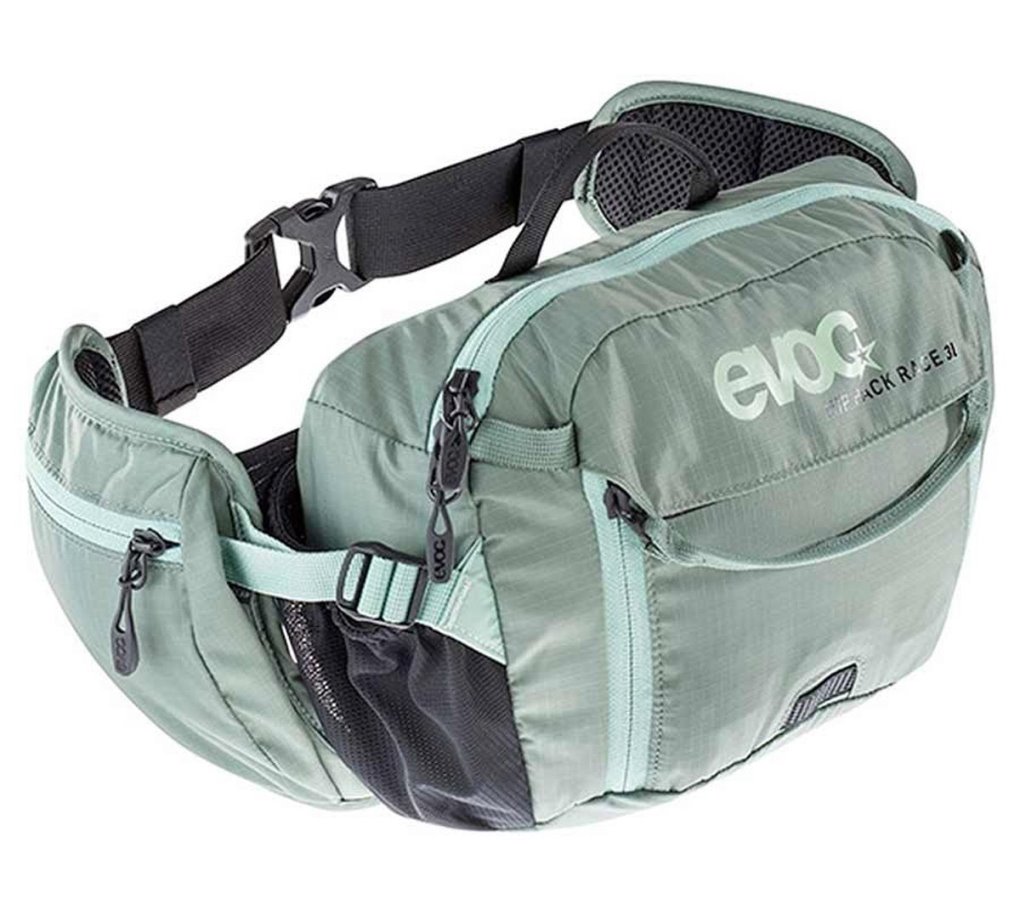
Evoc Hip Pack 3 L
Evoc Hip Pack 3 L
Suitable for:
- Hiking
- Mountaineering
- Climbing
- Running
- Mountain biking
- Cross country skiing
The EVOC Hip Pack 3L is one of the most refined hydration waist packs currently available and remains especially popular among mountain bikers and fast-moving hikers. The included hydration bladder allows for easy hands-free drinking while the optional side bottle pocket gives additional flexibility for longer outings. The compact design sits very securely against the lower back and minimizes bouncing even on rough terrain.
A major highlight is EVOC’s excellent ventilation system. The Venti Flap design allows you to quickly adjust the distance between the pack and your back to improve airflow during strenuous climbs. Combined with perforated EVA padding and mesh-covered ventilation channels, the result is noticeably better comfort in warm weather than many competing lumbar packs.
Despite its relatively compact 3-liter volume, the EVOC pack offers excellent organization with cleverly placed zippered pockets and tool compartments. The wide waist strap distributes weight comfortably and remains stable while moving fast. However, once the hydration reservoir is filled, remaining cargo space becomes fairly limited. The EVOC Hip Pack is best suited to minimalist hikers, runners and mountain bikers who prioritize ventilation and stability over maximum carrying capacity.
Performance Score
The Advantages
- Outstanding ventilation with Venti Flap system
- Very stable fit during high-output activities
- Hydration bladder and bottle compatibility
- Excellent pocket organization
- Comfortable wide waist strap
- Lightweight and compact design
The Considerations
- Limited storage space when reservoir is full
- Expensive for its size
- Best suited to minimalist loads
- Less practical for bulky gear or extra clothing

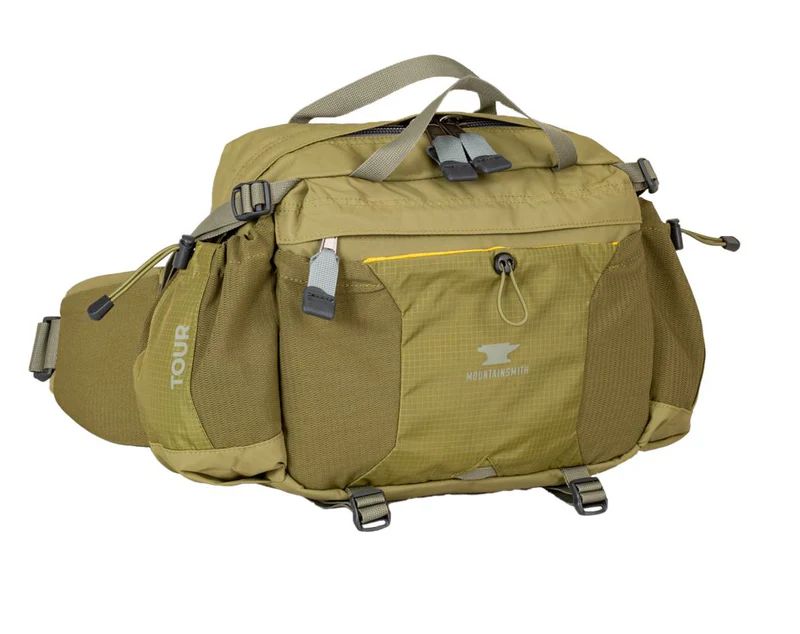
Mountainsmith Tour
MountainSmith Tour
Suitable for:
- Hiking
- Mountaineering
- Running
- Tactical use
- Hunting
- Mountain biking
- Everyday use
The Mountainsmith Tour remains one of the most spacious and versatile lumbar waist packs available. With a 9-liter capacity, it offers considerably more storage than most competitors and works well for hikers who want to avoid carrying a full backpack on shorter adventures. The latest version continues to focus on durability with heavy-duty nylon fabrics, reinforced stress points and quality YKK zippers throughout.
The pack stands out because of its adaptability. The hipbelt can be tucked away so the Tour can also function as a shoulder bag using the included strap. Multiple compression straps, daisy chains and the front beavertail pocket make it easy to secure extra layers, trekking poles or even lightweight camping gear externally. The organization is excellent with bottle pockets, hipbelt pockets, stash compartments and an internal padded sleeve for valuables or a tablet.
Compared to lighter and more minimalist lumbar packs, the Tour is noticeably bulkier and heavier. However, that extra weight brings superb carrying comfort, exceptional durability and much better hauling capability. The Mountainsmith Tour is an excellent option for hikers, photographers, travelers and anyone who wants maximum storage and versatility from a lumbar waist pack.
Performance Score
The Advantages
- Huge storage capacity for a lumbar pack
- Extremely durable materials and construction
- Very versatile carrying options
- Excellent external attachment points and compression straps
- Great organization with numerous pockets
- Comfortable supportive hipbelt
The Considerations
- Heavier and bulkier than most competitors
- Less streamlined for running or fast hiking
- Style may not appeal to everyone
- Can feel oversized for minimalist day hikes

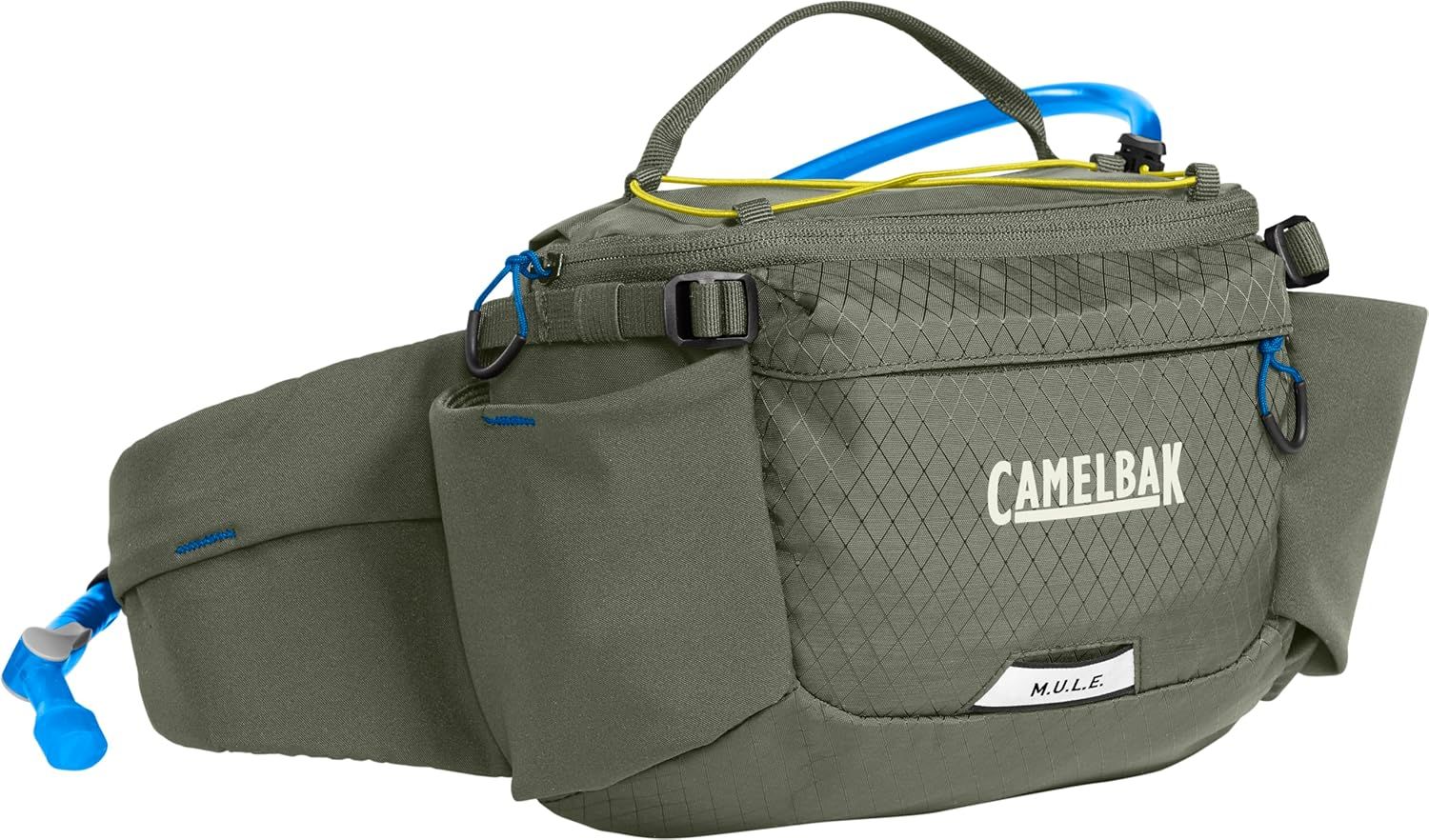
CamelBak M.U.L.E. 5
CamelBak M.U.L.E. 5
Suitable for:
- Hiking
- Mountaineering
- Climbing
- Cross country skiing
- SUPing
- Running
- Mountainbiking
The CamelBak M.U.L.E. 5 combines the convenience of a hydration pack with the low-profile feel of a lumbar waist pack. Designed primarily for mountain biking, it also performs very well for hiking, trail running and other high-output activities where easy hydration access is important. The included 1.5-liter CRUX reservoir delivers water efficiently and sits low in the pack for improved stability and balance.
CamelBak did an excellent job with organization. Despite the relatively compact size, the M.U.L.E. 5 includes multiple pockets, tool compartments and side bottle sleeves that help keep gear neatly arranged. Internal compression straps prevent the reservoir from shifting as the water level drops while the magnetic tube trap makes the drinking hose easy to access while moving.
Compared to some competitors, ventilation is not class-leading and the hydration system requires more maintenance than simple water bottle setups. Nevertheless, the M.U.L.E. 5 remains an excellent option for hikers and bikers who want a compact waist pack with integrated hydration and practical everyday functionality.
Performance Score
The Advantages
- Efficient CRUX hydration system included
- Very practical pocket layout and organization
- Internal reservoir compression improves stability
- Magnetic tube trap works well
- Compact and lightweight design
- Additional bottle pockets increase versatility
The Considerations
- Hydration systems require regular cleaning and maintenance
- Ventilation could be better in hot weather
- Storage space is limited for bulkier gear
- Less suitable for carrying extra clothing layers

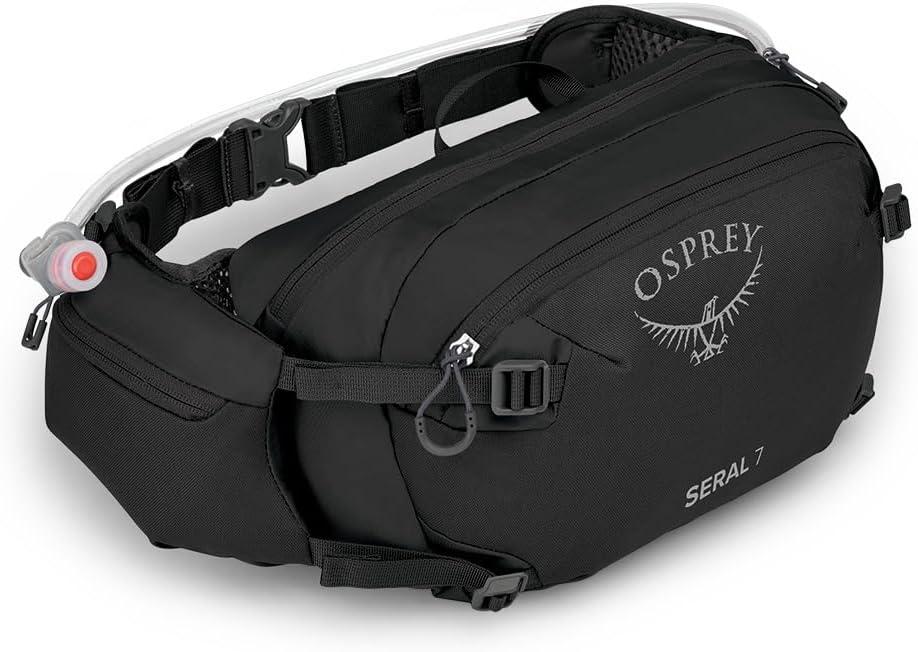
Osprey Seral 7
5. Osprey Seral 7
Suitable for:
- Hiking
- Mountaineering
- Climbing
- Running
- Mountain biking
The Osprey Seral 7 is one of the most comfortable hydration waist packs for longer hikes and mountain bike rides. It combines the stable fit and breathable backpanel of the Talon series with a well-integrated 1.5-liter Hydraulics lumbar reservoir made by Hydrapak. The hydration system is very user-friendly and features clean hose routing plus a magnetic attachment point on the hipbelt for quick access while moving.
Storage capacity is excellent for a lumbar pack of this type. The large main compartment easily accommodates tools, snacks and extra layers while the front organizational pocket and dual hipbelt pockets keep smaller essentials within easy reach. Compression straps help stabilize the load and prevent the pack from bouncing during active use.
The Seral 7 is slightly bulkier than smaller minimalist lumbar packs and can feel oversized on smaller users, particularly when fully loaded. However, for hikers and riders who prioritize comfort, hydration access and carrying capacity, it is one of the strongest options available.
Performance Score
The Advantages
- Excellent hydration system with intuitive hose routing
- Comfortable and stable fit
- Very practical storage layout
- Breathable AirScape backpanel
- Compression straps improve load stability
- Great option for longer rides and hikes
The Considerations
- Bulkier than minimalist lumbar packs
- May feel oversized on smaller users
- Hydration reservoir requires maintenance
- More expensive than simple bottle-based packs

Video
4. Hiking Waist Pack Buying Advice – What is important?
Water capacity and Hydration Options
The most important thing to bring for any longer-lasting outdoor activity is water. If you know that you will be passing by sources of drinkable water on your trip, you don’t have to bring much more than a half-liter bottle, but otherwise it is crucial to bring enough water to stay sufficiently hydrated. This is especially important on warm summer days where you can easily become dizzy or disoriented when dehydrated. How much water you need depends on your speed, body weight and the weather. As a general rule you should drink 33ml of water pr. kg bodyweight pr. day, but more when you are exercising and/or in very warm climate. For this list we have prioritized waist packs which can carry 1 liter of water or more. The hydration waist packs come with included hydration reservoirs, while you have to buy your own water bottles for those models meant to carry water bottles in the side pockets. If you can’t decide between a waist pack with water bottles or a hydration waist pack, you can learn about benefits and shortcomings of hydration reservoirs in the article Hydration Systems Vs. Water Bottles.
When choosing a lumbar waist pack, consider how much water you realistically need to carry. For short hikes where you pass reliable water sources, 0.5–1 liter may be sufficient. For longer, exposed, or hot-weather hikes, look for models that carry at least 1 liter — ideally more.
There are two main systems:
- Bottle-based packs with side sleeves (often angled for easier access).
- Hydration reservoir packs with integrated bladder and hose.
Bottle packs allow quick refilling and easy monitoring of intake. Hydration reservoirs offer hands-free drinking but are slightly more complex and require cleaning discipline. For most hikers, 1–2 liters of total capacity hits the sweet spot between weight and practicality.
Comfort, Fit and Stability
Comfort is non-negotiable. Even small packs become uncomfortable if poorly designed or overloaded. A good lumbar pack should sit securely on your hips without bouncing, sagging, or digging into your lower back.
Look for:
- A wide, supportive waist belt that distributes weight evenly.
- Sufficient padding in the back panel and hip area.
- Breathable mesh or ventilated foam to reduce sweat buildup.
- A highly adjustable strap that fits both narrow and broad waist sizes.
If you plan to move fast (trail running, scrambling, biking), stability becomes even more important. Wider straps and structured designs reduce bounce. Slim, minimalist designs may feel comfortable when lightly loaded but shift around once filled with water and snacks. Some packs can also be worn crossbody as a sling. While that adds versatility, the primary purpose of a hiking lumbar pack is stable weight distribution around the hips which are your body’s natural load-bearing zone.
Capacity and Organization
Capacity typically ranges from minimalist 0.5-liter models to 6–9 liter lumbar packs capable of replacing a small daypack. The right size depends entirely on your use case.
- 0.5–1.5 L: Phone, keys, small snack.
- 2–3 L: Essentials, gloves, small layer.
- 4–6 L: Water bottles, food, light shell, basic safety gear.
But raw liter numbers don’t tell the whole story. Usable space depends on structure and layout. Well-designed packs include:
- Internal mesh dividers
- Key clips
- Stretch front pockets
- Secure zippered compartments
- Quick-access exterior pockets
Good organization saves time and frustration. On the trail, you want instant access to sunscreen, lip balm, or your phone — without digging through a single large compartment.
Durability and Materials
Durability largely depends on fabric choice and construction quality. Waist packs sit close to your body and often get exposed to sweat, dirt, rocks, and repeated abrasion.
Common materials include:
- Ripstop nylon (balanced durability and weight)
- Polyester (slightly heavier, durable and color-stable)
- Technical laminates like Dyneema or Ultra fabrics (ultralight and highly tear-resistant)
Denier rating gives an indication of thickness: lower denier is lighter but less abrasion-resistant; higher denier is more rugged but heavier.
Pay attention to:
- Reinforced stitching
- Strong zipper construction
- Quality buckles and webbing
- Bottle sleeve durability (a common failure point)
If you are hard on gear or hike in rough terrain, durability should rank high on your priority list.
Weather Resistance
Most lumbar waist packs are water-resistant rather than fully waterproof. For fair-weather hiking, that’s usually sufficient. However, if you carry electronics or hike in consistently wet climates, weather protection becomes more important.
Features to look for:
- Water-resistant fabrics
- Coated or laminated materials
- Weatherproof zippers
- Taped seams (rare but effective)
Some ultralight fabrics repel water very well but may absorb moisture over time. Also note that packs with thick padding can retain water once soaked and take time to dry. If you expect prolonged rain exposure, consider either a waterproof model or store sensitive items in a small dry bag inside the pack.
Weight and Minimalism
One of the main advantages of a lumbar waist pack is weight savings. If you don’t need a full daypack, there’s no reason to carry one. Ultralight models use advanced materials to minimize weight, but they often sacrifice structure and padding. Larger 5–6 liter lumbar packs with bottle holders and padding naturally weigh more but offer better load stability and carrying comfort. Be realistic about your needs. If you consistently overload a minimalist pack, it becomes uncomfortable and unstable. It is often better to choose a slightly larger, structured pack than to max out a small one on every hike.
Gender
Lumbar waist packs can easily be worn by both genders – no matter the model. A few brands, like for example Osprey, have made slightly diverging models for men and women respectively, but we would dare to suggest that any women’s model can be worn by a male and vice versa. This is not to diminish the efforts of Osprey and others, but simply due to the fact that lumbar waist packs are meant for carrying relatively small loads unlike backpacks where it might be smart to choose a model that serves your body shape best.