Best Water Bottles for Hiking
Here we selected and reviewed the best water bottles for hiking and backpacking. We only listed insulated water bottles as these keep your beverages cool in hot weather and warm in cold weather. Insulated water bottles are typically made of stainless steel and therefore very durable. Furthermore, as stainless steel doesn’t absorb flavors, they can be used for various beverages besides water, such as soft drinks, tea, coffee, soup etc. However, insulated water bottles have one big downside; they are relatively heavy and bulky. Therefore, we don’t recommend using them if the conditions don’t require them (e.g. moderate temperatures).
In such conditions, a hydration bladder, collapsible water bottles (such as the Platypus SoftBottle) or simple disposable water bottles are a better option as they are lighter and take up less space in your backpack (plus they can be compressed when emptied). Nevertheless, insulated water bottles are the best (and often the only) option for hiking in winter as they prevent the fluids from freezing. They also come in handy in the heat of summer as they keep your beverages cold. However, it’s up to you whether you want to carry the additional weight to keep your drinks cold.
In this review of the best water bottles, we only listed lightweight insulated water bottles of the highest quality which are perfect for hiking, backpacking, mountaineering and similar activities. If you want to learn more about hydration, check out our article How much water to take on a hiking trip. If you are considering buying a hydration bladder also check out our article Hydration Bladders VS Water Bottles where we list the advantages and disadvantages of hydrations bladders in comparison to water bottles.
Updated Content
We regularly update our reviews and selections to always recommend you the best products on the market.
Expert Selections
We only list top-tier products. Read how our selections of best hiking products differ from others here.
Links
We use affiliate links and may receive a small commission on purchases at no extra cost to you.
1. Our Picks of Water Bottles for Hiking and Backpacking
Best Water Bottles for Hiking
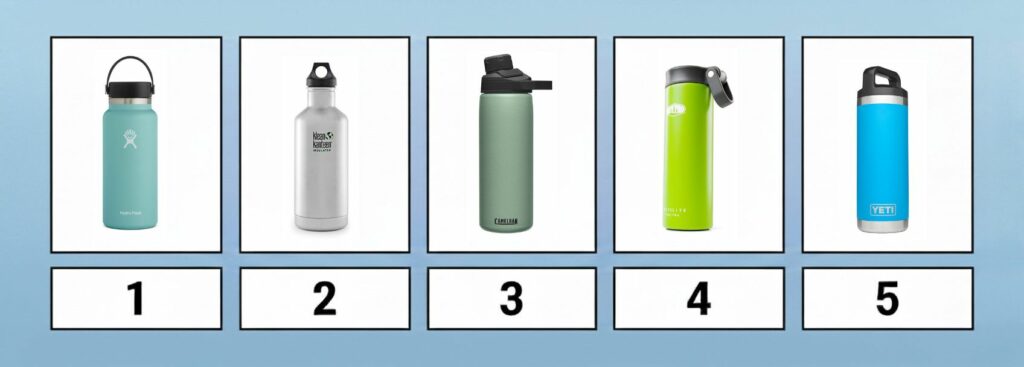
- Hydro Flask Wide Mouth 32 oz.
- Klean Kanteen Insulated Classic 32 oz.
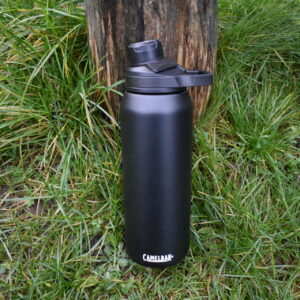
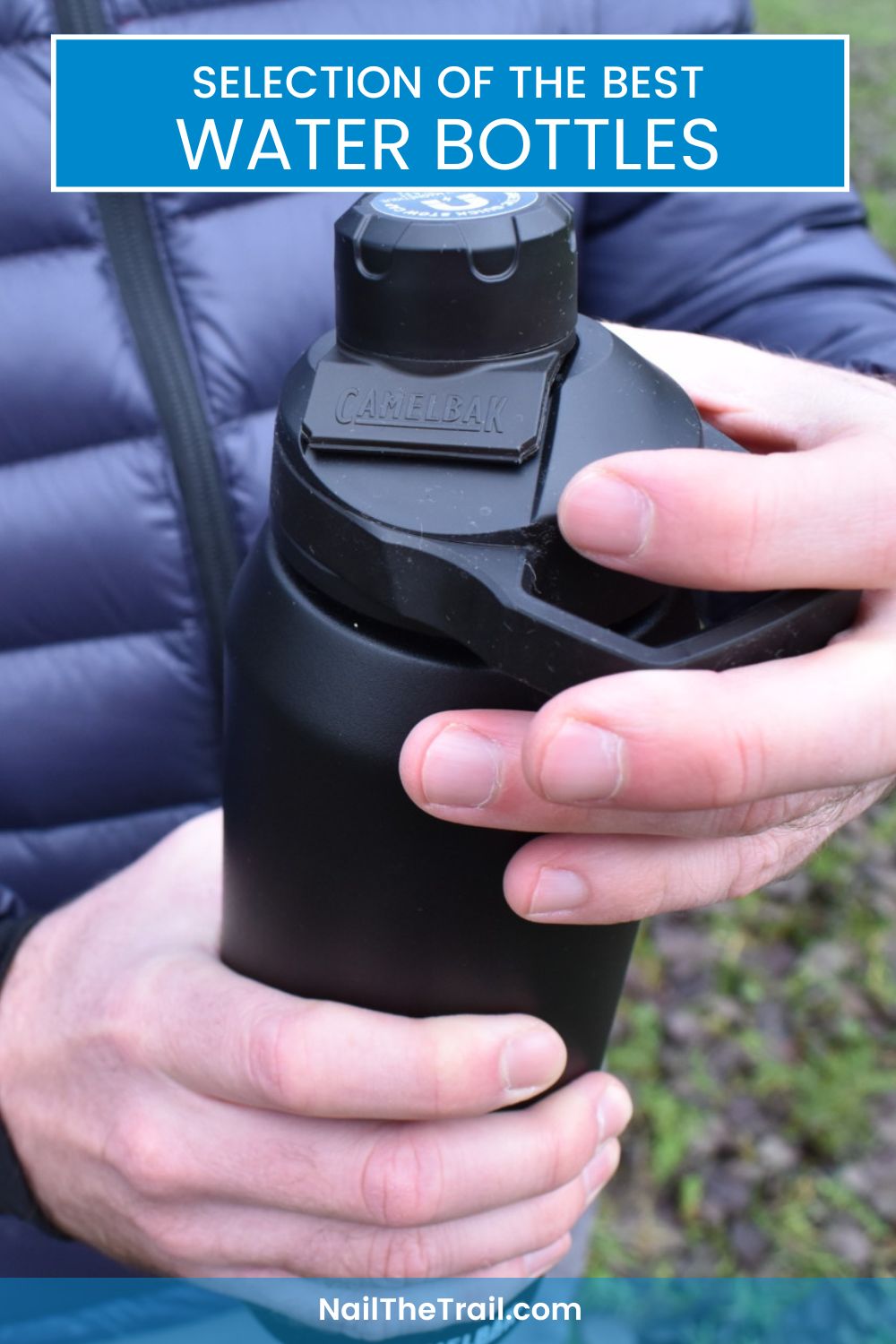
- CamelBak Chute Mag Vacuum 20 oz.
- GSI Outdoors Microlite 720 Twist – 24 oz.
- YETI Rambler Vacuum Bottle 18 oz.
2. Comparison of Water Bottles for Hiking and Backpacking

| Feature/Product | Hydro Flask Wide Mouth 32 oz. | Klean Kanteen Insulated Classic 32 oz. | CamelBak Chute Mag Vacuum 20 oz | GSI Outdoors MicroLite 720 Twist 24 oz. | YETI Rambler Vacuum Bottle 18 oz. |
|---|---|---|---|---|---|
| Weight (empty) | 14.1 oz. (400 g) | 14.9 oz. (422 g) | 11.1 oz. (315 g) | 10.2 oz. (289 g) | 15.3 oz. (433 g) |
| Liquid Capacity | 32 fl. oz. (0.94 liters) | 32 fl. oz. (0.94 liters) | 20 fl. oz. (0.59 liters) | 24 fl. oz. (0.70 liters) | 18 fl. oz. (0.53 liters) |
| Material | Stainless Steel | Stainless Steel | Stainless Steel | Stainless Steel | Stainless Steel |
| BPA Free | Yes | Yes | Yes | Yes | Yes |
| Opening | Wide | Classic | Wide | Wide | Wide |
| Cap Type | Screw Cap | Screw Cap | Half-turn cap (magnetic) | Screw Cap | Screw Cap |
| Also available capacity | 18 fl. oz. (0.53 liters), 40 fl. oz. (1.18 liters), 64 fl. oz. (1.89 liters | 20 fl. oz. (0.59 liters), 64 fl. oz. (1.89 liters) | 12 fl. oz. (0.35 liter), 36 fl. oz. (1 liter), 40 fl. oz. (1.18 liters) | 17 fl. oz. (0.5 liters) | 26 fl. oz. (0.76 liters), 36 fl. oz. (1 liter), 64 fl. oz. (1.89 liters |
3. The Selection
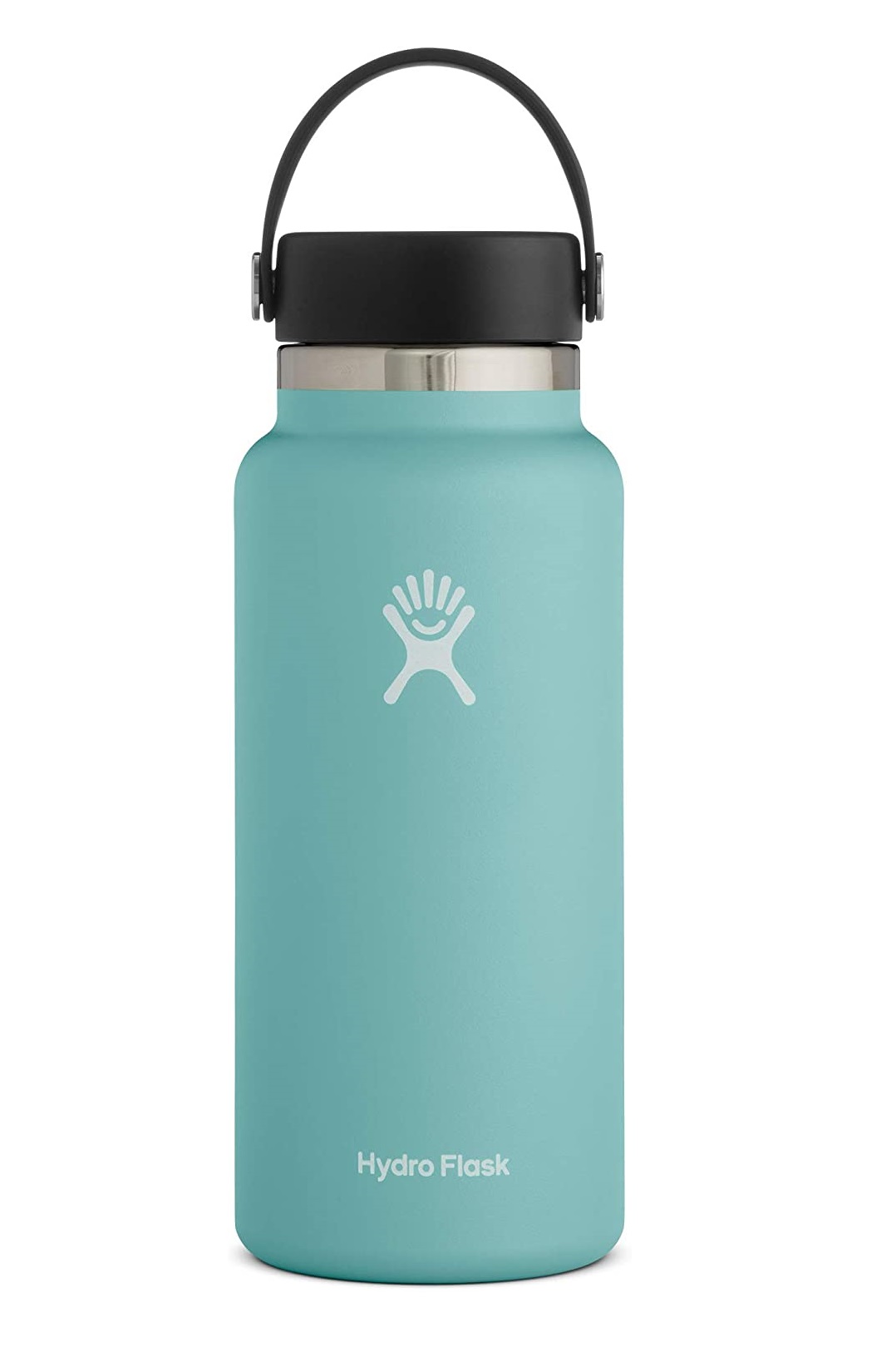
Hydro Flask Water Bottle
Hydro Flask Wide Mouth 32 oz.
Suitable for:
- Hiking
- Trekking
- Backpacking
- Mountaineering
- Snowshoeing
- Ski Touring
- Skiing
The Hydro Flask Wide Mouth 32 oz. remains one of the most versatile insulated water bottles for hiking and backpacking thanks to its excellent balance of durability, insulation performance and everyday usability. The bottle’s double-wall vacuum insulation keeps drinks cold for long periods in hot weather and prevents beverages from freezing too quickly during winter hikes. Unlike many insulated stainless steel bottles, the Hydro Flask also resists retaining flavors well and is very easy to clean due to the wide-mouth opening. The powder-coated exterior improves grip with gloves or wet hands while also adding abrasion resistance for rough outdoor use. We also like the excellent ecosystem of compatible caps and accessories which makes the bottle highly adaptable for hiking, commuting and travel. The main downside is weight – like most insulated stainless steel bottles, it is noticeably heavier than plastic or titanium alternatives, especially in the larger 32 oz. size. Nevertheless, for cold-weather hiking, mountaineering and year-round everyday use, the Hydro Flask Wide Mouth remains one of the best insulated bottles available.
Performance Score
The Advantages
- Excellent insulation performance
- Very durable stainless steel construction
- Wide mouth is easy to fill and clean
- Powder-coated exterior improves grip
- Compatible with different lids and accessories
- Doesn’t retain flavors
The Considerations
- Heavier than non-insulated bottles
- Relatively expensive

Video

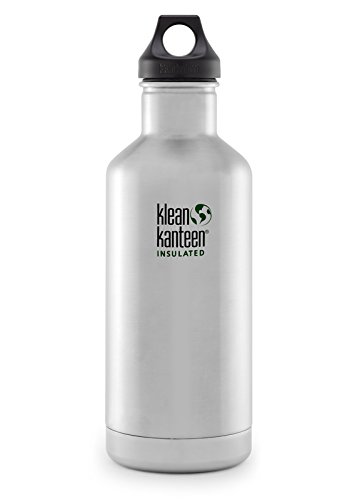
Klean Kanteen Insulated Classic 32 oz.
Klean Kanteen Insulated Classic 32 oz.
Suitable for:
- Hiking
- Trekking
- Backpacking
- Mountaineering
- Snowshoeing
- Ski Touring
- Skiing
The Klean Kanteen Insulated Classic is a great option for hikers and backpackers who want a simpler and slightly lighter insulated bottle without sacrificing durability. The bottle features a slim profile which fits better into backpack side pockets and cup holders than many wide insulated bottles. We particularly like the updated sport cap which allows convenient one-handed drinking during travel or while moving on the trail. The stainless steel construction is highly durable and resistant to retaining flavors while the minimalist design makes the bottle easy to use and maintain. Although the insulation performance is not quite as impressive as some heavier premium bottles, it still keeps drinks hot or cold for many hours and performs very well for everyday hiking and commuting use. The carrying loop on the cap is relatively small and the sport cap is not as leakproof as a screw cap during rough transport, but overall the Klean Kanteen remains an excellent all-around insulated hiking bottle.
Performance Score
The Advantages
- Slim and lightweight design
- Convenient one-handed drinking
- Durable stainless steel construction
- Fits easily into cup holders and pack pockets
- Doesn’t retain flavors
- Simple and versatile design
The Considerations
- Sport cap is less secure than screw caps
- Smaller carrying loop
- Insulation slightly weaker than heavier premium bottles
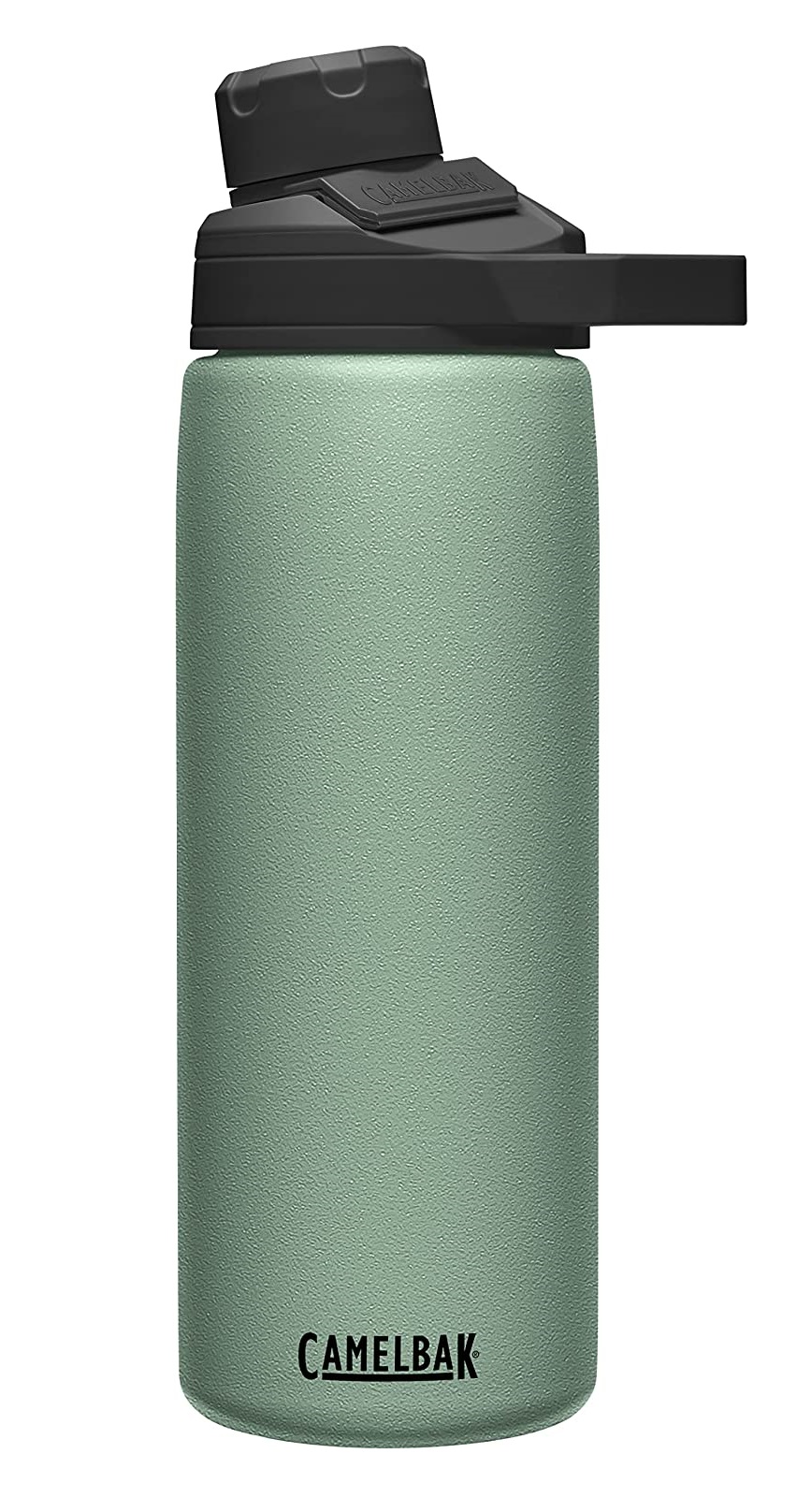
CamelBak Chute Mag Insulated Bottle
CamelBak Chute Mag Vacuum 20 oz.
Suitable for:
- Hiking
- Trekking
- Backpacking
- Mountaineering
- Snowshoeing
- Ski Touring
- Skiing
The CamelBak Chute Mag Vacuum Bottle stands out with one of the most practical cap systems we have used on an insulated hiking bottle. The magnetic Chute Mag cap securely stows the lid away while drinking which makes it much easier to use on the move and reduces the risk of losing parts on the trail. The stainless steel vacuum-insulated construction delivers excellent thermal performance for both hot and cold beverages while the powder-coated exterior improves grip in wet or cold conditions. We also appreciate that replacement caps are available separately and that the bottle is compatible with other CamelBak lids. The Chute Mag Vacuum bottle is relatively heavy compared to non-insulated options, but that is expected for a durable stainless steel bottle with strong insulation. For hikers, campers and travelers who value drinking convenience and versatility, this is one of the best-designed insulated bottles available.
Performance Score
The Advantages
- Excellent magnetic cap design
- Very convenient for drinking on the move
- Durable stainless steel construction
- Compatible with different CamelBak caps
- Powder-coated slip-resistant exterior
- Replacement caps available separately
The Considerations
- Relatively heavy
- No integrated cup for hot drinks

Video

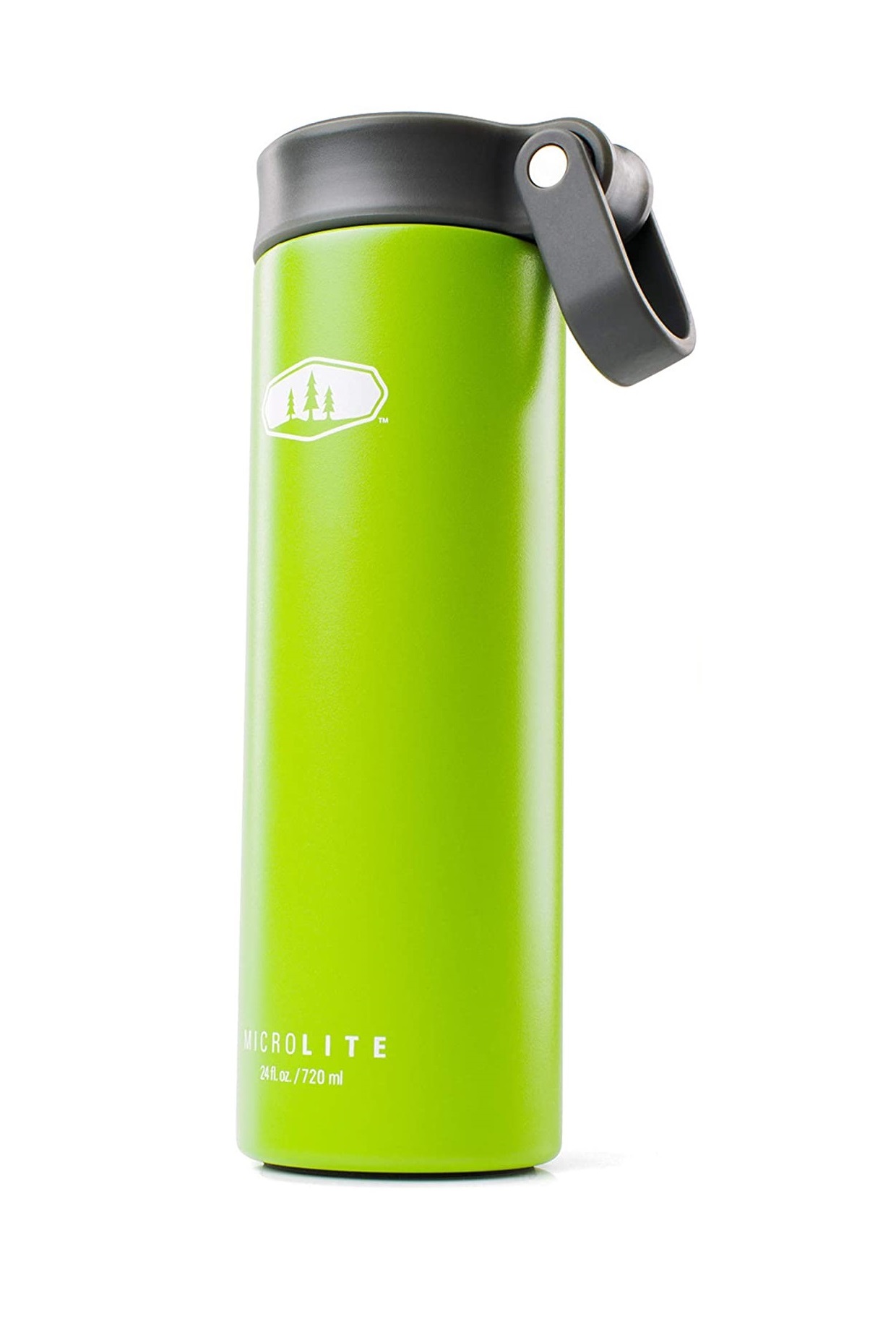
GSI Outdoors MicroLite 720 Twist Vacuum Water Bottle
GSI Outdoors Microlite 720 Twist – 24 oz.
Suitable for:
- Hiking
- Trekking
- Backpacking
- Mountaineering
- Snowshoeing
- Ski Touring
- Skiing
The GSI Outdoors Microlite 720 Twist is one of the lightest insulated stainless steel bottles we have tested, making it an excellent option for hikers and backpackers who want solid insulation without carrying unnecessary weight. Despite its lightweight design, the bottle still provides very good thermal performance and durable stainless steel construction suitable for everyday outdoor use. The streamlined shape packs easily into backpack side pockets while the silicone base helps protect against dents and improves stability on smooth surfaces. The simple twist cap is easy to use and seals securely, although the carrying handle feels somewhat awkward compared to more refined competitors. We also found the bottle rim slightly sharp during drinking. Nevertheless, the Microlite 720 Twist offers a very attractive combination of low weight, good insulation and reasonable price, making it particularly appealing for weight-conscious hikers.
Performance Score
The Advantages
- Very lightweight for an insulated bottle
- Good insulation performance
- Durable stainless steel construction
- Slim shape packs easily
- Protective silicone base
- Reasonable price
The Considerations
- Handle design feels awkward
- Bottle rim is slightly sharp
- Fewer features than premium competitors

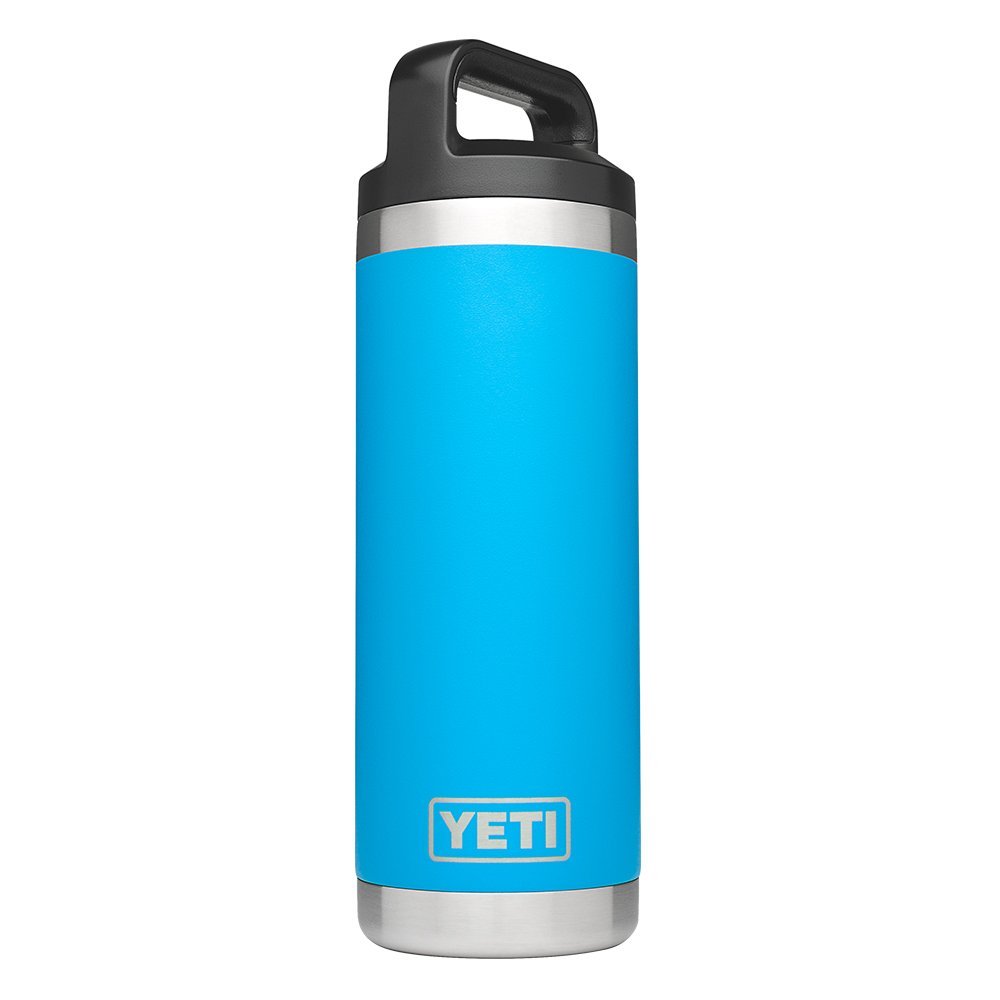
YETI Rambler Vacuum Bottle 18 oz.
YETI Rambler Vacuum Bottle 18 oz.
Suitable for:
- Hiking
- Trekking
- Backpacking
- Mountaineering
- Snowshoeing
- Ski Touring
- Skiing
The YETI Rambler Vacuum Bottle is built for users who prioritize maximum durability and insulation performance over low weight. The bottle features extremely robust stainless steel construction that easily withstands rough handling during hiking, climbing and camping trips. Its vacuum insulation performs exceptionally well in both hot and cold conditions, keeping beverages at stable temperatures for many hours even in harsh weather. The wide range of compatible caps and accessories also increases versatility for outdoor use. However, the Rambler is one of the heaviest bottles in this category and can feel bulky for lightweight backpacking. Nevertheless, for basecamp use, winter hiking, vehicle-supported adventures or users who simply want an extremely rugged insulated bottle that will last for years, the YETI Rambler is hard to beat.
Performance Score
The Advantages
- Exceptional insulation performance
- Extremely durable construction
- Wide range of caps and accessories
- Excellent for harsh outdoor use
- Resists dents and damage very well
- Easy to clean
The Considerations
- Very heavy for backpacking
- Bulky compared to lighter bottles
- Expensive
Also available at:
4. Hiking Water Bottle Buying Advice – What is important?
In this review we focus exclusively on insulated water bottles, as they are the most versatile option for hiking. While they are heavier than simple plastic bottles, they offer a major advantage: they keep water cold in summer and prevent drinks from freezing in winter. Whether you are hiking in 30°C heat or below freezing temperatures, insulation makes a real difference in comfort and hydration.
Below are the key factors you should consider before choosing your bottle.
Capacity
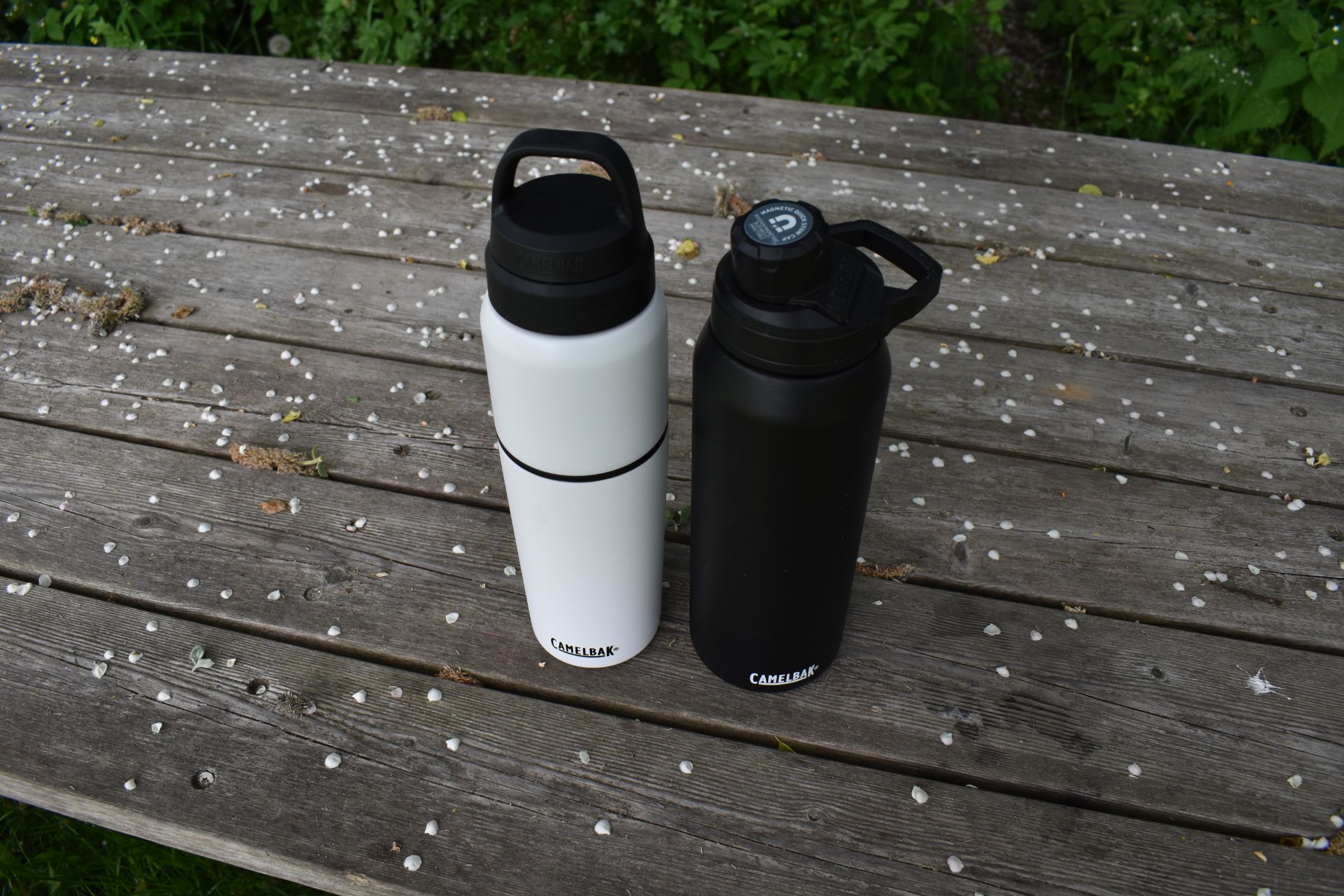
For hiking we recommend water bottles between 0.5 and 1 liters
For hiking, capacity is one of the most important considerations. Most insulated bottles suitable for the trail, range between 18 fl. oz. (0.5 liters) and 32 fl. oz. (1 liter). In our opinion, this is the optimal range.
Insulated bottles are relatively heavy due to their stainless steel double-wall construction. Because of this, most hikers carry one insulated bottle within easy reach—typically in the side pocket of a backpack—while storing additional water in lightweight plastic bottles or a hydration reservoir inside the pack. Once the insulated bottle is empty, it can simply be refilled from your backup supply.
We generally do not recommend going below 18 fl. oz. (0.5 L), as smaller bottles require frequent refilling and rarely provide enough water for sustained hiking. On the other hand, bottles larger than 32 fl. oz. (1 L) become bulky and heavy, especially once filled. Keep in mind that 1 liter of water weighs 1 kilogram (2.2 lb). A fully filled 1-liter insulated bottle can easily approach 1.5 kg (3.3 lb) total weight. Read why weight is important in our article Why hike lightweight.
For most day hikes, 24–32 fl. oz. (0.7–1 L) offers the best balance between capacity and practicality.
Weight
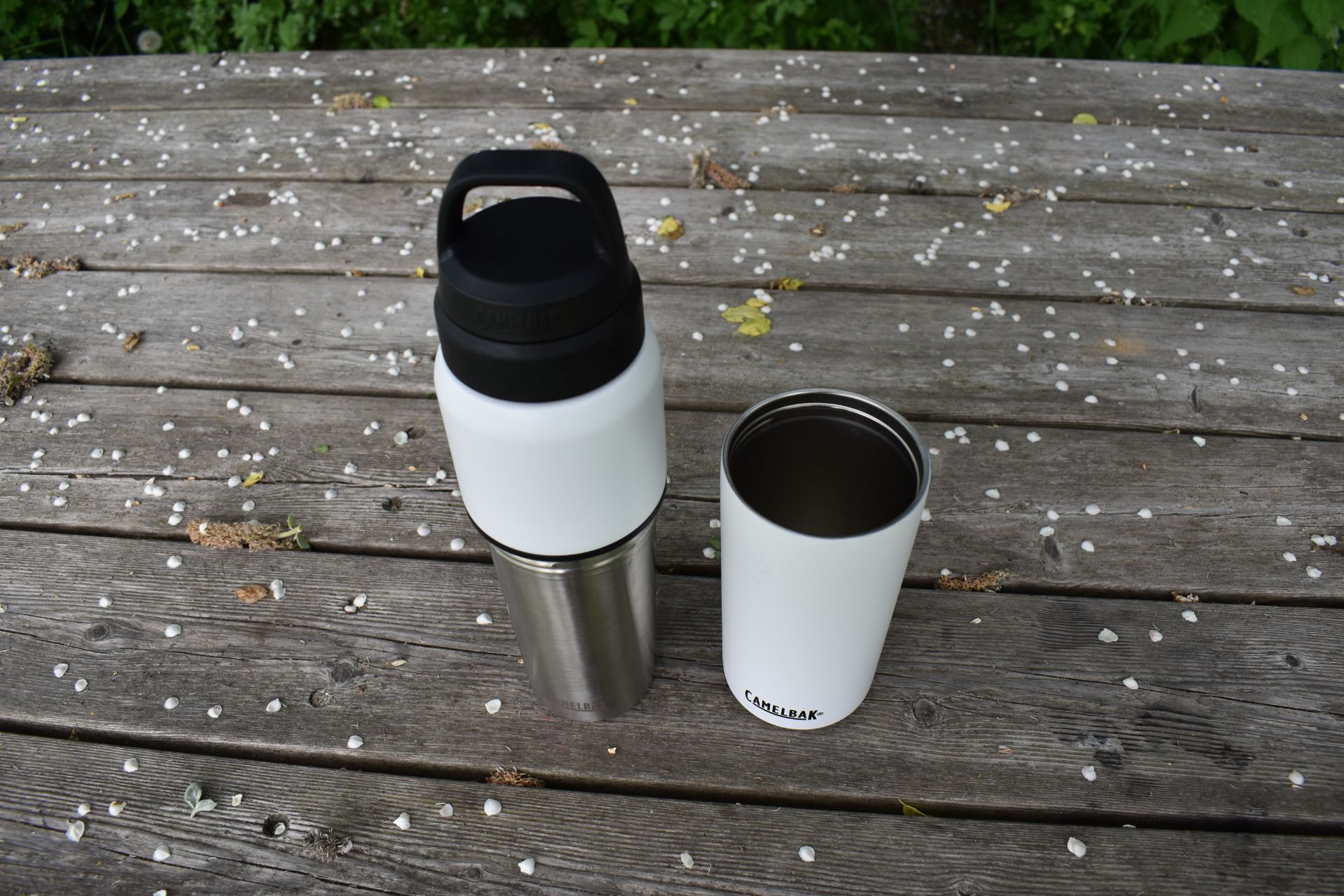
The lighter the bottle, the better
Weight matters on every hike. Even small increases can become noticeable over long distances or during steep ascents.
Empty insulated bottles typically weigh between 10 and 15 ounces (280–425 grams). Once filled with 1 liter (32 fl. oz.) of water, you are carrying roughly 1.3–1.5 kg (2.9–3.3 lb) in total.
The key question is whether insulation justifies the added weight. In hot conditions, having cold water several hours into your hike can significantly improve comfort and encourage proper hydration. In freezing conditions, insulation can prevent your water from turning into ice. In these scenarios, the extra weight is absolutely worth it.
That said, there is no reason to choose an unnecessarily heavy model. Look for a bottle that delivers strong insulation and durability without excessive bulk.
Insulation Performance
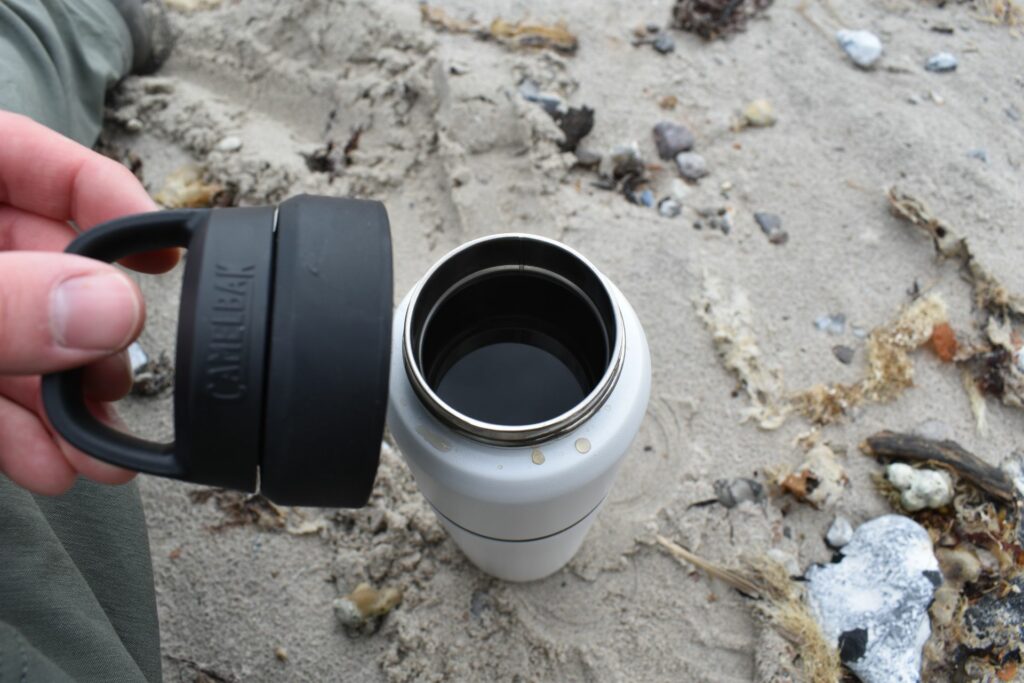
A good bottle keeps warm drinks warm for hours
Insulation is the primary reason to choose this type of bottle. High-quality insulated bottles use a double-wall vacuum construction. Two stainless steel walls are separated by a vacuum layer, dramatically reducing heat transfer through conduction and convection. This design allows cold drinks to stay cold for many hours and hot drinks to remain warm in winter conditions.
A well-designed insulated bottle should:
- Keep cold water cool throughout a full day hike
- Preserve ice for several hours in warm weather
- Keep tea, coffee, or soup warm during cold-weather hikes
Keep in mind that insulation performance depends on ambient temperature and how often the bottle is opened. Frequent opening releases cold or warm air, reducing overall efficiency. For hiking, reliable insulation is not just about comfort but it can help prevent dehydration in summer and keep fluids usable in winter.
Durability
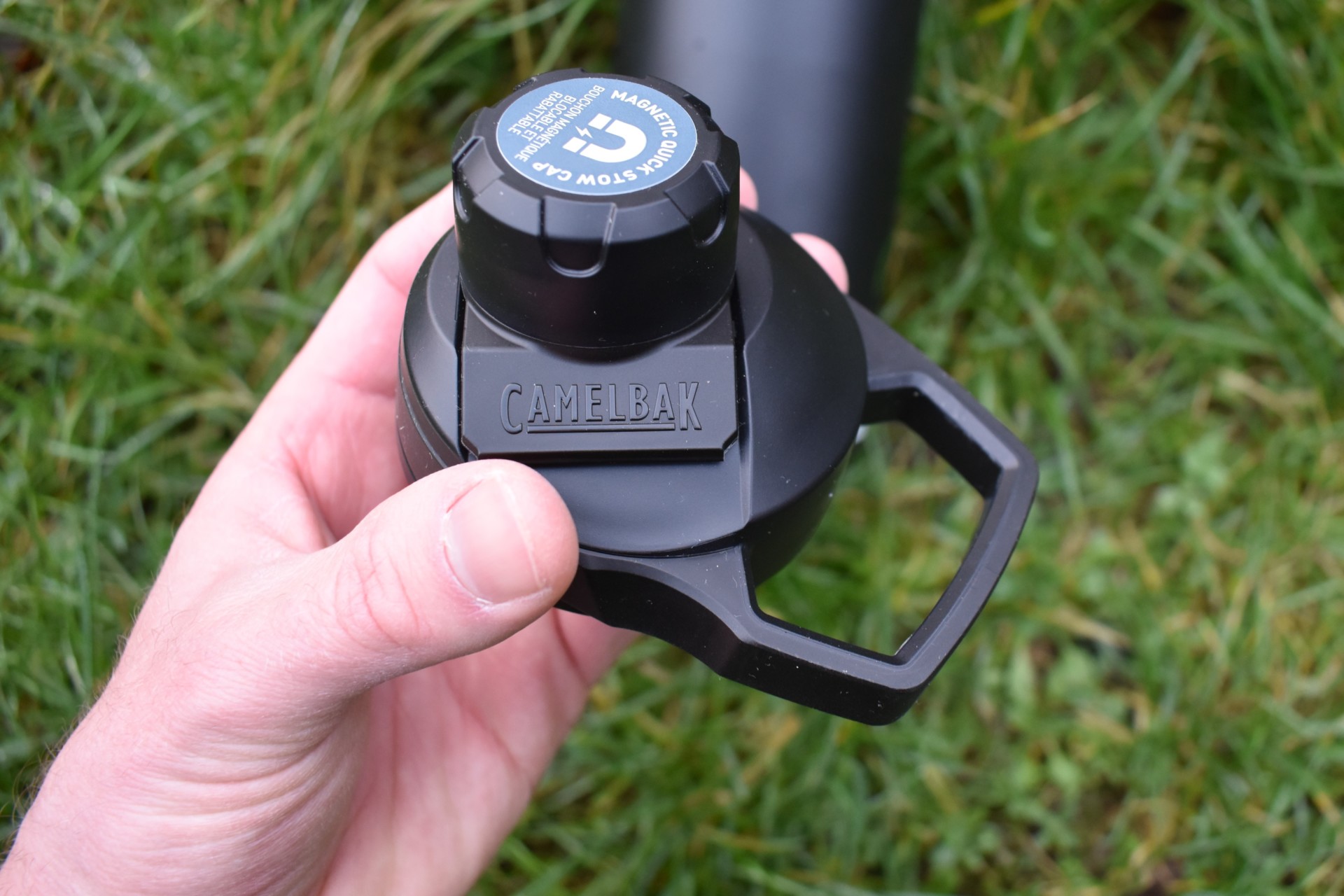
Small pieces are typically what causes issues in terms of durability
A hiking water bottle must withstand rough handling, drops on rocks, and constant movement in your backpack. Stainless steel bottles are highly durable. Instead of cracking like plastic, they typically dent, which rarely affects functionality. A solid bottle should survive repeated impacts without leaking or losing insulation performance.
Pay attention to:
- Steel thickness and overall build quality
- Durable powder coating that resists scratches
- Strong lid threads and sealing system
- Leak-proof performance
The lid is often the weakest point. Complex straw systems and flip mechanisms introduce more potential failure points. For demanding hikes, a simple screw cap with a reliable seal is often the most dependable solution.
Ergonomics and Pack Compatibility
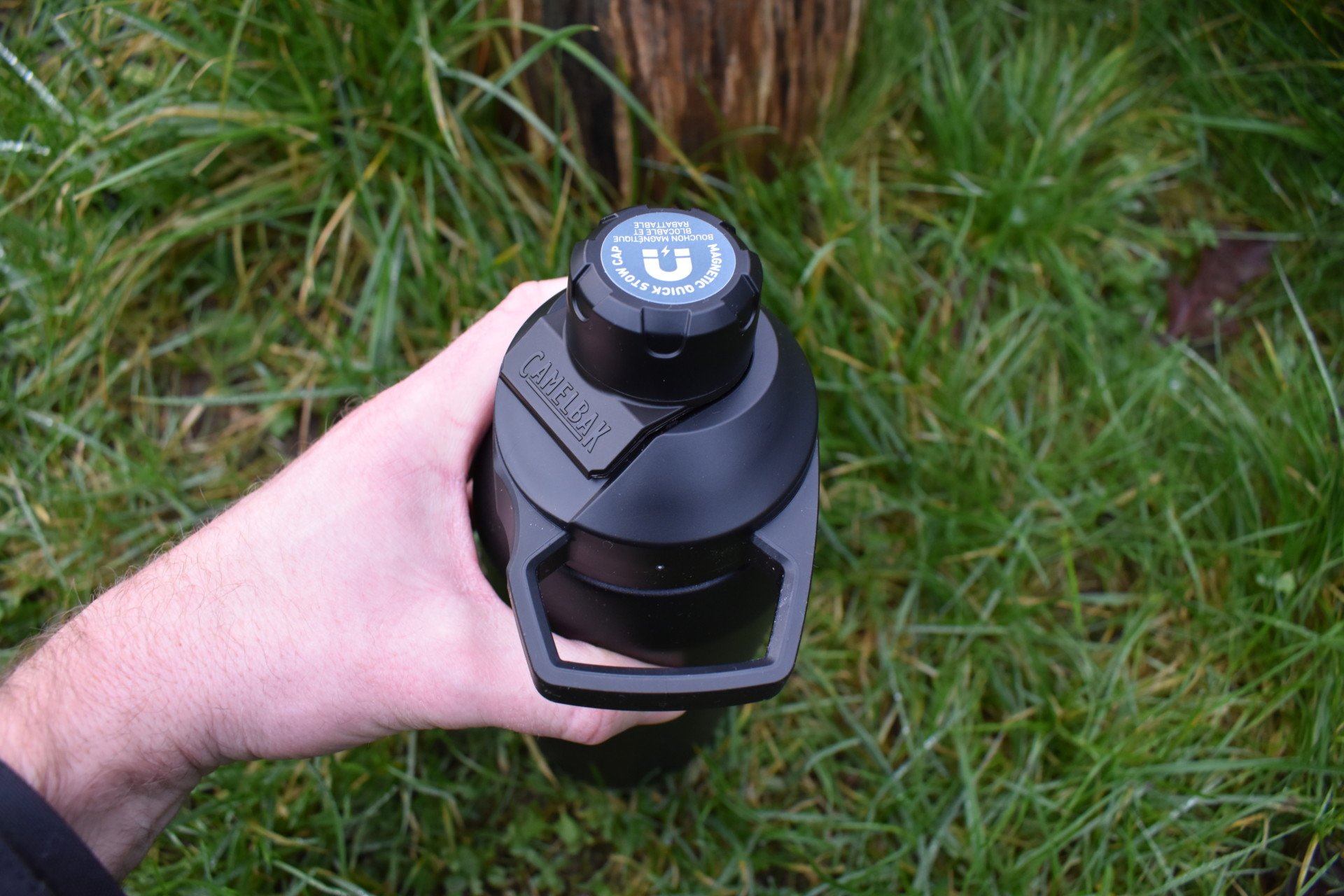
A water bottle should fit nicely in the hand
A bottle must be practical in real-world hiking conditions. For hiking use, consider:
- Does it fit securely in your backpack’s side pocket?
- Is it easy to grab while walking?
- Does it stay stable when placed on uneven ground?
- Is it comfortable to drink from?
Slim-profile bottles generally fit better in backpack side pockets. Wide 32 oz. (1 L) bottles can sometimes stretch the fabric to its limit, especially on smaller daypacks. Surface texture also matters. Powder-coated finishes provide better grip when your hands are sweaty, wet, or cold. Integrated carry loops or handles on the lid can make the bottle easier to transport around camp. If you also plan to use the bottle daily, check that it fits in a standard car cup holder. Versatility is part of what makes insulated bottles so appealing.
Opening and Lid Design
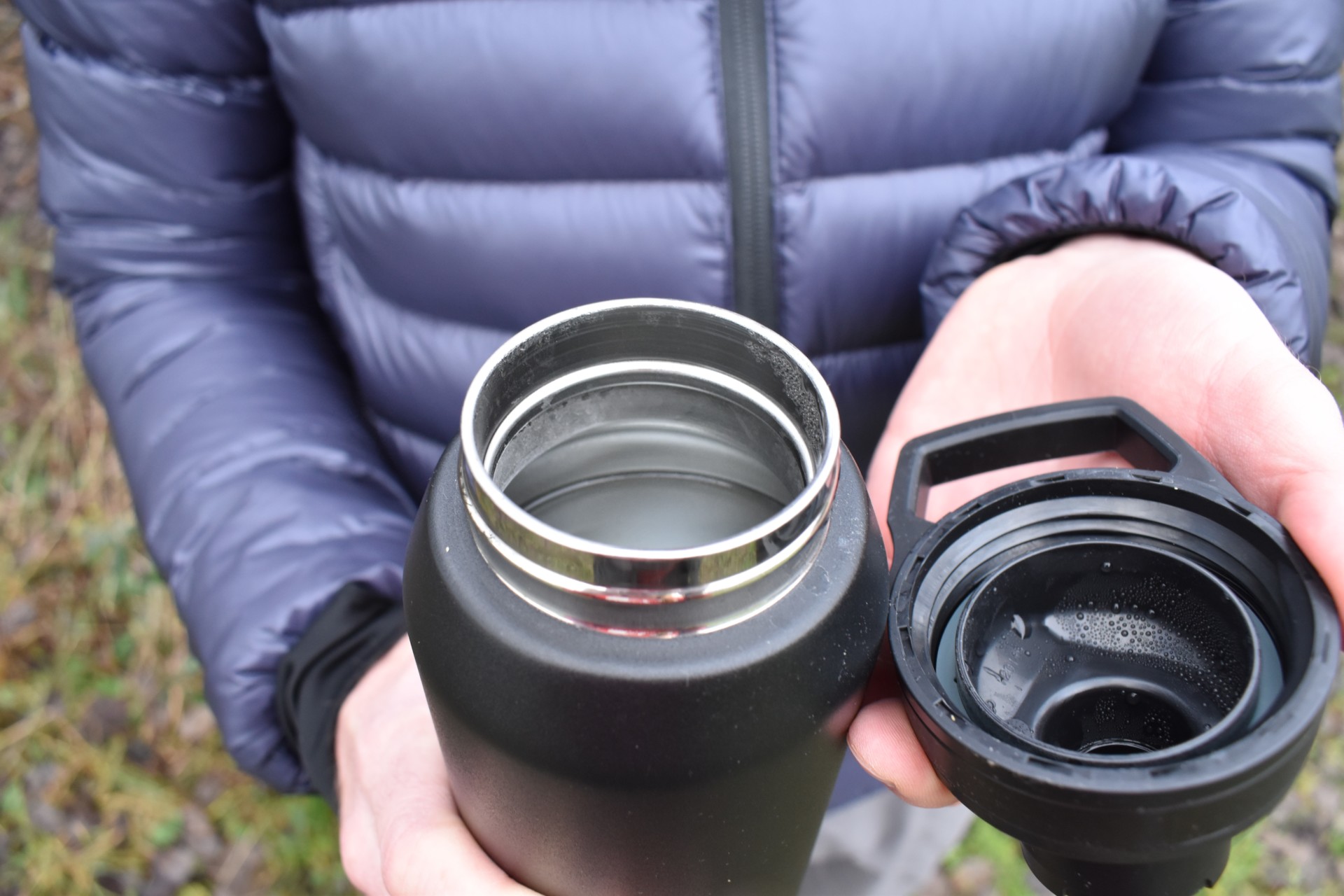
Wide opening has many benefits
The opening size affects refilling, cleaning, and drinking comfort. Wide-mouth bottles are the most versatile. They allow:
- Easy refilling from taps or streams
- Adding ice cubes
- Filling with powdered drink mixes or soup
- Thorough cleaning
However, wide openings can lead to spills when drinking on the move. Some bottles offer secondary caps or narrower spouts to improve drinkability. Straw lids and flip tops are convenient but add complexity, weight, and cleaning requirements. They can also introduce additional leak points. For serious hiking, many prefer a straightforward screw cap that is easy to operate even with gloves in cold conditions.
Sustainability and Long-Term Value
Reusable insulated bottles significantly reduce waste compared to disposable plastic bottles. Considering the enormous number of single-use bottles produced every year, switching to a durable reusable bottle is an easy way to reduce your environmental footprint. Although insulated stainless steel bottles are more expensive upfront, they can last for many years with proper care. In the long run, they are both cost-effective and environmentally responsible. If sustainability matters to you, look for brands that use recycled stainless steel or emphasize responsible production practices.
Cleaning and Maintenance
Regular cleaning is essential for hygiene and taste. Wide-mouth bottles are easier to clean thoroughly. Make sure you can access the bottom of the bottle with a brush and properly clean the threads and seals in the lid. Always let all components dry completely before reassembling to prevent mold or odor buildup. Straw systems require additional attention because narrow tubes can trap moisture and bacteria. A well-maintained bottle will last longer and ensure clean, fresh-tasting water on every hike.
5. Buyer’s Checklist
Before buying an insulated water bottle for hiking, go through this checklist and make sure the bottle matches how you actually plan to use it:
- Capacity:
24–32 fl. oz. (0.7–1 liter) is the sweet spot for most hikes. Large enough to minimize refills, but not so big that it becomes bulky or overly heavy in your pack. Remember: 1 liter of water weighs 1 kg (2.2 lb). - Weight (empty):
Check the empty weight (ideally around 280–425 g / 10–15 oz.). Insulation adds weight, so make sure the comfort of cold or hot drinks justifies the extra ounces for your typical conditions. - Insulation performance:
Double-wall vacuum construction is essential. The bottle should realistically keep water cold for a full day hike and prevent freezing in winter. Don’t rely on marketing claims—look for proven, consistent performance. - Material & construction:
High-quality stainless steel with solid welds and durable powder coating. The bottle should dent rather than crack and feel robust enough to handle drops on rocks. - Lid reliability:
Leak-proof seal is non-negotiable. Simple screw caps are often more reliable than complex straw systems. Make sure the lid can handle movement inside a backpack without leaking. - Opening size:
Wide enough for easy refilling, adding ice, and proper cleaning. If it’s too narrow, cleaning becomes difficult and hygiene suffers. - Ease of use with gloves:
If you hike in cold conditions, ensure the lid can be opened and closed with cold hands or gloves. - Backpack compatibility:
Slim enough to fit securely in your backpack’s side pocket without stretching it. Easy to grab while walking. Stability matters more than aesthetics. - Grip & surface finish:
Powder-coated exterior for better grip in wet or sweaty conditions. Smooth steel can be slippery. - Cleaning & maintenance:
Design should allow thorough cleaning of both bottle and lid. Fewer small parts mean fewer places for mold and bacteria to develop. - Versatility beyond hiking:
If you plan to use it daily, check cup holder compatibility and overall portability. The best insulated bottles work just as well on your commute as on the trail.
6. Questions and Answers
What does an insulated water bottle do?
An insulated water bottle consists of two “water bottles”. A smaller water bottle is placed into a bigger water bottle and the air in the gap between them is extracted to create vacuum. Vacuum has a thermal conductivity of 0 and therefore the beverage in an insulated water bottle stays warm or cold longer despite the conditions.
Are stainless steel water bottles safe?
Stainless steel water bottles are completely safe. However, note that not all metal bottles are safe. We recommend avoiding aluminum water bottles because aluminum should not be used for food grade products. Aluminum has been linked to diseases such as Alzheimer’s. We only listed stainless steel bottles in the selection above.