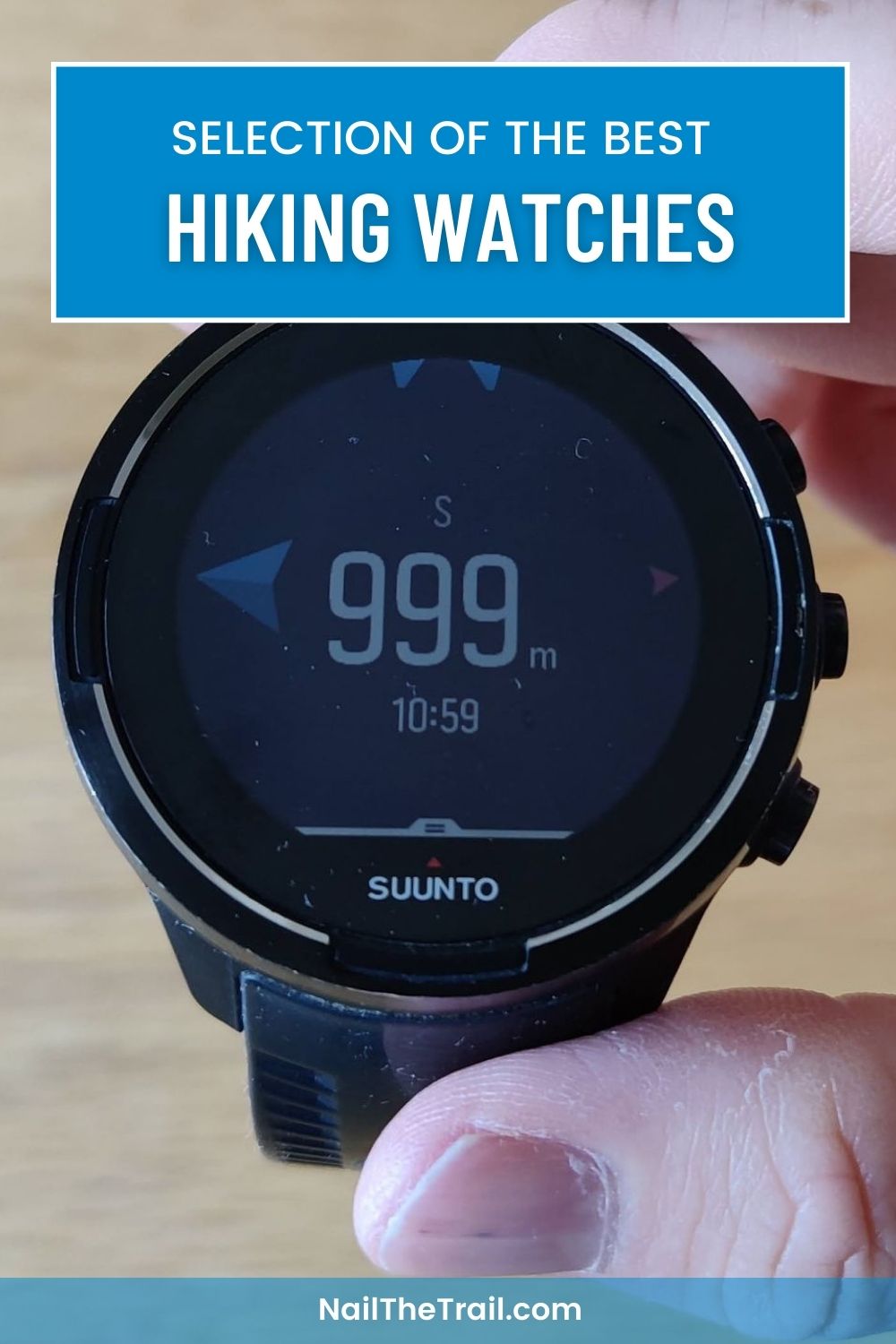
Best Hiking Watches
A hiking watch can make it easier to follow a route, monitor your ascent and keep track of the daylight remaining. The right choice depends on how you hike: detailed maps matter when navigating unfamiliar trails, while battery life becomes more important on trips with limited charging opportunities.
We favor GPS watches for route guidance and activity recording, but a traditional altimeter, barometer and compass (ABC) watch still has its place. The Suunto Core Alpha, for example, provides useful outdoor instruments without needing regular recharging. However, it cannot show your GPS position or record your route.
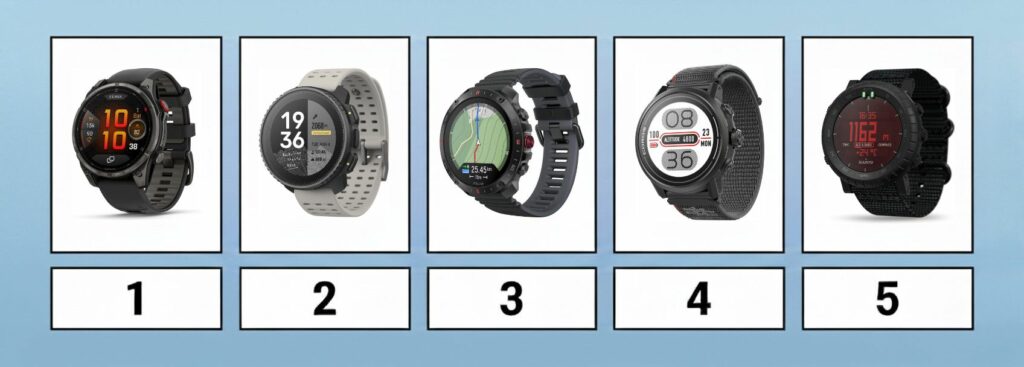
This selection compares five watches with different strengths. The Garmin Fenix 8 Pro offers the broadest combination of navigation and connected features, the Suunto Vertical Titanium Solar prioritizes endurance, and the Polar Grit X2 Pro combines outdoor navigation with detailed training and recovery tools. The smaller COROS APEX 2 is worth considering if the larger models feel excessive.
Our recommendations combine documented hands-on experience with outdoor watches and research into the specific models below. Each product entry identifies the basis of its assessment. See how we test and research and how we rate hiking watches for the details.
This article contains affiliate links. We may earn a commission from qualifying purchases at no extra cost to you.
1. Our Hiking Watch Picks
Best Hiking Watches
- Garmin Fenix 8 Pro – for advanced navigation and communication features
- Suunto Vertical Titanium Solar – for long GPS battery life
- Polar Grit X2 Pro – for hiking, training and recovery tracking
- COROS APEX 2 – for a smaller GPS watch with offline maps
- Suunto Core Alpha – for ABC functions without GPS
2. Comparison of Hiking Watches

| Feature/Product | Garmin Fenix 8X PRO | Suunto Vertical Titanium Solar | Polar Grit X2 PRO | Coros Apex 2 | Suunto Core Alpha |
|---|---|---|---|---|---|
| Weight | 3.17 oz. | 2.61 oz. | 2.78 oz. | 1.9 oz. | 2.36 oz. |
| Weight (Metric) | 90 g | 74 g | 79 g | 53 g with silicone band | 67 g |
| Case Size | 2.0 x 2.0 x 0.6 in. | 1.9 x 1.9 x 0.5 in. | 1.9 x 1.9 x 0.5 in. | 1.7 x 1.7 x 0.5 in. | 1.9 x 1.9 x 0.5 in. |
| Case Size (Metric) | 5.1 x 5.1 x 1.6 cm | 4.9 x 4.9 x 1.4 cm | 4.9 x 4.9 x 1.3 cm | 4.3 x 4.3 x 1.3 cm | 4.9 x 4.9 x 1.5 cm |
| GPS | Yes + GLONASS & Galileo & BeiDou | Yes + GLONASS & Galileo & BeiDou & QZSS | Yes + GLONASS & Galileo & BeiDou & QZSS | Yes + QZSS, GLONASS, Galileo & BeiDou | No |
| Display Type | AMOLED or MicroLED | Color Touch Screen | AMOLED Color Touch Screen | Color Touch Screen | Matrix |
| Glass Material | Sapphire Glass | Sapphire Glass | Sapphire Glass | Sapphire Glass | Mineral Crystal |
| Strap Material | Silicone | Silicone | Silicone | Silicone or Nylon | Silicone |
| Water Resistance | 100 m | 100 m | 100 m | 100 m | 30 m |
| Battery | Rechargeable lithium-ion | Rechargeable lithium-ion | Rechargeable lithium-ion | Rechargeable lithium-ion | CR2032 |
| Battery Life | Up to 27 days in smartwatch time mode | Up to 60 days in smartwatch time mode | Up to 10 days in smartwatch time mode | Up to 13 days in smartwatch time mode | 12 months with normal use |
| Altimeter | Yes (GPS and Barometric) | Yes (GPS and Barometric) | Yes (GPS and Barometric) | Yes (GPS and Barometric) | Yes (Barometric) |
| Barometer | Yes | Yes | Yes | Yes | Yes |
| Thermometer | Yes | Yes | Yes | Yes | Yes |
| Compass | Yes | Yes | Yes | Yes | Yes |
| Sunrise and Sunset Times | Yes | Yes | Yes | Yes | Yes |
| Storm Alarm | Yes | Yes | No | Yes | Yes |
| Bluetooth | Yes | Yes | Yes | Yes | No |
| Smartphone Notifications | Yes | Yes | Yes | Yes | No |
| Vibration Alerts | Yes | Yes | Yes | Yes | No |
| Heart Rate Belt Support | Yes | Yes | Yes | Yes | No |
| Wrist Heart Rate | Yes | Yes | Yes | Yes | No |
| GPS Navigation | Yes | Yes | Yes | Yes | No |
| GPS Tracking | Yes | Yes | Yes | Yes | No |
| Track Back | Yes | Yes | Yes | Yes | No |
| Planning Software | Garmin Connect | Suunto App | Polar Flow | Coros App | None |
| Mobile App | Yes (Garmin Connect) | Yes (Suunto App) | Yes (Polar Flow) | Yes (Coros App) | None |
3. The Selection
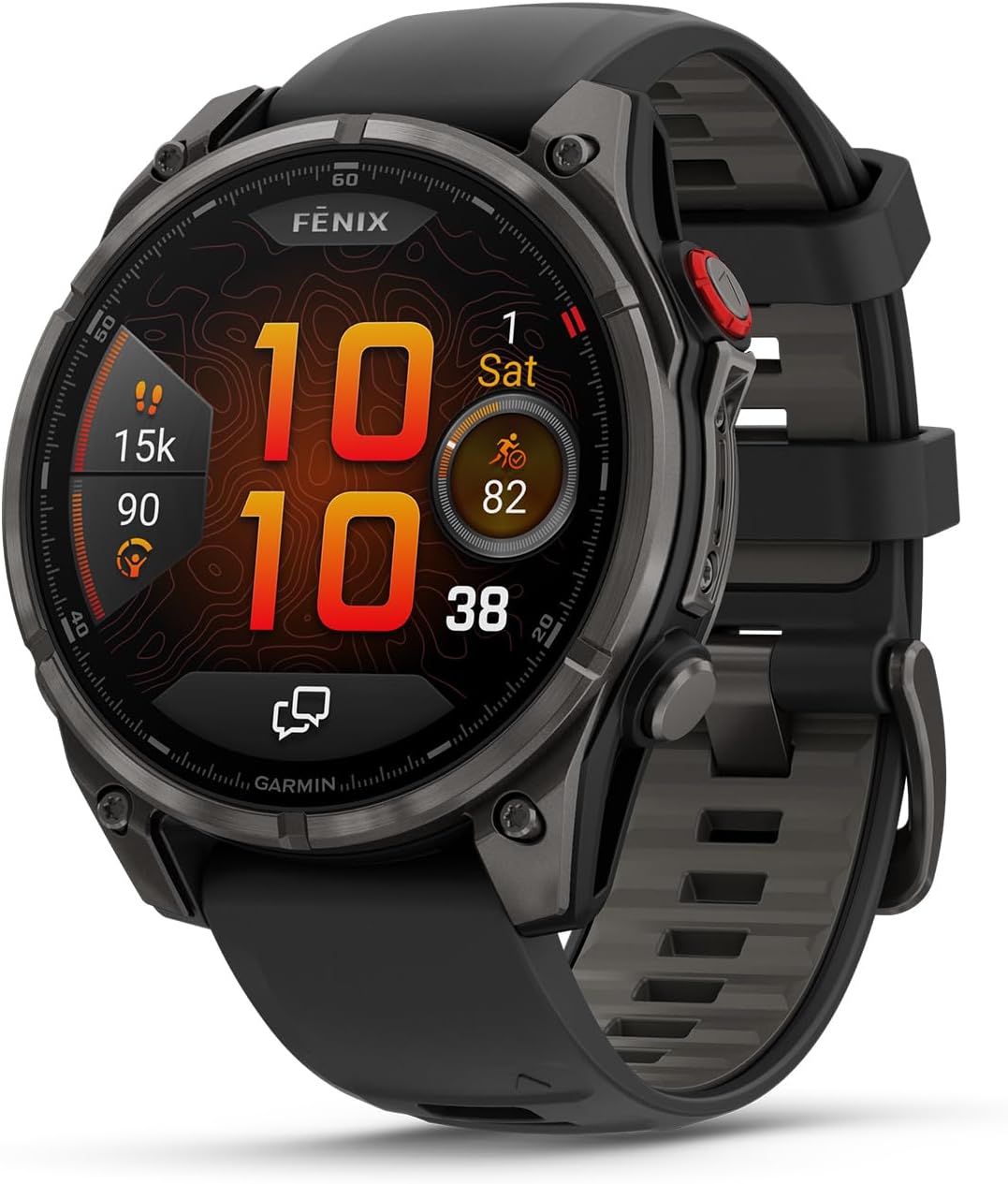
Garmin Fenix 8 Pro
Garmin Fenix 8 Pro
Our pick for advanced navigation and communication
Best for:
- Hikers who want maps with on-watch route calculation
- Users who want supported satellite messaging and SOS features
- Multisport athletes who also want extensive connected features
We would choose the Fenix 8 Pro when navigation and connected features take priority over simplicity. We particularly like that it can calculate hiking routes directly on the watch using built-in maps, so you don’t always need to plan your route on a phone beforehand. That gives it an advantage over the other watches here when you want more flexibility in how you navigate. Multi-band GNSS, an altimeter, barometer and compass complete the outdoor toolkit.
We also see its built-in LTE and satellite communication as a useful reason to consider it over the Vertical or Grit X2 Pro. Satellite connectivity supports text messages, check-ins and interactive SOS, but voice messages and calls require a phone connection or the watch’s LTE connection. An active inReach plan is required for the watch’s LTE and satellite services, including SOS. Before relying on those features, check Garmin’s requirements and coverage information for your destination.
Of the available versions, we would pick AMOLED for hiking. Garmin lists up to 30 hours of all-systems plus multi-band recording for the 47 mm AMOLED model and 53 hours for the 51 mm version, using gesture display settings. Their smartwatch estimates are up to 15 and 27 days respectively. The 51 mm MicroLED model is another option, but its advertised smartwatch endurance drops to 10 days.
Our main reservation is that many hikers will not need everything the Fenix offers. We would favor the Vertical for longer GPS recording between charges and the APEX 2 for a smaller watch. If you will use Garmin’s routing tools, training features and communication options, however, it is our most versatile pick in this selection.
Performance Score
The Advantages
- Routable TopoActive maps
- Multi-band GNSS
- Satellite text messaging and SOS with a suitable plan and coverage
- LTE communication and extensive connected features
The Considerations
- Subscription needed for LTE and satellite services
- Satellite coverage and sky visibility limit communication
- Voice messages and calls do not work over satellite
- Battery life varies substantially by size and display
Video

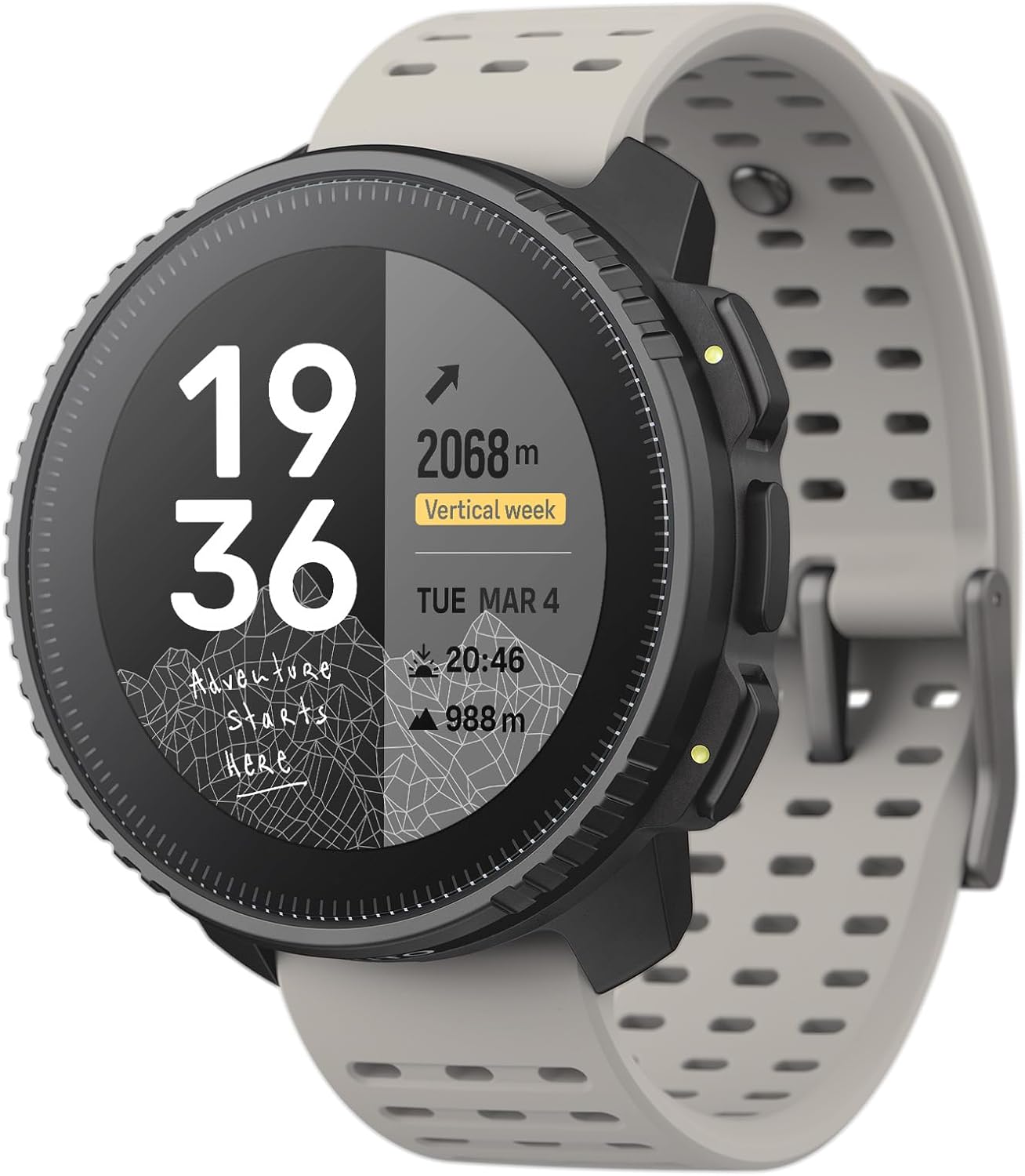
Suunto Vertical Titanium Solar
Suunto Vertical Titanium Solar
Our pick for long GPS battery life
Best for:
- Backpackers who prioritize time between charges
- Hikers who want offline maps and dual-band GNSS
- Users comfortable with a large 49 mm watch
We would put the original Vertical Titanium Solar at the top of our shortlist for a multiday hike where charging opportunities are limited. Suunto lists up to 65 hours in its most accurate multi-band mode without solar assistance, or up to 90 hours with sufficient sunlight. Those estimates exceed Garmin’s published multi-band figures for both Fenix 8 Pro AMOLED sizes, although the manufacturers use different test conditions.
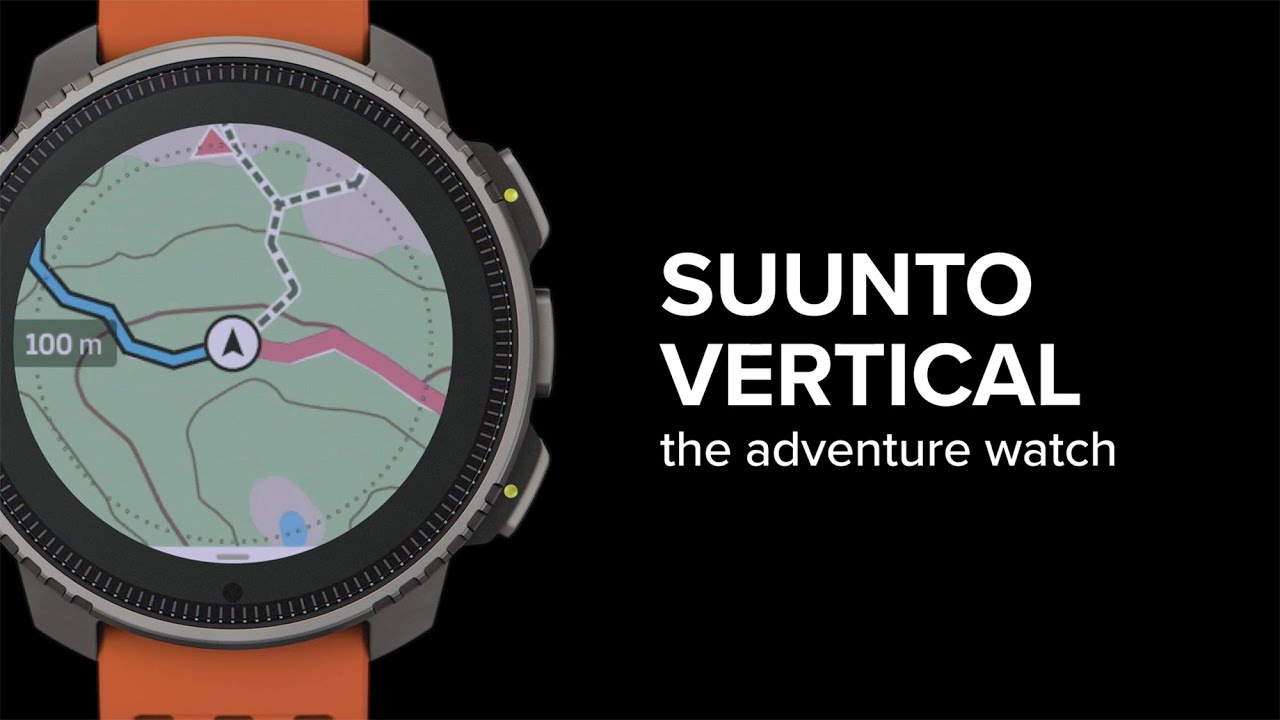
We like the balance of materials and weight: a titanium bezel and sapphire lens in a 74 g watch. The 49 mm case is still large, but the bigger screen gives maps more room than on the APEX 2. Offline maps show the terrain around a saved route, while the Suunto app handles route planning and syncing. Download the relevant map areas before heading out.
For us, the Vertical’s appeal is the combination of maps, dual-band GNSS and long advertised endurance. We would choose it over the Garmin if those features mattered more than payments, music storage or communication from the wrist. It has no built-in LTE or satellite messaging, so the Fenix remains the more complete option for connected features.
We would also plan around the non-solar battery estimate and treat sunlight as extra margin. That makes more sense than relying on ideal exposure throughout a trip. The much longer Tour-mode estimate comes with reduced tracking capabilities and wrist heart rate switched off; for detailed route recording, we would prioritize the more capable recording modes.
Performance Score
The Advantages
- Long advertised battery life in multi-band mode
- Solar assistance can extend runtime
- Offline maps and route guidance
- Titanium bezel and sapphire lens
The Considerations
- Large 49 mm case
- Solar benefit depends on light exposure
- No built-in LTE or satellite messaging
- Fewer connected features than Garmin
Video
Polar Grit X2 Pro
Polar Grit X2 Pro
Our pick for hiking combined with training and recovery tracking
Best for:
- Hikers who also follow a structured training plan
- Users who value Polar Flow and recovery tools
- People who want an AMOLED display with offline maps
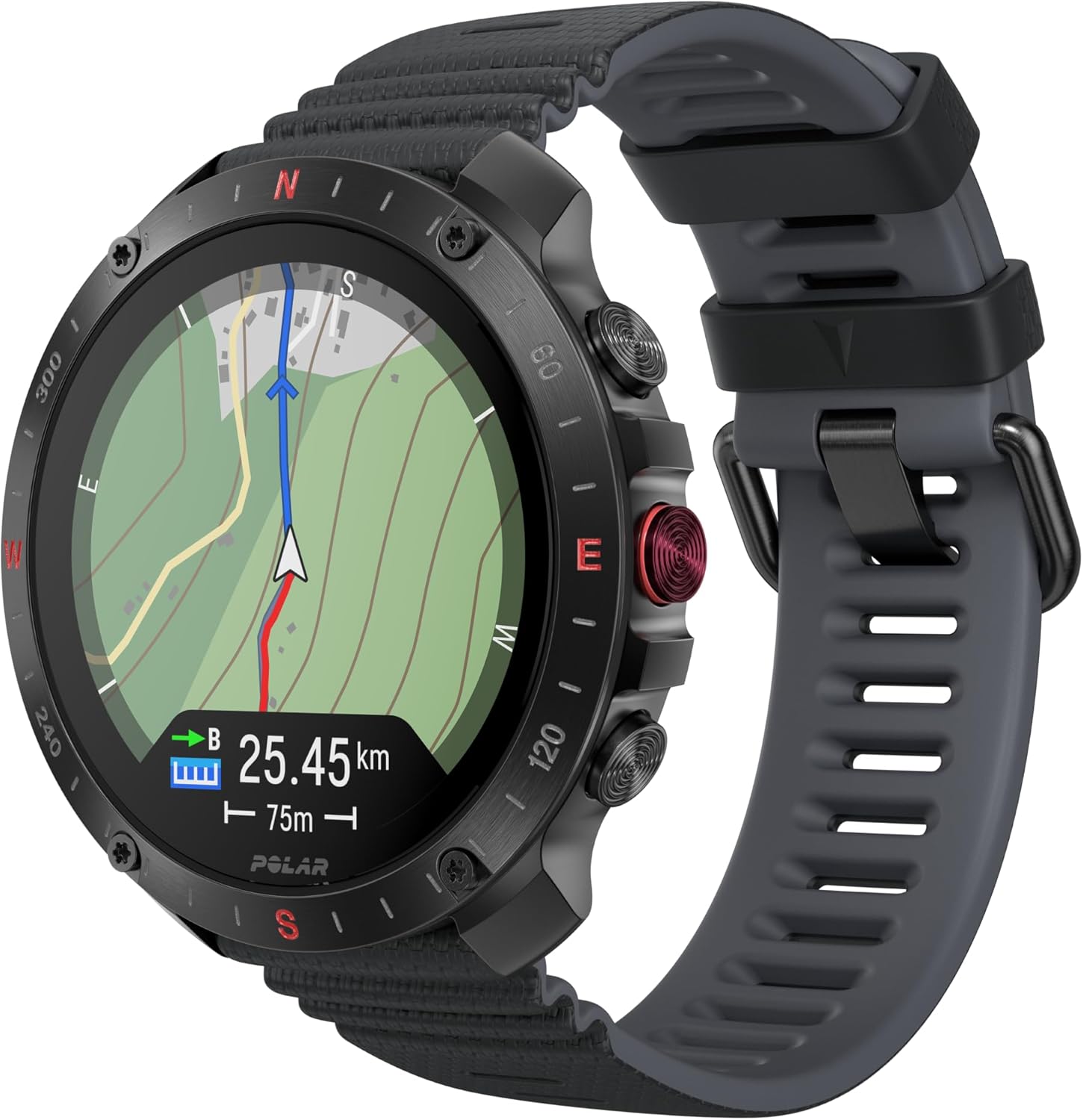
We would recommend the Grit X2 Pro to hikers who want their watch to support a structured training routine as well as weekend trips. Its 1.39-inch AMOLED display, sapphire lens and dual-frequency GNSS give it the outdoor features we look for, while offline maps, route guidance and track-back functions support navigation along a planned route.
Our main reason for choosing the Polar over the Vertical or APEX 2 would be Polar Flow and its training, sleep and recovery tools. We see more value in that combination for someone who runs or cycles throughout the week than for a hiker interested mainly in navigation. The watch also includes wrist ECG and overnight skin-temperature features, although those additions do not establish superior heart-rate accuracy or replace medical assessment.
Battery life is where we would lean toward the Vertical for longer trips. Polar’s product page advertises up to 43 hours in Performance mode and 140 hours in Eco mode, while its detailed support guidance lists 40 and 110 hours. We use the more conservative 40-hour figure with dual-frequency GPS and optical heart rate, with the always-on display disabled.
Compared with the Garmin, we would miss onboard music storage, contactless payments and built-in satellite messaging. Those omissions matter less if your priority is training and recovery. Our choice would therefore come down to the ecosystem: Polar for its training-focused approach, Garmin for the broader combination of navigation and connected features.
Performance Score
The Advantages
- AMOLED display with sapphire lens
- Offline maps and dual-frequency GNSS
- Detailed training and recovery tools
- Polar Flow ecosystem
The Considerations
- Large case compared with the APEX 2
- Shorter advertised high-accuracy runtime than the Vertical
- No onboard music storage or contactless payments
- Official battery estimates differ between product and support pages

Video

COROS APEX 2
COROS APEX 2
Our compact GPS option with offline maps
Best for:
- Hikers who prefer a smaller watch
- Trail runners who want maps and training tools
- Buyers comparing discounted outdoor watches
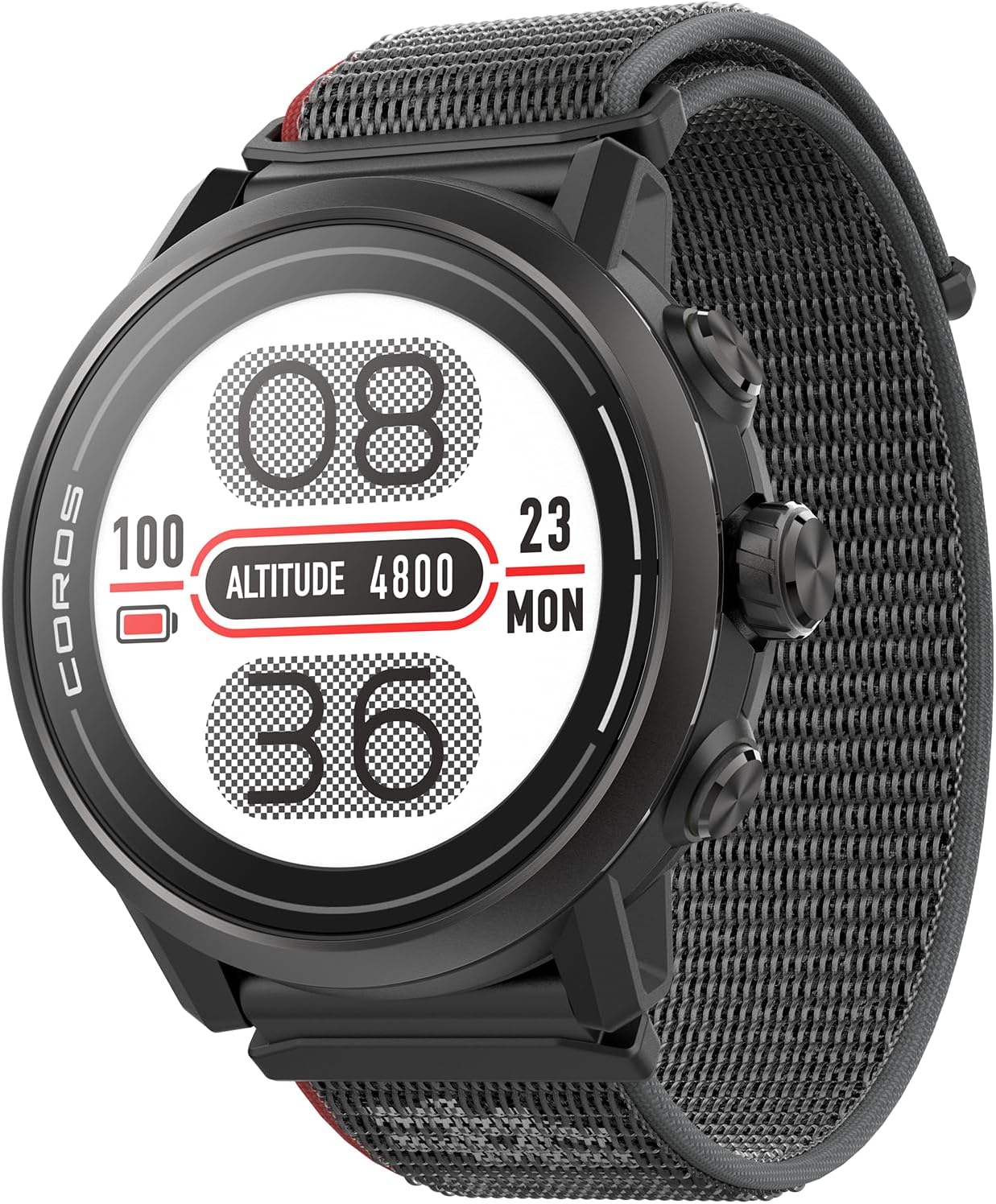
We like the APEX 2 as an alternative for hikers who find the other GPS watches in this selection too large. Its smaller case and 1.2-inch display offer a more compact package, while sapphire glass and a titanium bezel retain the materials we expect from an outdoor watch.
We particularly appreciate that COROS includes downloadable offline maps rather than limiting the watch to a breadcrumb line. The compromise is screen space: there is less room to inspect the surrounding terrain than on the Vertical or Grit X2 Pro. We would choose one of those larger watches if frequent map checks were our main priority, but the APEX 2 remains an appealing option for following a prepared route on a smaller device.
The distinction between the APEX 2 and APEX 2 Pro is important here. The standard model supports multiple satellite systems but does not have dual-frequency GNSS. COROS lists up to 40 hours in Standard GPS mode and 25 hours with All Systems On, so we would use the latter figure when planning around its most capable satellite mode. The 40-hour estimate is not directly comparable with the Vertical’s multi-band figure.
Our recommendation depends partly on the price. At a worthwhile discount, we would consider the APEX 2 for its combination of maps, training tools and compact size. We would look elsewhere if on-watch routing, communication features or dual-band positioning were essential. Its 5 ATM water-resistance rating is also lower than those of the Garmin, Vertical and Polar.
Performance Score
The Advantages
- Smaller case than the other GPS picks
- Offline maps and route guidance
- Sapphire lens and titanium bezel
- Training tools in the COROS app
The Considerations
- No dual-frequency GNSS on the standard APEX 2
- Small screen provides less space for maps
- 25-hour estimate with All Systems On
- No built-in LTE or satellite messaging
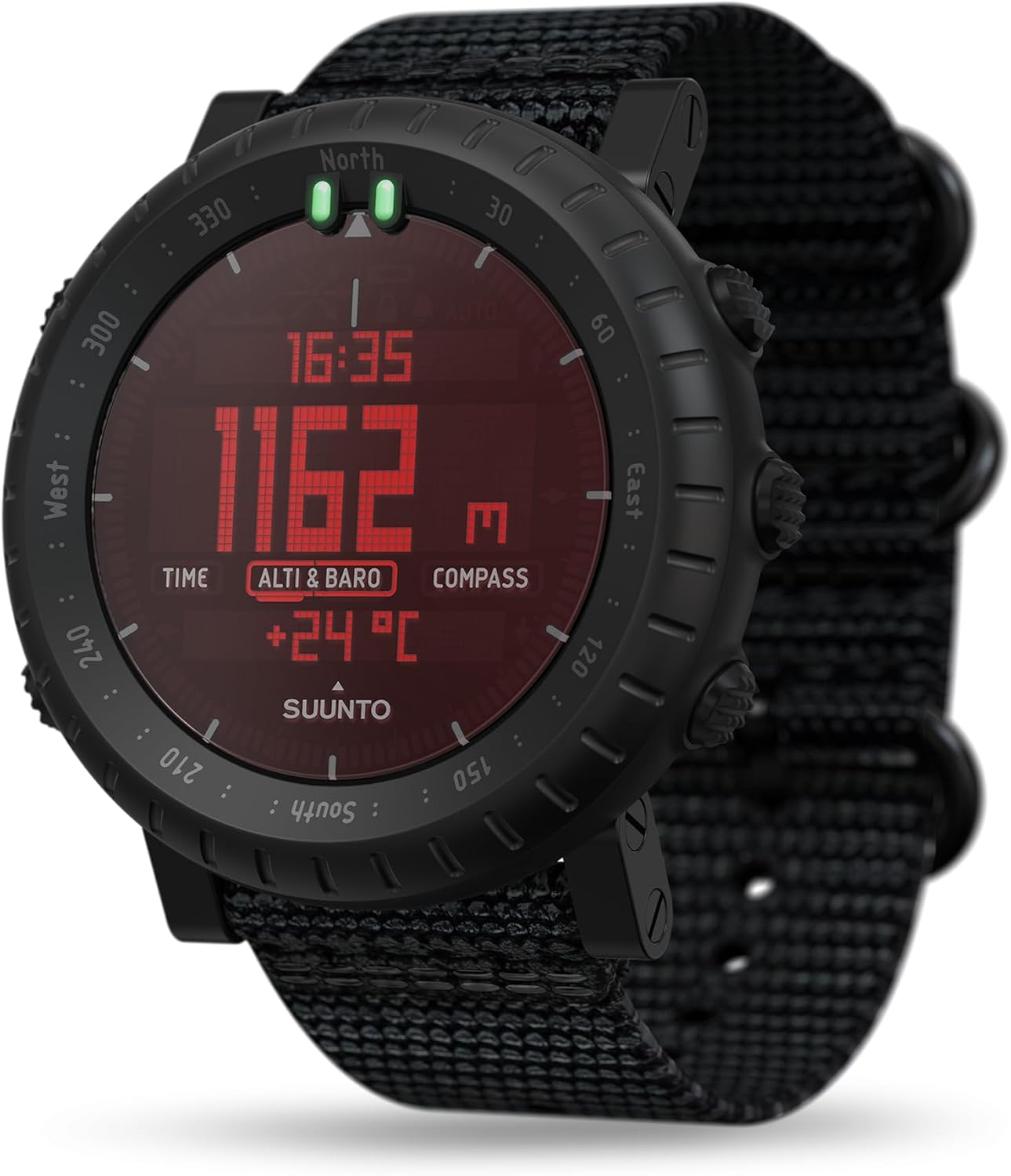
Suunto Core Alpha
Suunto Core Alpha
Our non-GPS option for traditional outdoor instruments
Best for:
- Hikers who do not need GPS recording on their wrist
- Users who prefer a replaceable battery
- People seeking an ABC watch to complement other navigation tools
We included the Core Alpha for hikers who want traditional outdoor instruments without another device to recharge regularly. Its altimeter, barometer and compass provide elevation, pressure and direction information, while the storm alarm and sunrise/sunset information add useful context. It does not provide GPS positioning, maps or route recording.
What appeals to us most is the replaceable CR2032 battery. Suunto specifies approximately 12 months in time mode, although frequent sensor and backlight use can shorten that. We also like the straightforward approach of physical controls, a red backlight and a textile strap, with no phone pairing required.
We would not choose it simply to get a smaller or more protective watch. At 49.5 mm across, its case is slightly wider than the Vertical’s, and it uses mineral crystal rather than sapphire. Its 30 m water-resistance rating is also lower than those of the four GPS models.
For us, the Core Alpha makes sense as a companion to a map and other navigation tools. We would choose the APEX 2 or Vertical instead if following routes on the wrist were important. If your priorities are ABC functions and freedom from routine charging, however, the Core Alpha offers a clear reason to skip the more complicated GPS options.
Performance Score
The Advantages
- Replaceable CR2032 battery
- Altimeter, barometer and compass
- Storm alarm and sunrise/sunset information
- No phone pairing required
The Considerations
- No GPS, maps or route recording
- No heart-rate monitoring or phone connectivity
- Large case despite its simpler functions
- Mineral lens and lower water resistance than the GPS picks

4. How We Test and Research Hiking Watches
Our hands-on background includes daily use of the Suunto 9 Baro for hiking, running and other activities, plus comparative GPS testing of the Suunto 9 and Ambit 2. Those reviews document practical observations about route recording, navigation, controls and everyday use.
That experience helps us identify useful features and potential limitations, but testing an earlier watch does not establish the performance of a newer model. The five product assessments in this version of the guide are research-based; they are not presented as a controlled, hands-on comparison of these five watches.
For this update, we checked manufacturer specifications, user manuals and support documents, paying particular attention to model variants, navigation capabilities and battery settings. When sources disagree, as they do for the Polar’s battery estimates, we explain the difference rather than treating one number as a measured result.
The questions guiding our assessment are practical:
- Navigation: Can the watch display offline maps, follow an imported route and help identify a missed turn? Can it calculate routes on the watch?
- Battery: What is the advertised runtime in the most capable continuous recording mode, and which functions must be disabled to extend it?
- Outdoor use: What do the lens, water-resistance rating, screen size and physical controls offer?
- Training and connectivity: Which features work independently, and which need a phone, external sensor or subscription?
GPS and optical heart-rate accuracy require direct comparison under known conditions. We do not turn the presence of dual-band GNSS or a newer heart-rate sensor into a claim that a watch measured more accurately in our testing.
5. How We Rate Hiking Watches
The ratings in this guide are editorial feature assessments out of five. They describe the capabilities and trade-offs supported by the available documentation. They are not laboratory scores or measurements of GPS accuracy, heart-rate accuracy or long-term reliability.
For the four GPS watches, we use the following criteria:
- Navigation features: Offline maps, route guidance, positioning options and on-watch routing. The Garmin leads this selection for its routable maps; the Vertical and Polar combine maps with dual-band GNSS, while the standard APEX 2 has a smaller display and no dual-band mode.
- GPS battery endurance: Manufacturer-rated runtime in the highest-capability continuous GNSS mode used in this comparison, without solar assistance. Our bands are 5/5 for 60 hours or more, 4/5 for 40–59 hours, 3/5 for 24–39 hours, 2/5 for 12–23 hours and 1/5 for less than 12 hours. Always-on display is disabled where relevant. These are advertised figures under different test conditions, so the score is a planning aid, not proof of comparative real-world endurance.
- Outdoor hardware: Lens material, water resistance, outdoor instruments and useful physical features. In this selection, sapphire and a 100 m water-resistance rating earn 4/5; Garmin’s additional built-in LED flashlight raises its score to 5/5. The APEX 2 receives 3/5 for sapphire with 5 ATM water resistance, and the Core Alpha receives 2/5 for mineral crystal with 30 m water resistance. These ratings do not measure impact resistance or comfort.
- Training tools: The breadth of structured workouts, training-load analysis and recovery features. Garmin and Polar receive 5/5 for their extensive toolsets; Suunto and COROS receive 4/5. This rates feature coverage, not the accuracy of the underlying physiological estimates.
- Connected features: Phone integration, sensor connections, map transfers, music, payments and independent communication. Garmin receives 5/5 for the broadest set. Suunto and COROS receive 3/5 for a narrower set with wireless map downloads; Polar receives 2/5 for its more limited connected extras. Required subscriptions remain a consideration.
For the Garmin, the displayed battery score applies to the 47 mm AMOLED model. The 51 mm AMOLED version would receive 4/5 using its published 53-hour multi-band estimate. The Polar score uses its conservative 40-hour support figure, the Vertical uses 65 hours without solar assistance, and the APEX 2 uses 25 hours with All Systems On.
The Core Alpha is assessed separately for its ABC role. Its 4/5 for ABC feature coverage reflects its altimeter, barometer, compass, storm alarm and daylight information. Its 5/5 for battery independence reflects the replaceable cell and year-long time-mode estimate. GPS, training and connectivity scores are not applicable.
We show category scores separately rather than combining them into one overall ranking. Price, fit and intended use influence the recommendation: a higher feature score does not automatically make a watch the better purchase.
6. Hiking Watch Buying Advice – What Matters?
GPS Navigation and Offline Maps
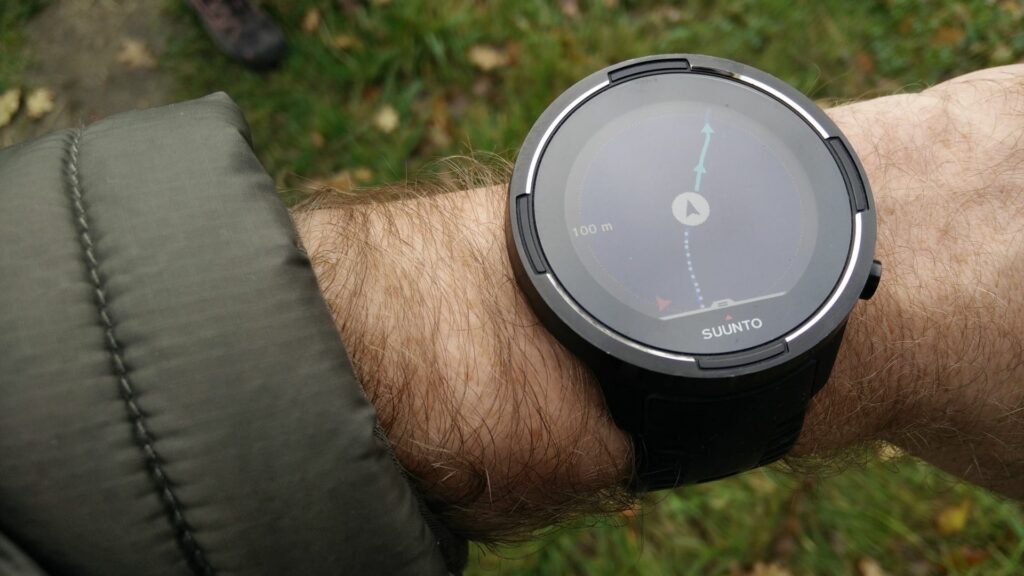
GPS watches can display your position relative to a saved route
GPS reception does not require mobile coverage, but routes and maps need to be loaded before you rely on them offline. A breadcrumb trail shows a route line; an offline map adds surrounding terrain and paths. Routable mapping goes further by allowing the watch to calculate a route using its map data.
All four GPS watches in this selection support offline maps. The Core Alpha does not. The Garmin stands out for on-watch routing, while the smaller APEX 2 provides less screen space for inspecting the surrounding terrain.
Multi-system GNSS and dual-frequency GNSS are different features. The former uses more than one satellite constellation; the latter receives signals on two frequency bands. The Fenix 8 Pro, Vertical and Grit X2 Pro support dual-frequency operation. The standard APEX 2 does not. Hardware alone does not guarantee an accurate track in every environment.
Check that your route and map areas are available before departure. For unfamiliar terrain, we would also carry an appropriate backup map and compass and know how to use them.
Altimeter, Barometer and Compass
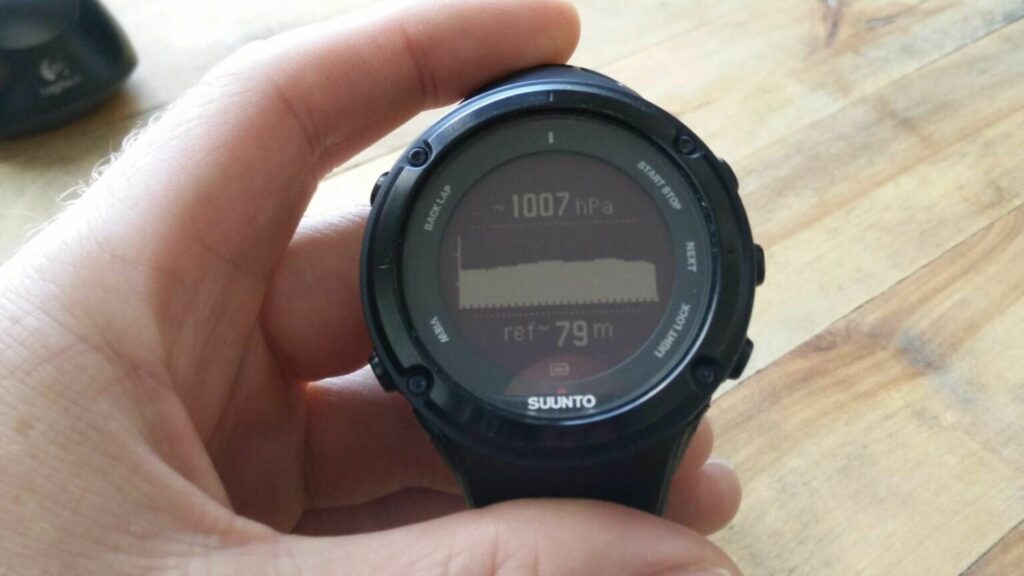
Altimeter, barometer and compass functions provide useful outdoor information
Altimeter
A barometric altimeter estimates elevation from air pressure. It can provide useful elevation changes, but weather-related pressure changes can cause readings to drift. Calibration against a known elevation, or automatic calibration where supported, helps reduce that error.
GPS altitude is not automatically more accurate than a calibrated barometric altimeter. Watches may combine both sources. Check the calibration procedure for your model, especially before using elevation to help identify your position.
Barometer
Pressure trends can provide clues about changing weather, but they are not a reliable forecast on their own. Gaining altitude also lowers the pressure around you, so movement and weather need to be distinguished.
Some watches include a storm alarm, but not every model in this selection does. A lack of an alarm does not mean conditions are safe. Use forecasts and observations alongside the watch. Our guide to using a Suunto barometer explains the feature in more detail.
Compass
A watch compass helps you check direction and follow a bearing. Calibrate it as instructed, account for magnetic declination when needed and keep it away from magnetic interference. A direction reading alone cannot tell you where you are on a map.
Battery Life and Solar Assistance
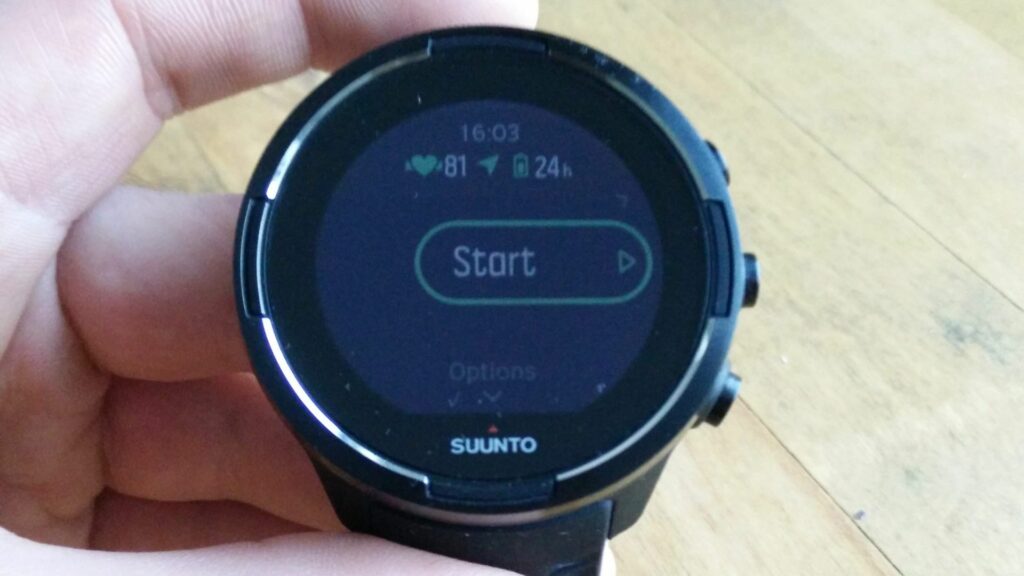
GPS recording consumes more power than ordinary watch use
Smartwatch battery life is a poor guide to how long a watch will record a hike. Compare continuous recording figures, then check whether they refer to GPS-only, all-systems or multi-band operation. An economy mode may extend runtime by recording less often or disabling sensors.
Display settings, map use, temperature, music and communication features can affect endurance. Plan charging around the functions you will actually use and allow a reserve rather than expecting the advertised maximum.
Solar assistance can help, but a sleeve, forest canopy or overcast weather can reduce its contribution. We would carry a compatible charging cable and sufficient power for a long trip instead of depending on sunlight alone. The Core Alpha avoids routine charging but still needs a fresh battery when its cell runs low.
Display, Size and Controls
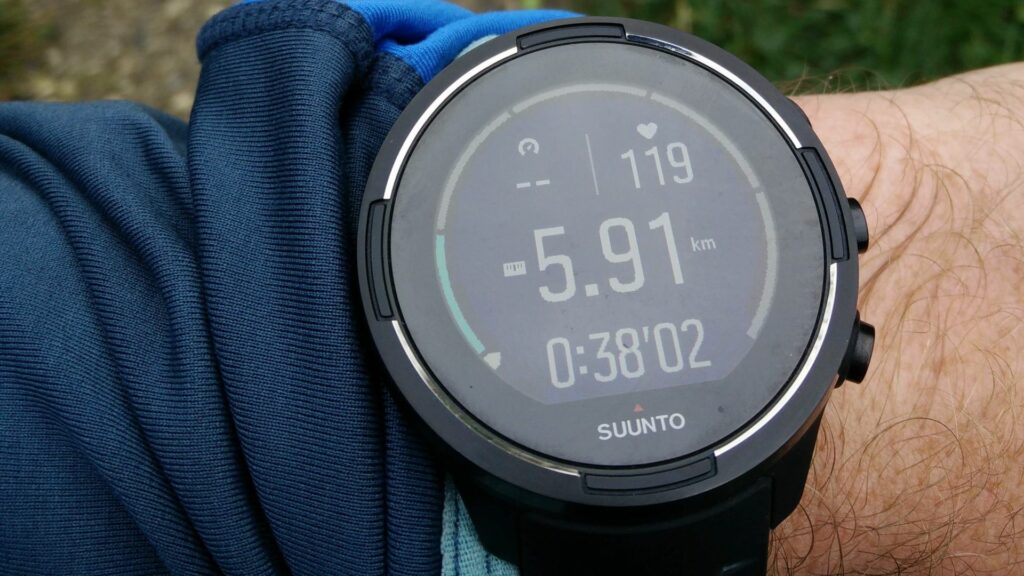
Physical controls help when touchscreens are difficult to operate
A larger display leaves more room for maps and data, while a smaller case can be easier to accommodate on a narrow wrist. Check the case dimensions and strap fit rather than assuming that the lightest watch will be the most comfortable.
AMOLED displays offer strong contrast and detailed color graphics. The Vertical and APEX 2 use memory-in-pixel displays, which favor low power use and visibility in daylight. Neither technology is automatically best for every hiker.
Physical buttons or a crown are useful when gloves, rain or sweat make touch input awkward. Practice starting an activity, opening navigation and returning to your data screens before heading out.
Materials and Water Resistance
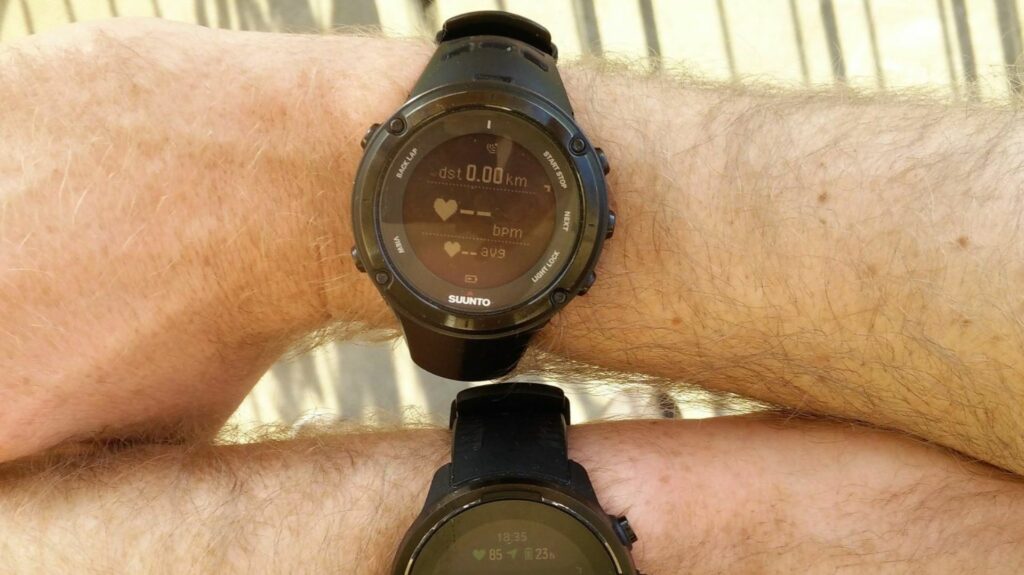
Lens material, case construction and fit all matter for outdoor use
Sapphire generally resists scratching better than mineral glass, but no lens is immune to damage. The four GPS picks use sapphire; the Core Alpha uses mineral crystal.
Water-resistance ratings also differ. The APEX 2 is rated to 5 ATM and the Core Alpha to 30 m, while the Garmin, Vertical and Grit X2 Pro have higher ratings. A quoted depth is a test rating, not permission to use every watch for diving. Follow the manufacturer’s activity guidance.
Heart Rate and Temperature Sensors
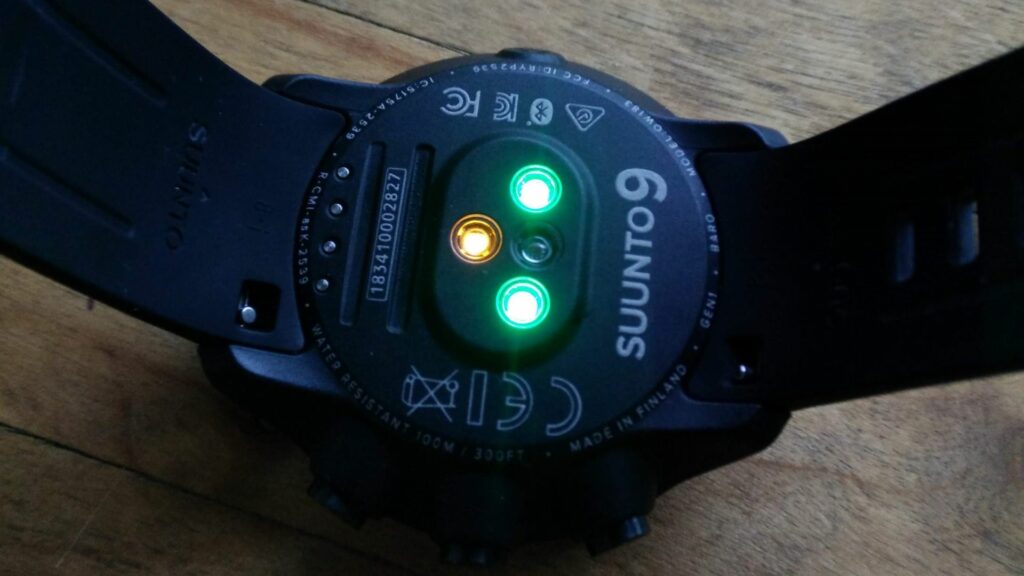
Wrist heart-rate readings can be useful but are affected by fit and conditions
The four GPS models include optical heart-rate sensors; the Core Alpha does not. Fit, wrist movement, cold conditions and gripping trekking poles can affect optical readings. For training where heart-rate data matters, a compatible chest strap is worth considering. Our article on wrist heart-rate accuracy discusses the limitations.
Do not confuse overnight skin-temperature tracking with measuring the outside air. Even a watch with an ambient-temperature function can be affected by body heat while worn. Follow its instructions and allow it to adjust to the surroundings before interpreting the reading.
Connectivity and Communication
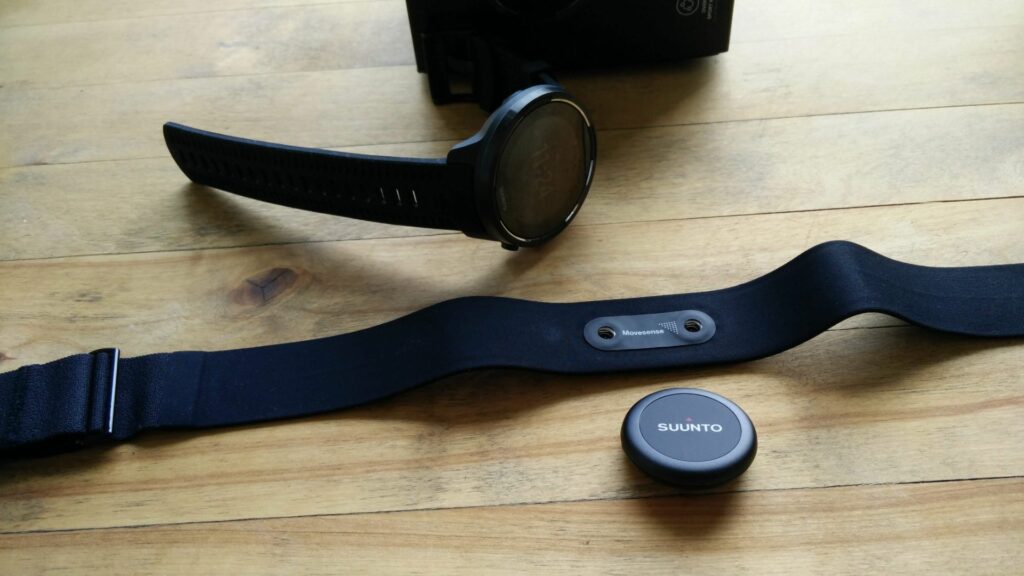
Check compatibility before buying an external sensor
Bluetooth commonly connects watches to phones and compatible sensors. ANT+ is also still supported by some modern watches, including the Fenix 8 Pro; it is not universally obsolete. Wi-Fi can support larger transfers such as map downloads, but available functions differ between models.
GPS reception does not mean a watch can send your location to someone else. Of these five, only the Fenix 8 Pro has built-in LTE and satellite communication. Its services require a suitable subscription and coverage, and satellite messages need a usable view toward the satellite.
Sunrise, Sunset and Daylight
Daylight information helps with planning a turnaround time, but mountains, forest and weather can reduce usable light before the listed sunset. Check your location and time settings, allow a margin and carry a headlamp when there is a chance of finishing late.