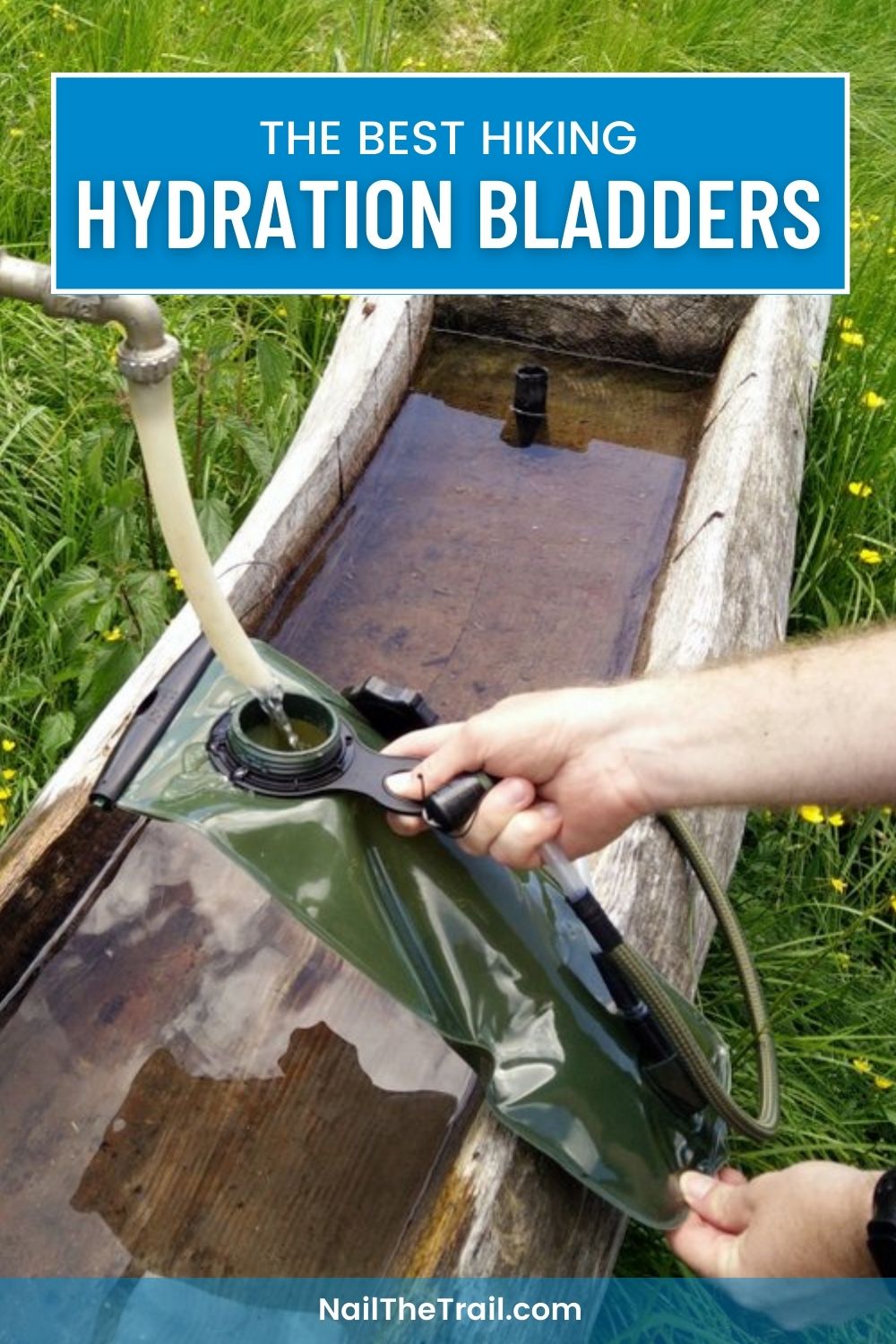
Best Hydration Bladders for Hiking
A hydration bladder is very useful for hiking trips of all durations because it provides easy access to water and you have your hands free while you are drinking. Therefore, it allows you to take small sips of water throughout the hike which is recommended during strenuous activities because it ensures that the water gets absorbed efficiently and prevents any splashing sensation in the stomach.
Hydration bladders also keep the water cool (in warm weather) and have a longer lifespan than water bottles. However, they also have shortcomings; they are hard to use in very cold conditions (tube freezes, refilling is difficult if you are wearing gloves etc.) and they should be only used for storing water as other beverages might cause growth of microorganisms in the bladder and the tube. To learn more about hydration bladders, check out our article Hydration Systems VS Water Bottles.
Most backpacks are hydration bladder compatible; they come with a sleeve or a pocket that holds the hydration bladder and have an opening for the tube at the top. However, only a handful of backpacks come with a hydration bladder – it is much more common that it is sold separately.
In this review we selected and reviewed the best hydration bladders for hiking to make your buying decision a little easier. We only listed hydration bladders which are available in the size of 3 liters (100 oz.) because these are the most versatile – they can be used for long and short hiking trips (filled according to your water requirements). However, all the listed hydration bladders are also available in smaller and/or lumbar versions if you are carrying a lumbar waist pack. If you are not sure how much water do you need for your hiking trip(s), read How much water to take on a hiking trip.
If you are also looking for a backpack, which is hydration bladder compatible, check out our reviews of the Best Expedition Packs (+ 50 liters).
Updated Content
We regularly update our reviews and selections to always recommend you the best products on the market.
Expert Selections
We only list top-tier products. Read how our selections of best hiking products differ from others here.
Links
We use affiliate links and may receive a small commission on purchases at no extra cost to you.
1. Our Picks of Hydration Bladders for Hiking

The Best Water Reservoirs
2. Comparison of Hydration Bladders for Hiking

| Feature/Product | Source Outdoor Widepac | Platypus Big Zip | CamelBak Crux | HydraPak Shape-Shift | Osprey Hydraulics |
|---|---|---|---|---|---|
| Weight of 100 oz. model | 6.3 oz. | 6.5 oz. | 8 oz. | 5.7 oz. | 7.8 oz. |
| Weight (Metric) of 3L model | 180 g | 184 g | 226 g | 162 g | 220 g |
| Available in sizes | 1.5L (51 oz.), 2L (68 oz.), 3L (100 oz) | 1.5L (51 oz.), 2L (68 oz.) - also lumbar version , 3L (100 oz) | 1.5L (51 oz.), 2L (68 oz.), 3L (100 oz) - also lumbar version. | 2L (68 oz.), 3L (100 oz) | 1.5L (51 oz.)- also lumbar version, 2L (68 oz.), 2.5L (85 oz.) 3L (100 oz) |
| Material | Polyethylene | Polyethylene | Polyurethane | Thermoplastic Urethane | Thermoplastic Polyurethane |
| Dimensions (Width x Length) for 100 oz. model | 8.5 x 16.7 in. | 8.8 x 17.2 in. | 9 x 18 in. | 6.5 x 17.3 in. | 7.1 x 15.4 in. |
| Dimensions - Metric (Width x Length) for 3L model | 21.5 x 42.5 cm | 22.9 x 43.7 cm | 23 x 46 cm | 16.5 x 44 cm | 18 x 39 cm |
| BPA Free | Yes | Yes | Yes | Yes | Yes |
| Mouthpiece | Bite Valve | Bite Valve | Bite Valve | Bite Valve | Bite Valve |
| Closure Type | Wide Slide Closure | Wide Slide Closure | Snap Cap Closure | Wide Slide Closure | Wide Slide Closure |
| Detachable Tube | Yes | Yes | Yes | Yes | Yes |
3. The Selection

Source WidePac
1. Source Outdoor Widepac
Suitable for:
- Hiking
- Trekking
- Mountaineering
- Backpacking
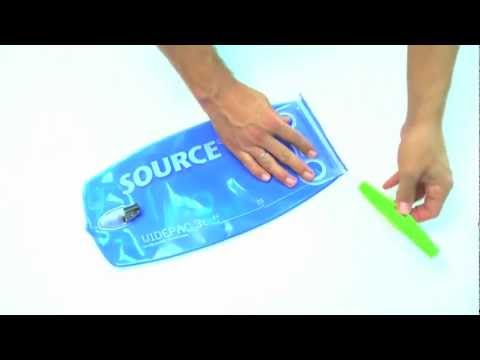
The Source Outdoor Widepac reservoir is due to its simplicity and durability very popular among hikers, mountaineers and other outdoor enthusiasts. The bladder is made of a 3-layer polyethylene material which is treated with an antimicrobial agent to prevent the growth of bacteria. The polyethylene material also features Source Glass-Like technology which makes it super smooth and thus easy to clean. The bladder is equipped with a wide slide closure at the top for easy refilling, draining and cleaning. The tube can be easily disconnected from the reservoir by pushing the button on the joint. The Helix bite valve is made of silicone material and can be locked with a twist to prevent leakages during transport. The bite valve also comes with a cover which protects it against dirt, sand etc. As for the accessories, Source offers a tube with a Sawyer water filter, cleaning kit, magnetic clip for the mouthpiece, a mouthpiece shoulder strap attachment kit (docking station), tube insulator and a universal tube adapter which allows you to refill the reservoir directly through the tube (from a tap or water bottles).
Pros:
- Durable construction
- Antimicrobial performance
- Easy to clean (smooth surfaces)
- Valve cover included
- Available accessories
- Wide opening for easy filling and cleaning
- Taste-free bladder material
Cons:
- A bit difficult to dry it after use

Video
Platypus Big Zip EVO
2. Platypus Big Zip
Suitable for:
- Hiking
- Trekking
- Mountaineering
- Backpacking
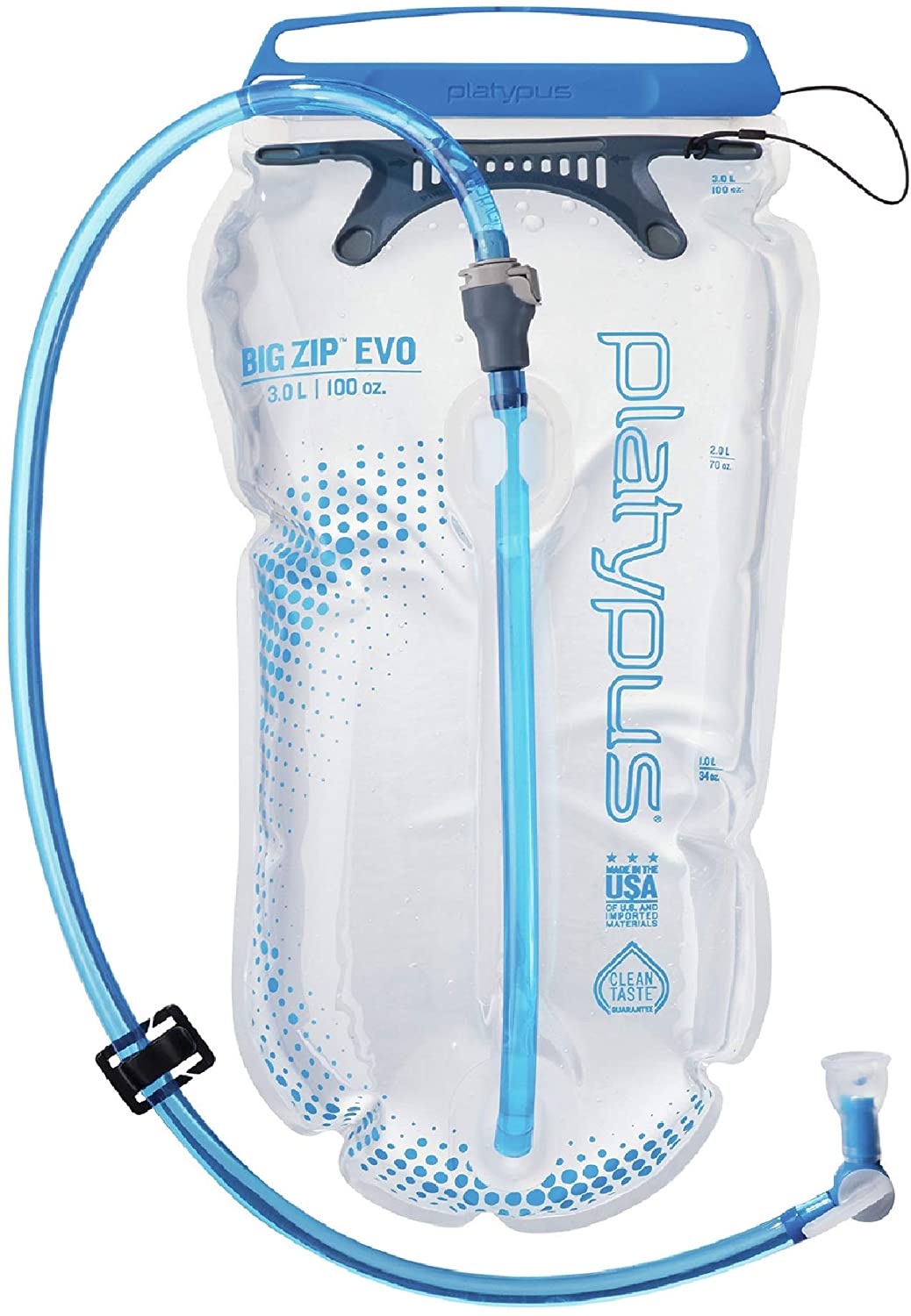
The Platypus Big Zip is another simple but very handy hydration bladder that is perfect for hiking, mountaineering and similar activities. The bladder is made of a 2-layer polyethylene material; the inner layer ensures that the water is taste-free while the outer layer is more robust and provides durability. Furthermore, the inner layer is silver-ion treated and thus protects the reservoir from bacteria and mold. The reservoir has a wide slide closure at the top which allows easy refilling, cleaning and draining. The tube can be disconnected from the reservoir by pressing the release button which is located on the reservoir/tube joint. The bite valve is equipped with a twist locking mechanism for additional security. Unfortunately, the valve does not come with a cover for protection against the dirt – the cover is sold separately. The Platypus Big Zip EVO has a very slim shape and thus it fits nicely in most hydration system compatible backpacks. Useful accessories offered by Platypus include a tube insulator and a mouthpiece clip. The hydration bladder is also available in the EVO version which comes with fast flow valve.
Pros:
- Durability
- Easy to clean
- Antimicrobial performance
- Slim
- High flow rate
- Lightweight
Cons:
- Some users report wear on slider at the top

Video
CamelBak Crux 3l
3. CamelBak Crux
Suitable for:
- Hiking
- Trekking
- Mountaineering
- Backpacking
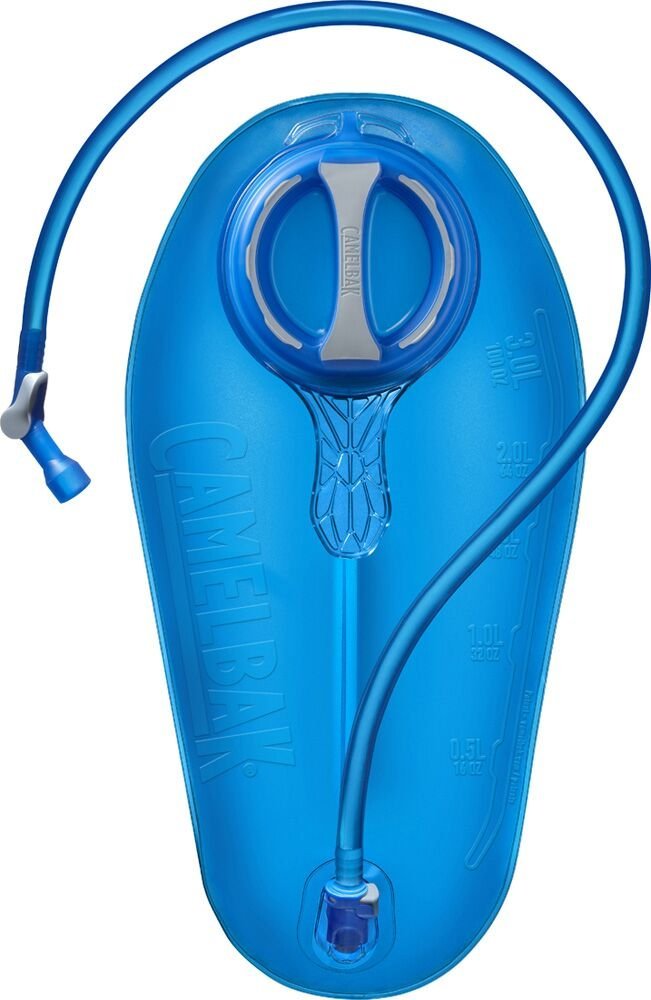
The CamelBak Crux hydration bladder differs from other products in this review in closure type – it has a snap cap closure. The snap cap closure is very big and thus it allows you to easily reach inside the bladder for thorough cleaning. Furthermore, the snap cap opens/closes with only a quarter of a turn which makes refilling super easy. The CamelBak Crux is made of very durable and elastic polyurethane and thus it provides great durability. The material is also treated with an antimicrobial agent to prevent the growth of mold and bacteria. The bite valve is made of durable silicone material and has a very fast flow rate. CamelBak also offers some accessories for this reservoir – an insulated tube and a cleaning kit. However, it is disappointing that this water reservoir doesn’t have the Quick Link system, like older reservoirs from CamelBak. Quick Link system was compatible with many accessories such as water filters, flow meters etc. You can read our first-hand review of the CamelBak Crux reservoirs here.
Pros:
- Reputable brand with good support
- Durability
- Easy to clean
- Antimicrobial performance
- High water flow
- Leak-proof design
Cons:
- Does not have Quick Link system like older CamelBak models
- Weight

Video
HydraPak Shape-Shift 3l
4. HydraPak Shape-Shift
Suitable for:
- Hiking
- Trekking
- Mountaineering
- Backpacking
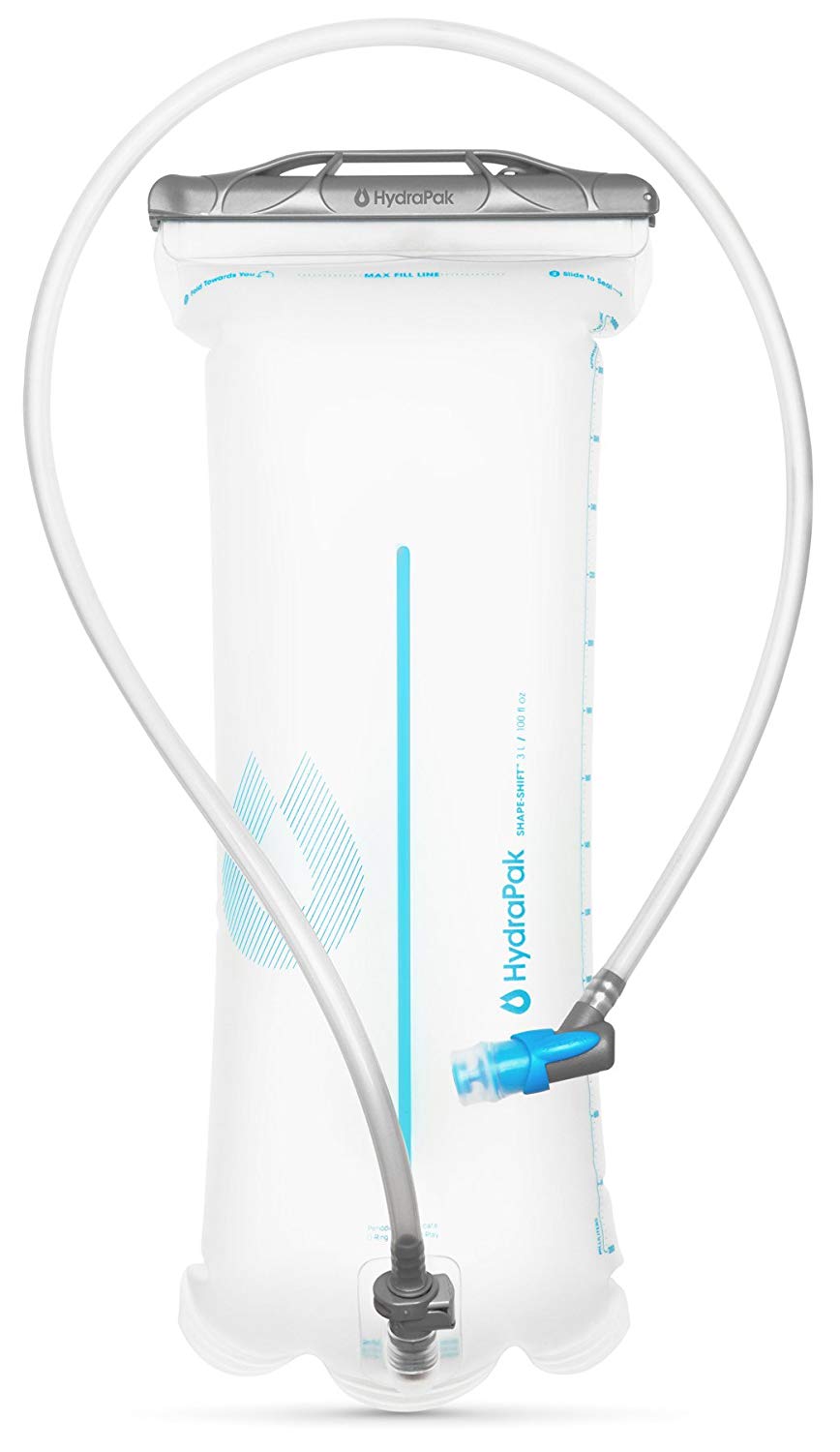
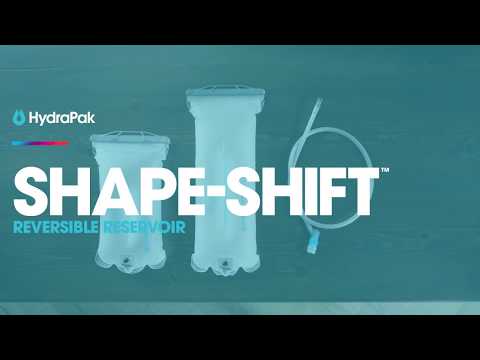
The Hydrapak Shape-Shift has an innovative design – it is equipped with a center baffle that holds the bladder together and prevents the water from sloshing around. Due to the center baffle it is very slim (it measures merely 2 centimeters in depth) and therefore fits nicely in most hydration system compatible backpacks. The Hydrapak hydration bladder is also reversible – it can be turned around for easy cleaning and drying. Hydrapak states that the bladder can be washed in a dishwasher without a problem which is a great advantage. The tube is detachable and uses a high-flow bite valve with a twist locking mechanism for safe transport. The reservoir is also treated with antimicrobial agent to prevent the growth of bacteria and mold. It comes with the Quantum Clip – a magnetic clip for attaching the tube to the backpack. As for the accessories, HydraPak offers a mouthpiece cover, tube cleaning brush, tube insulator, extended tubes and different bite valves.
Pros:
- Versatile shape that can compress as you drink.
- Wide slide top for easy filling.
- Can be turned inside out for thorough cleaning.
- Center baffle – slim design
Cons:
- /

Video

Osprey Hydraulics
5. Osprey Hydraulics
Suitable for:
- Hiking
- Trekking
- Mountaineering
- Backpacking
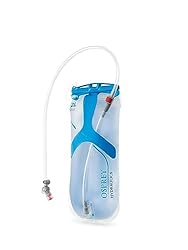
The Osprey Hydraulics differs from other products in this review because it has a rigid back plate. The rigid back plate allows you to easily insert the it in the backpack’s internal or external hydration sleeve even when the backpack is fully loaded – it doesn’t bend when forced into the sleeve. However, the rigid back plate also adds some weight to the hydration bladder – unloaded the 3L version weighs 8 ounces (220 grams) which is more than the competitive products. It is made of durable thermoplastic polyurethane and is anatomically shaped. It features a carrying handle for easy transportation and is equipped with a detachable hose and a bite valve. The bite valve can be locked with a twist to prevent leakages during the transport. Osprey also offers several accessories such as an insulated tube, magnetic clip and cleaning kit.
Pros:
- Integrated handle for easy filling and carrying.
- Quick-connect hose for convenient removal.
- Wide mouth for easy cleaning.
- TPU construction is durable and resistant to odors.
Cons:
- Weight
- Bite valve requires more pressure
Video

4. Hydration Bladder Buying Advice – What is important?
Capacity
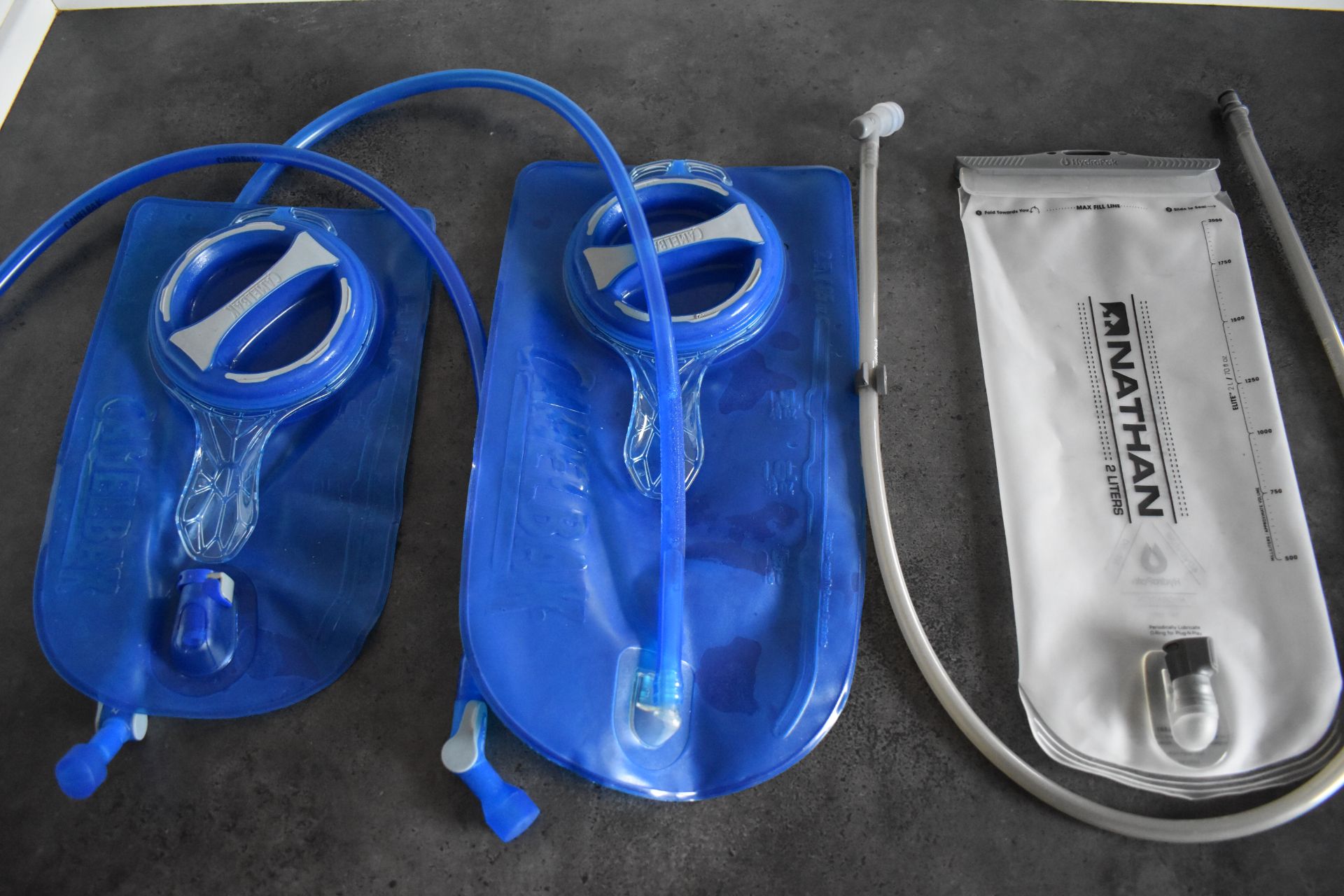
Hydration bladders have different capacities
Capacity dictates both comfort and safety. Most hydration bladders come in 1.5–3 liters, and the “best” size is the one you’ll realistically use for your typical outings. Water is heavy (about 2 lb / 1 kg per liter), so carrying a 3L bladder “just in case” can add a lot of weight you didn’t need. A good rule of thumb is to plan around roughly 0.5L per hour for moderate hiking in mild weather, and closer to 1L per hour in heat or during hard efforts. The smart part is that you don’t have to fill the reservoir to its max so a 3-liter reservoir will be useful for more scenarios than a smaller one.
Closure type, opening size, and ease of cleaning
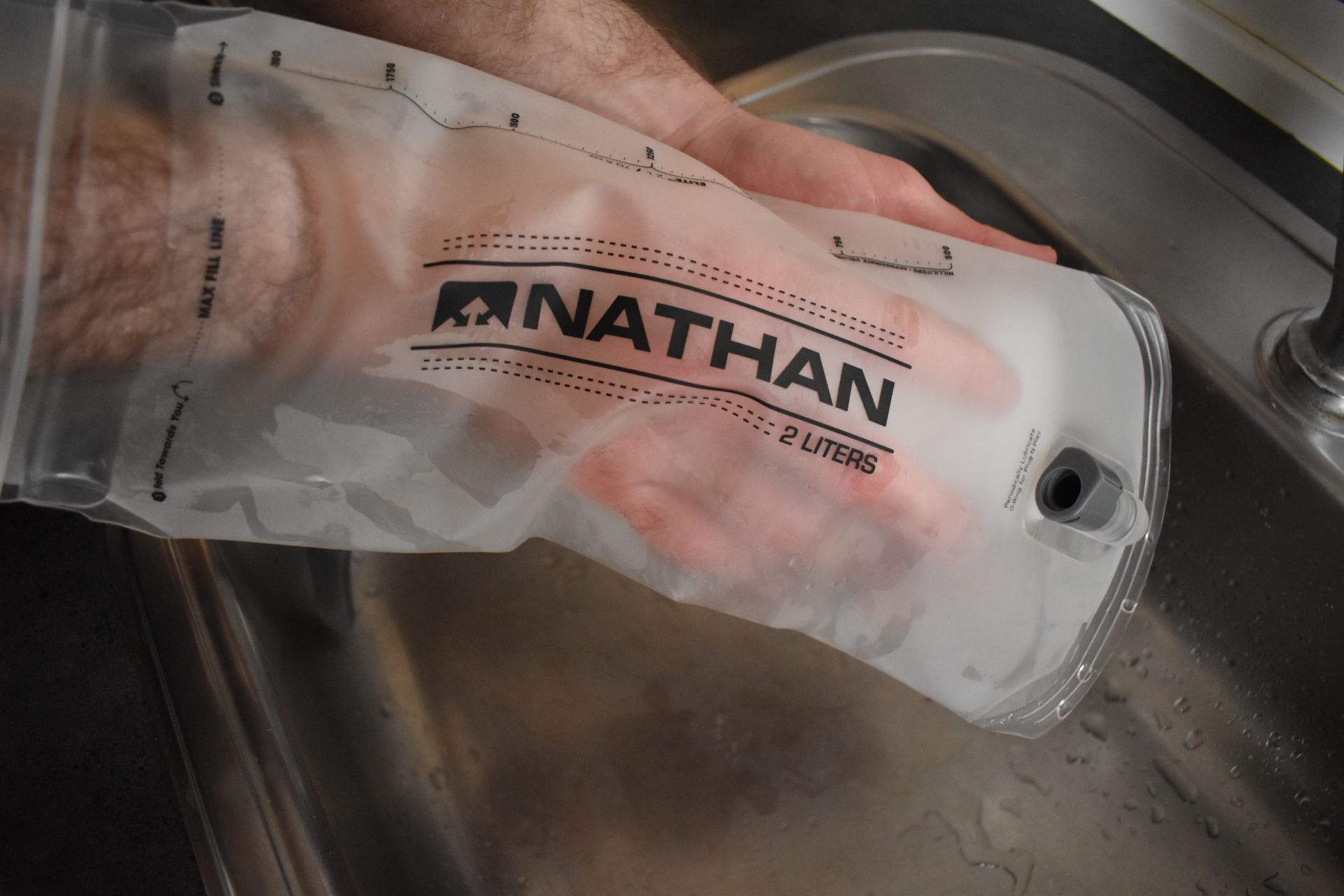
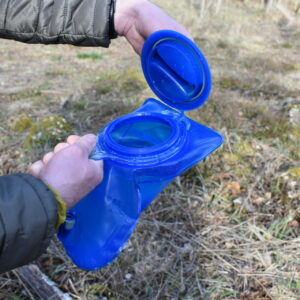
Wide-opening makes cleaning easy
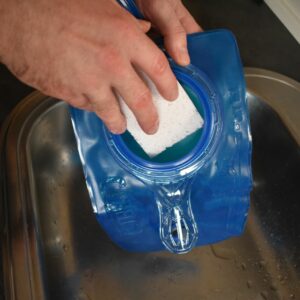
A hydration bladder is only great if you’re willing to keep it clean. That’s why the opening and closure style deserve more attention than “it looks convenient.” In practice, wide openings are the difference between a quick rinse and a lot of hassle. Slider/slide-seal tops and wide zip-style openings are usually easiest for cleaning and drying because you can get your hand (or a brush) inside, scrub corners, and leave the reservoir propped open to dry. Some models can even be flipped inside out, which is a huge advantage because drying is where most people fail. Moisture left inside is what makes the reservoir moldy.
Twist-cap openings can be very convenient for filling, especially under a tap or small stream, but they’re often harder to scrub thoroughly because the opening is smaller and corners are harder to reach. They’re not a dealbreaker but expect to rely more on brushes and cleaning tablets. If you ever use drink mix or electrolytes, cleaning becomes even more important because residue builds quickly in the tube and bite valve.
A good reservoir is designed to be disassembled: detachable hose, removable bite valve etc. That lets you clean properly and replace parts later instead of throwing the whole bladder away.
Mouthpiece, flow rate, and leak prevention
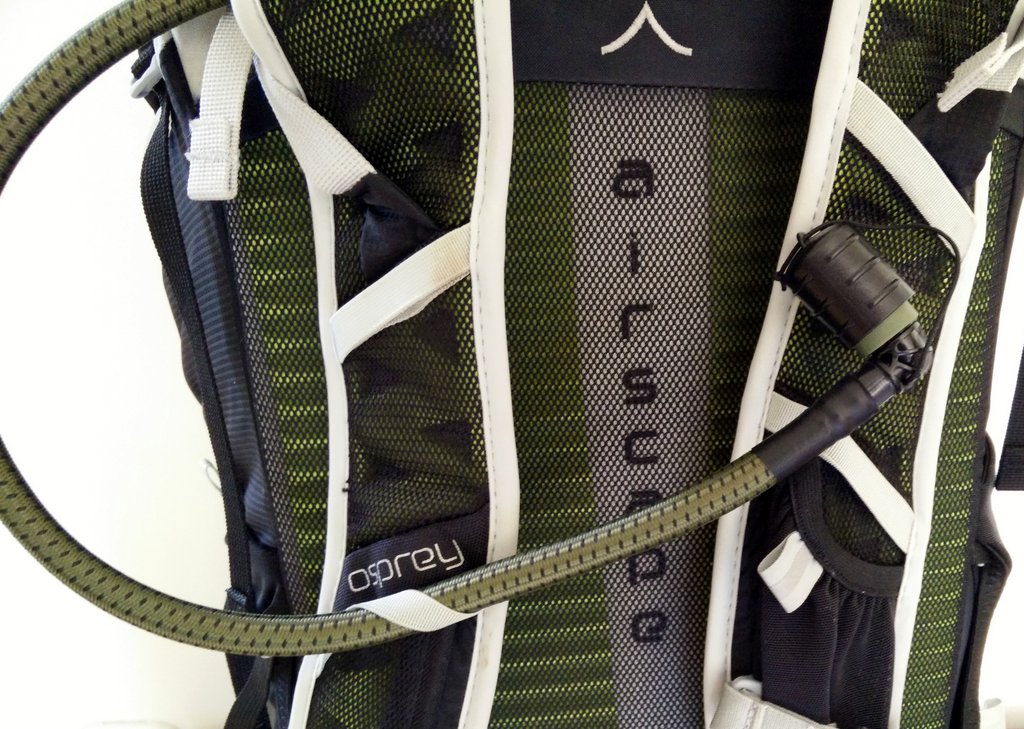
Mouthpiece with a cover
If drinking from your bladder feels annoying, you’ll drink less. The mouthpiece is where hydration systems either shine or frustrate you. Most modern bladders use bite valves because they’re the most effortless when you’re moving: bite, sip, done. Push/pull valves can work, but they’re generally fussier because you often have to remember to close them and they’re slower to operate mid-stride. Beyond valve type, pay attention to flow rate. Some valves deliver a big, fast sip with minimal effort, while others are more conservative and can feel like you’re “working” for water. If you hike fast, trail run, or breathe hard on climbs, that difference is noticeable.
Leak prevention is the other half of ease of use. A shutoff mechanism (switch or twist) is a big deal: it helps prevent the classic “mystery wet backpack” problem when the bite valve gets pressed by gear or when you toss your pack into a car. A dust cover for mouthpiece is also underrated, especially on muddy trails or in sandy environments.
Finally, think about real-life compatibility: tube routing, whether the hose kinks easily, and whether you can operate the shutoff with one hand (or gloves). The best systems feel invisible and let you sip without thinking about it.
Durability
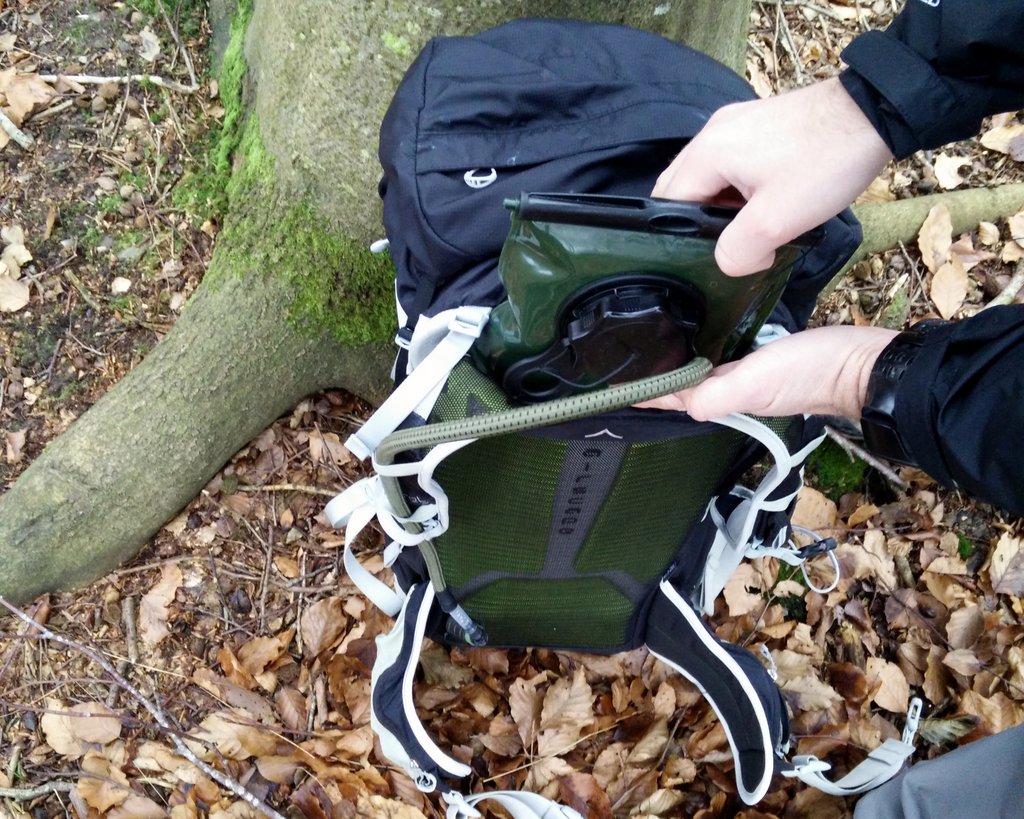
Some hydration bladders are more durable than the others
Most reservoirs fail at the edges, on seams, hose connections, and the joint where the tube meets the reservoir. That’s why “durability” isn’t just thick plastic; it’s also how well the fittings are designed and how consistently they seal. If you’ve ever had a bladder leak, there’s a good chance it was around a connector or a stressed seam rather than a random puncture.
Look for a reservoir with a solid connector system and, ideally, a quick-disconnect fitting. Quick disconnects make refilling easier (you can pull the bladder without re-routing the hose), but they also often signal a more modular design where parts can be serviced. Detachable tubes and replaceable bite valves are a major value win, because they let you replace the part that wears out instead of buying a whole new system. This matters if you use your bladder frequently—bite valves soften, seals wear, and hoses can get funky over time.
Material plays a role too. Heavier plastics tend to resist punctures and abuse better (stuffing into packs, rubbing against gear, or being squeezed), while ultralight designs save ounces but may need more “babying” around sharp items like microspikes, tent stakes, or cookware. If you’re hard on gear, durability-focused designs (sometimes with protective sleeves) can be worth the small weight penalty.
Weight and Packability
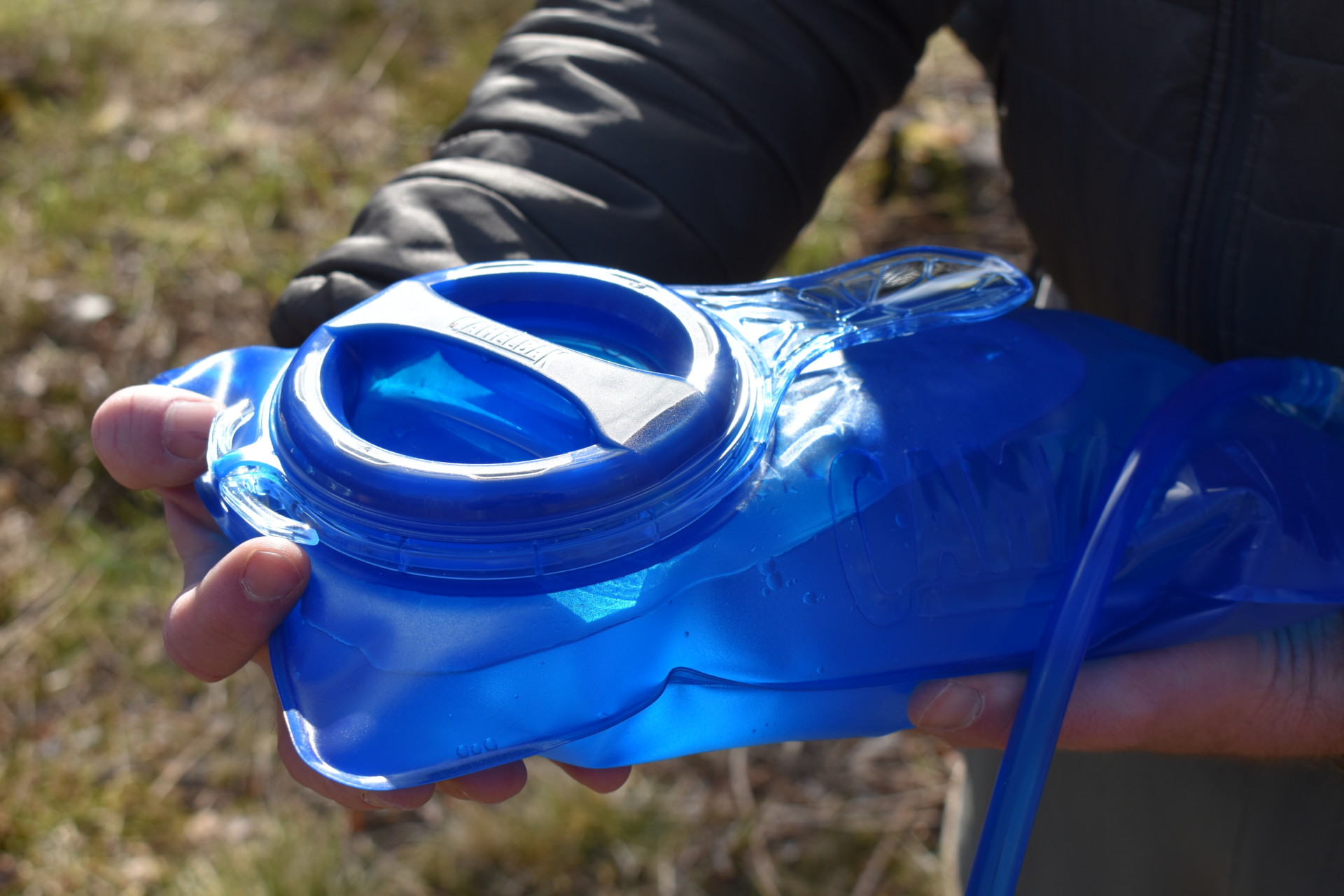
Some reservoirs back better than the others
Hydration bladders aren’t heavy compared to the water they carry, but weight still matters, especially if you prefer lightweight hiking, do trail running, or packing for long trips where every ounce adds up. The main idea is: water weight dominates, but the reservoir’s design can either add unnecessary bulk or disappear into your pack.
However, weight savings usually come with tradeoffs. The lightest bladders often skip rigid handles, backplates, or structured shapes, features that make filling and loading easier. A floppy reservoir can be annoying to slide into a hydration sleeve when your pack is full, and some designs sag when half-filled, causing the water to pool and shift. Structured bladders (with baffles or a rigid backer) can feel better in a pack, reduce sloshing, and make filling easier, but they can be less packable and sometimes harder to fully invert for cleaning.
So the “important” part is matching design to your activity: if you want the lowest weight and smallest packed size, choose streamlined models and accept a bit more fuss. If you’re backpacking with a full pack and want convenience, a slightly heavier bladder that’s easier to fill, load, and clean can be the smarter long-term choice.
Insulation, filter compatibility and accessories
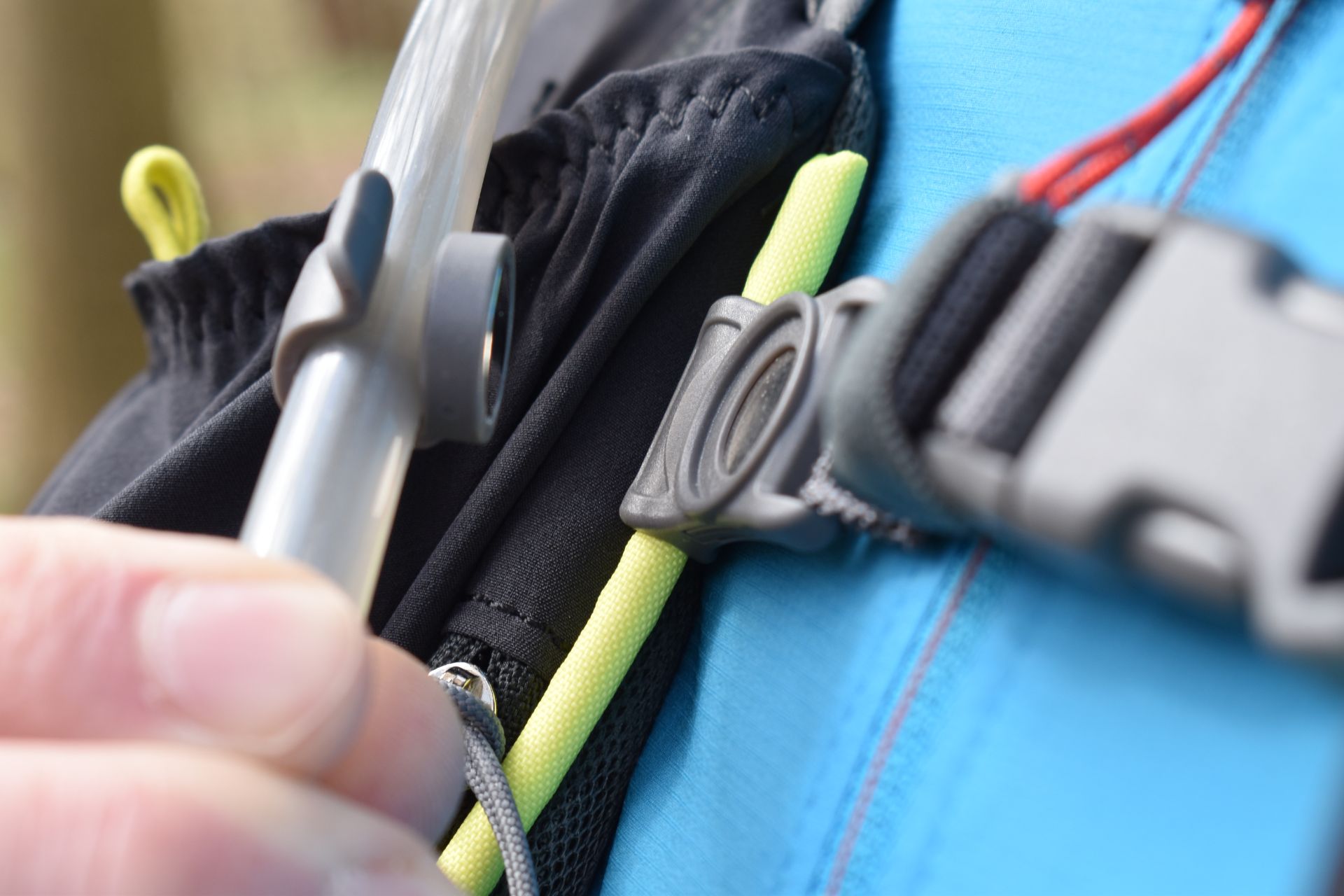
Magnetic clip on hydration bladder
In hot weather, an insulated sleeve can keep water cooler for longer, which is a genuine comfort upgrade if you prefer cold water. In cold weather, insulation helps, but it’s not magic: the hose is usually the first thing to freeze. The practical habit that makes the biggest difference is clearing the tube after each sip by blowing water back into the reservoir.
Filter compatibility is the other “advanced” feature that becomes crucial depending on your style. If you plan to refill from streams or lakes, you’ll want a system that plays nicely with your filtration method. Quick-disconnect fittings make inline filter setups much easier and cleaner, but not every reservoir is equally friendly to aftermarket connectors. Some hikers prefer chemical treatment (simple and light), while others build an inline setup for real on-the-go filtering. If this is you, check how accessible the connector is inside your pack and whether the hose routing makes field refills painless.
Finally, look at accessories and replacement parts availability. Magnetic hose clips, insulated tubes, cleaning kits, and replacement valves can extend the life of a good bladder and make it better over time, especially if you’re the type who uses one system for years.
5. Quick Checklist: What to prioritize when buying a hydration bladder
- Choose capacity based on your typical outing – better to big than too small as you don’t have to fully fill it
- Prefer wide openings if you want easy cleaning and faster drying.
- Bite valve + reliable shutoff means easier drinking and fewer leaks.
- Prioritize strong fittings and replaceable parts (tube/valve) for long-term durability.
- Go minimalist for packability; go structured for easier filling/loading and less slosh.
- Consider insulation and filter compatibility if your conditions demand it.