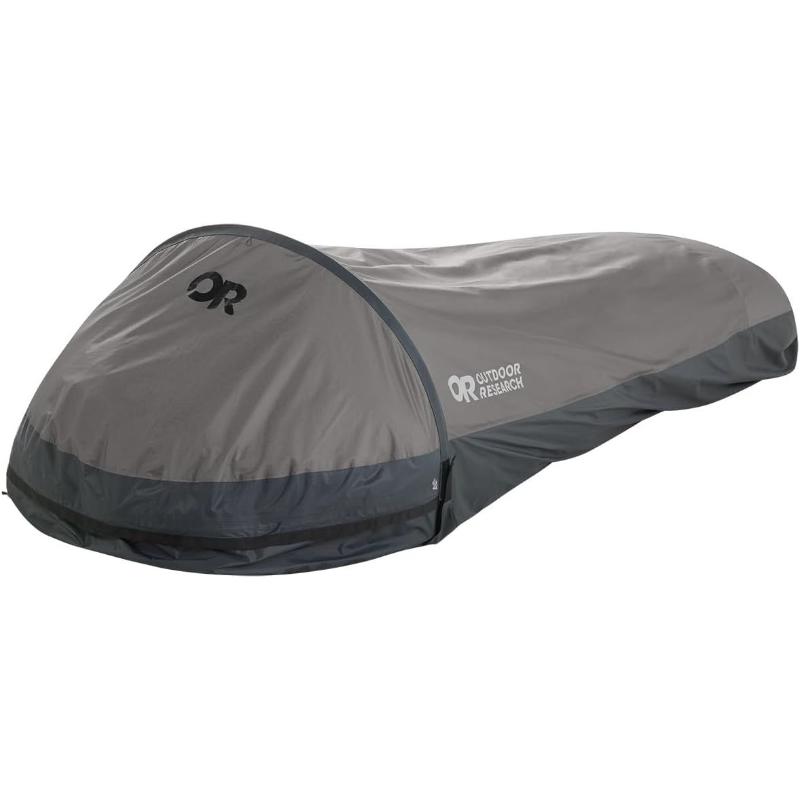
Outdoor Research Helium Bivy Sack
A portable shelter proves indispensable for multi-day outdoor adventures, granting the freedom to set up camp in various locations without the need to reach traditional accommodation facilities like man-made shelters or huts. While tents are a go-to for their versatility and comfort, they can sometimes be cumbersome for solo adventurers or for those on brief excursions, due to their weight and bulk. In these instances, a bivy sack emerges as an excellent alternative. Not only is a high-quality bivy sack on average twice as light and 30% more compact (when packed) than a comparable two-person tent, but it also offers a swift setup in unfavorable weather conditions. This makes it an ideal choice for those of us seeking efficiency and lightness on the trail. However, it’s important to note that bivy sacks might not be the best option for extended journeys as they offer limited space and comfort, often necessitating that the backpack be stored outside.
In making this selection of the best bivy sacks, we’ve prioritized lightweight and waterproof/breathable materials, ensuring versatility and practicality in a variety of conditions. On this selection there is a bivy sack for every situation – from overnight ultralight alpine missions to multi‑day expeditions.
Updated Content
We regularly update our reviews and selections to always recommend you the best products on the market.
Expert Selections
We only list top-tier products. Read how our selections of best hiking products differ from others here.
Links
We use affiliate links and may receive a small commission on purchases at no extra cost to you.
1. Our Bivy Sack Picks
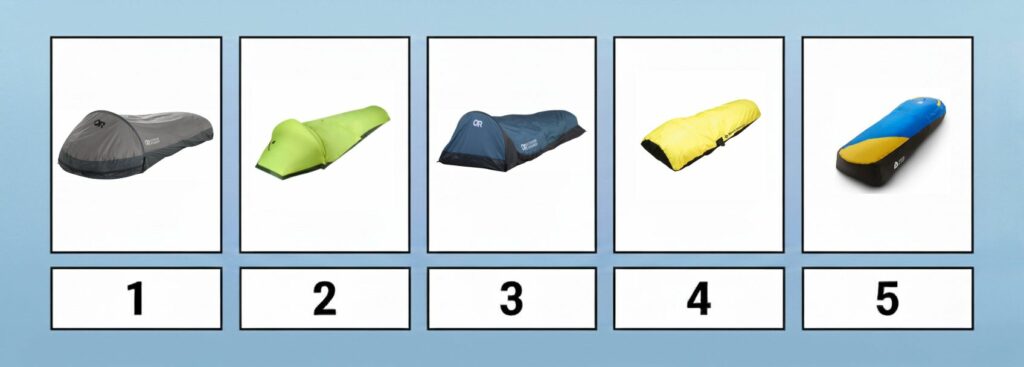
Bivy Sacks
- Outdoor Research Helium Bivy
- Black Diamond Spotlight Bivy
- Outdoor Research Alpine AscentShell Bivy
- Black Diamond Big Wall Hooped Bivy
- Sierra Designs Backcountry Bivy
2. Comparison of Bivy Sacks

| Feature/Product | Outdoor Research Helium Bivy | Black Diamond Spotlight Bivy | Outdoor Research Alpine AscentShell Bivy | Black Diamond Big Wall Hooped Bivy | Sierra Designs Backcountry Bivy |
|---|---|---|---|---|---|
| Type | Single-wall | Single-wall | Single-wall | Single-wall | Single-wall |
| Packed Weight | 15.8 oz. | 1 lb. 7 oz. | 1 lb. 3 oz. | 2 lbs. | 14 oz. |
| Packed Weight (Metric) | 447 g | 660 g | 549 g | 950 g | 400 g |
| Packed Size | 11 x 4 in. | 4 x 7.5 in. | 3.5 x 12 in. | 6 x 12 in. | 10 x 4 in. |
| Packed Size (Metric) | 30 x 10 cm | 10 x 19 cm | 8 x 30 cm | 15 x 30 cm | 25 x 10 cm |
| Size (Length/Width) | 92 x 30 in. | 92 x 30 in. | 83 x 28 in. | 98 x 35 in. | 80 x 36 in. (R), 86 x 40 in. (L) |
| Size - Metric (Length/Width) | 208 x 66 cm | 234 x 76 cm | 210 x 71 cm | 251 x 89 cm | 203 x 91 cm (R), 218 x 102 cm (L) |
| Material | 2.5-layer Pertex Shield Diamond Fuse | Single-layer NanoShield | 3-layer AscentShell | 3-layer ToddTex | 20-denier Nylon Ripstop (WPB) |
| Head Area System | Single-Pole System | Single-Pole System | Single-Pole System | Free-Standing ( Flexible Wire | None |
| Season | 4-season | 4-season | 4-season | 4-season | 4-season |
3. The Selection
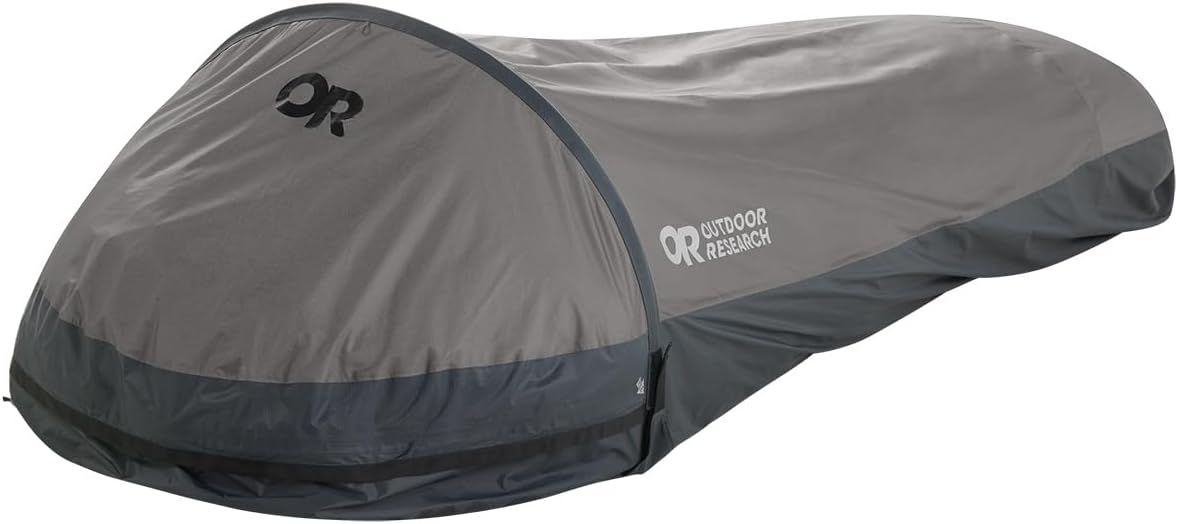
Outdoor Research Helium Bivy
Outdoor Research Helium Bivy
Best Overall
Suitable for:
- Hiking
- Mountaineering
- Backpacking
- Alpine Climbing
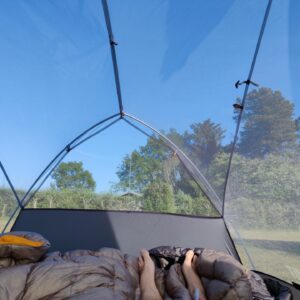
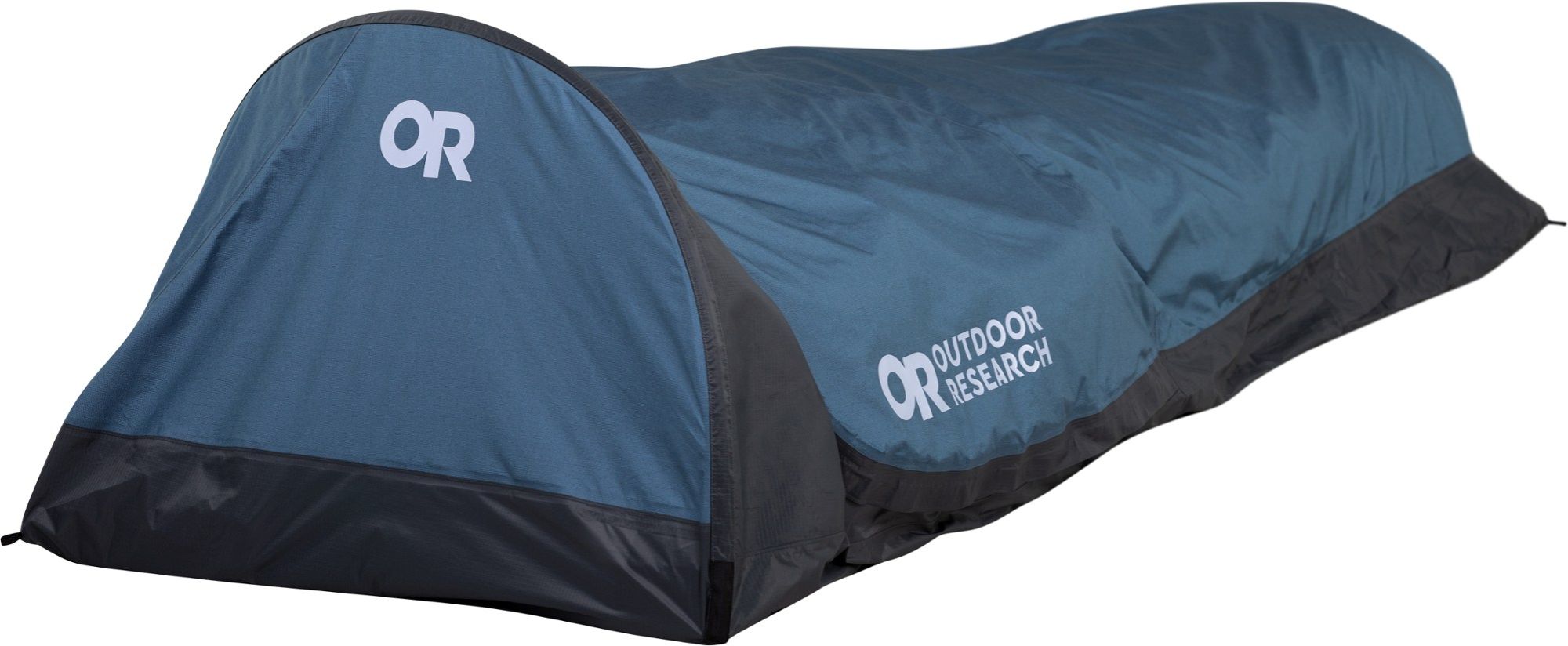
The Outdoor Research Helium Bivy is the best choice for hikers, backpackers and mountaineers who want one bivy sack that performs well across most conditions. It is light and compact enough for longer trips, but still much more livable than minimalist emergency-style bivies. The hooped pole lifts the fabric away from the face, creating useful headroom and space for the integrated no-see-um mesh screen. This makes the Helium far more comfortable in buggy or humid conditions than simpler bivy sacks where the fabric lies directly over the sleeping bag.
Weather protection is also very good. The waterproof Pertex Shield shell, sealed seams and durable floor provide reliable protection against rain and wet ground, while the ventilation options help reduce the condensation problems that are common with bivy sacks. That said, condensation can still build up if the bivy is closed tightly for long periods, especially in wet or cold conditions. The Helium is therefore best seen as a highly capable three-season bivy for backpacking, bikepacking and alpine overnighters rather than a full winter storm shelter. For severe weather and expedition use, a heavier alpine bivy is still the better option.
Performance Score
The Advantages
- Comfortable, with lots of headroom and a hooped design
- Integrated bug screen and well-thought-out ventilation
- Reliable weather protection in a lightweight package
The Considerations
- Condensation can build up if closed tightly
- Slightly larger packed size than the lightest ultralight models
- Not the best option for severe winter storms

Also available at:
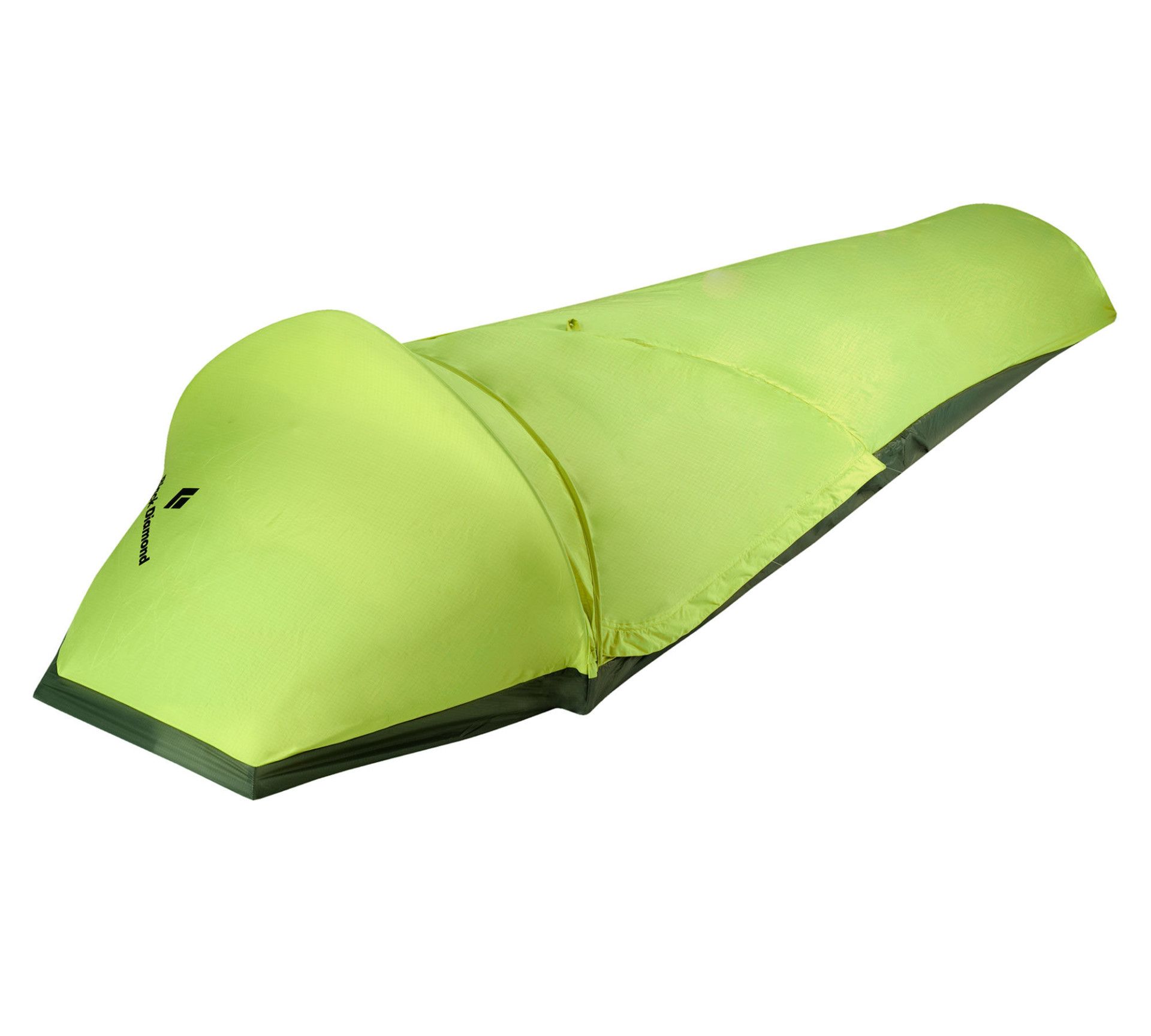
Black Diamond Spotlight Bivy
Black Diamond Spotlight Bivy
Best for Headroom & Ventilation
Suitable for:
- Hiking
- Mountaineering
- Backpacking
- Alpine Climbing
The Black Diamond Spotlight Bivy strikes an excellent balance between low weight and livability, making it a great option for minimalist backpacking and alpine missions where every ounce matters. Compared to fully enclosed expedition bivies, the Spotlight feels noticeably less claustrophobic thanks to its single-pole design that lifts the canopy away from the face and shoulders. The zippered mesh entry also improves airflow and comfort in warmer weather while keeping insects out.
Black Diamond uses a highly water-resistant ToddTex shell fabric that performs very well in rain, wind and wet alpine conditions. The floor material is robust enough for rough ground and the compact packed size makes the bivy easy to stash inside a climbing or backpacking pack. Despite its relatively low weight, the Spotlight still provides enough interior space to store smaller essentials near your head and move around more comfortably than many ultralight bivies.
However, the lightweight construction does come with compromises. Ventilation is good for a bivy sack, but condensation can still become an issue during extended wet weather. The compact interior also feels restrictive for larger users or those spending long periods sheltering inside. Nevertheless, the Spotlight remains one of the best lightweight bivy sacks for fast-and-light mountain travel where simplicity, weather protection and packability matter most.
Performance Score
The Advantages
- Very lightweight and compact packed size
- Hooped design improves comfort and livability
- Strong weather protection for alpine and backpacking use
The Considerations
- Condensation can still build up in wet conditions
- Interior space feels restrictive for extended use
- Less protective than heavier expedition bivies

Also available at:
Outdoor Research Alpine Bivy
Outdoor Research Alpine AscentShell Bivy
Best for Expeditions in Severe Weather
Suitable for:
- Hiking
- Mountaineering
- Alpine Climbing
- Emergency shelter
The Outdoor Research Alpine AscentShell Bivy is built for mountaineers, climbers and winter backpackers who need maximum protection in harsh weather. Compared to lighter bivy sacks, the Alpine prioritizes durability, warmth and storm resistance over minimal packed size. The three-layer waterproof shell provides excellent defense against heavy rain, wind and snow while still offering better breathability than many traditional expedition bivies. Its robust construction and fully weatherproof design make it a dependable shelter for exposed alpine environments and multi-day mountain trips.
Despite its protective build, the Alpine remains surprisingly comfortable. The hooped design creates generous headroom, helping the bivy feel less claustrophobic during long nights or extended storms. The mesh panel improves airflow and reduces condensation buildup while also providing insect protection in milder conditions. The interior is roomy enough for a sleeping pad, winter sleeping bag and a few essential items, making it one of the more livable bivy sacks available.
The downside is weight and bulk. Compared to ultralight models like the Helium, the Alpine packs larger and adds noticeable weight to your load. It is also somewhat overbuilt for casual summer backpacking where lighter and more breathable shelters make more sense. Nevertheless, for demanding alpine missions and foul-weather use, the Alpine AscentShell Bivy remains one of the most protective and confidence-inspiring bivy sacks on the market.
Performance Score
The Advantages
- Outstanding weather protection for alpine conditions
- Spacious hooped design with excellent headroom
- Durable construction and highly breathable waterproof fabric
The Considerations
- Heavier and bulkier than ultralight bivies
- Overkill for mild summer conditions
- Premium price compared to simpler bivy sacks
Black Diamond Big Wall Hooped Bivy
Best for Climbers
Suitable for:
- Hiking
- Mountaineering
- Alpine Climbing
- Emergency shelter
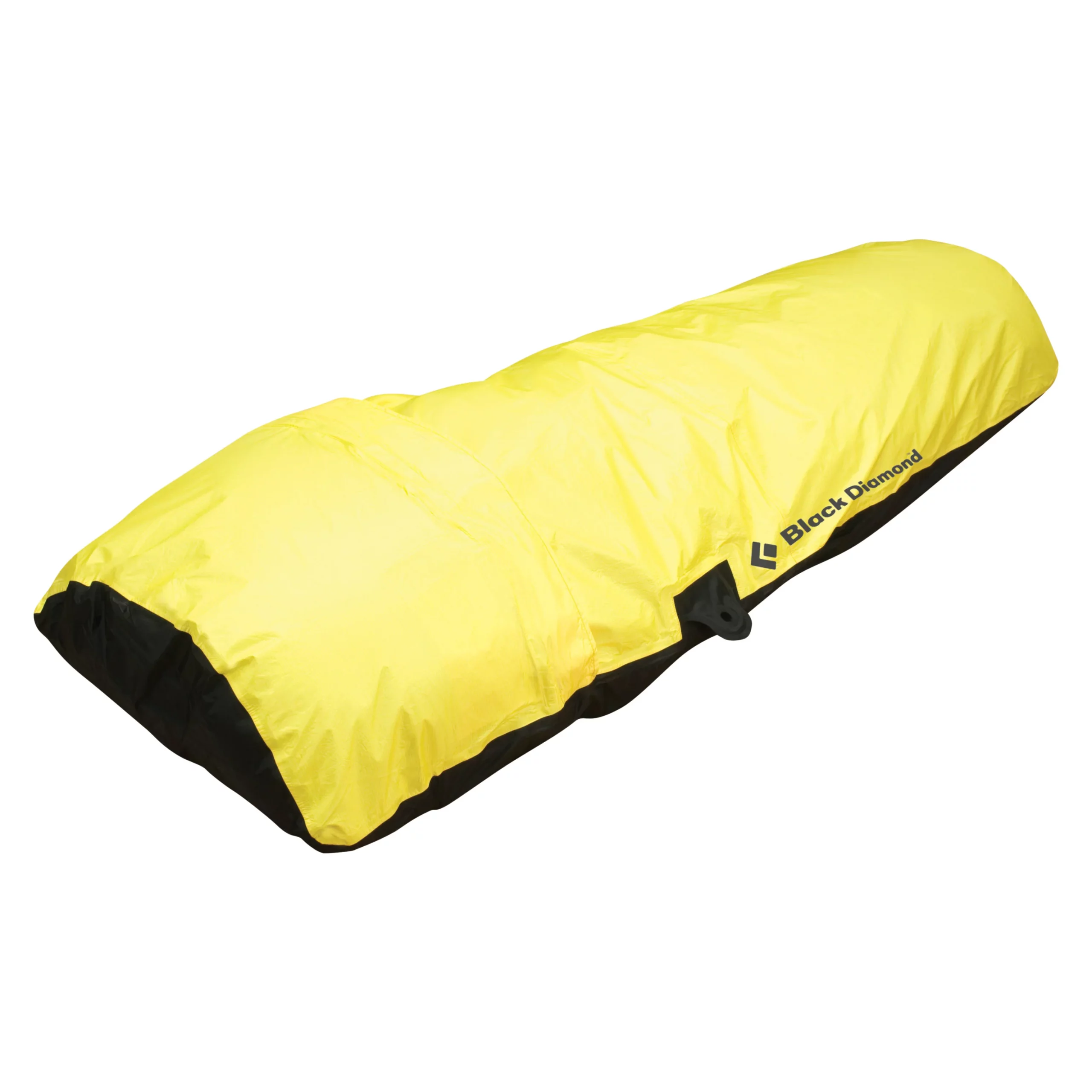
The Black Diamond Big Wall Hooped Bivy is a specialized shelter designed for climbers and mountaineers who expect severe weather, exposed camps and demanding alpine conditions. Unlike minimalist backpacking bivies, this model focuses heavily on durability, warmth and full storm protection. The reinforced ToddTex shell fabric is exceptionally rugged and highly weather resistant, making the bivy suitable for high-altitude climbing, portaledge use and winter mountaineering where reliability matters more than shaving ounces.
The hooped design creates impressive interior volume for a bivy sack and makes extended stays considerably more tolerable during storms. There is enough room to move around, manage gear and avoid the claustrophobic feeling that many compact bivies suffer from. Black Diamond also includes climbing-specific details such as reinforced clip-in points and a robust structure that performs well in exposed environments where lighter bivies would struggle.
However, all this protection comes at a cost. The Big Wall Hooped Bivy is significantly heavier and bulkier than most modern backpacking bivies and feels closer to a minimalist single-wall shelter than a true ultralight bivy sack. Ventilation is decent for such a protective design, but condensation can still become noticeable during prolonged storms. For regular backpacking it is excessive, but for climbers and mountaineers facing harsh conditions, it remains one of the most confidence-inspiring bivy shelters available.
Performance Score
The Advantages
- Exceptional storm protection and durability
- Spacious hooped design with excellent livability
- Designed specifically for alpine climbing and exposed bivouacs
The Considerations
- Heavy and bulky compared to backpacking bivies
- Condensation can build up during prolonged storms
- Overkill for regular three-season hiking
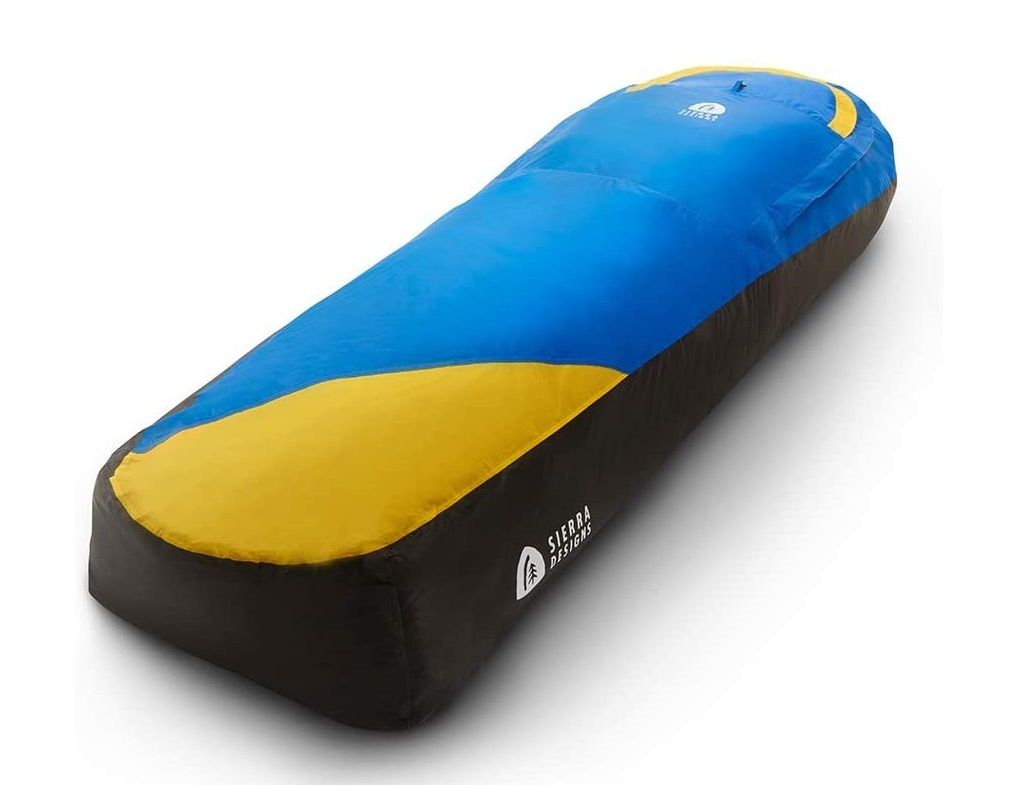
Sierra Designs Backcountry Bivy
Sierra Designs Backcountry Bivy
Best Budget Option
Suitable for:
- Hiking
- Mountaineering
- Alpine Climbing
- Emergency shelter
The Sierra Designs Backcountry Bivy is a spacious and affordable bivy sack that works best for minimalist backpacking, bikepacking and sheltered camping where low weight and simplicity are more important than full storm protection. Compared to more technical alpine bivies, the Backcountry Bivy offers noticeably more interior room and a more open feel, especially when the mesh ventilation panel is exposed. The generous dimensions easily accommodate thicker sleeping pads and bulkier cold-weather sleeping bags, which many narrower bivies struggle with.
The large U-shaped opening improves accessibility and ventilation, while the mesh panel helps reduce condensation and keeps insects away in warmer conditions. The head area can also be suspended from above to improve livability and prevent the fabric from resting directly against the face. At around 13 ounces, the Backcountry Bivy remains reasonably lightweight considering its roomy interior and durable bathtub floor.
However, this bivy is not fully waterproof in prolonged rain. The upper fabric and untaped hood zippers are more vulnerable to moisture than the expedition-oriented bivies in this selection, so it performs best under a tarp, in shelters or during relatively stable weather. The design also feels somewhat less refined than premium models, particularly when getting in and out or trying to keep the bivy positioned properly overnight. Nevertheless, for hikers and bikepackers seeking an inexpensive and spacious lightweight bivy, the Backcountry Bivy offers good overall value.
Performance Score
The Advantages
- Very spacious interior for a lightweight bivy
- Good ventilation with mesh panel and suspendable hood
- Affordable and reasonably lightweight
The Considerations
- Not fully waterproof in sustained rain
- Awkward top-entry access compared to side-zip bivies
- Can shift around at night due to limited stake-out points

4. Buying a Bivy Sack – What is important?
Weight
One of the main reasons hikers switch from a tent to a bivy sack is weight. Shelters are typically among the heaviest items in your backpack, so shaving off even half a kilo can make a noticeable difference in comfort and speed on the trail. Most quality bivy sacks weigh under 2 pounds (900 g), and many are significantly lighter. Ultralight emergency models can weigh as little as 150–250 grams, while more protective alpine bivies with poles or wire hoops often land between 400–700 grams. That’s still dramatically lighter than most one-person tents.
However, weight should never be viewed in isolation. A 200-gram emergency bivy might be perfect for fastpacking, alpine ridge traverses, or as a backup shelter—but it won’t offer the same comfort or weather resistance as a heavier four-season model. If you expect prolonged exposure to wind, snow, or cold rain, adding a few hundred grams for better protection and structure is usually worth it. Always ask yourself: Is this my primary shelter or an emergency backup? Your answer should guide your weight tolerance. Read more about why it is important to use lightweight gear in our article Why hike lightweight.
Weather Resistance
Weather protection is arguably the most critical performance factor of any bivy sack. Unlike double-wall tents, bivies use a single-wall construction, meaning the same fabric must block rain and allow moisture to escape. High-end bivies use waterproof/breathable (WPB) fabrics such as Gore-Tex, eVent and Pertex. These materials are treated with DWR (Durable Water Repellent) so water beads off the surface. DWR must be reapplied from time to time for optimal performance. It’s important to understand that no WPB fabric is completely waterproof in prolonged, heavy rain.
If you camp in exposed alpine terrain or winter conditions, choose a fully waterproof fabric with a high hydrostatic head rating and a design that allows you to completely zip and seal the opening. Models intended for four-season use often include storm flaps and reinforced floors made from polyurethane-coated nylon for total ground waterproofing. Lightweight bivies made from coated ripstop nylon or metalized materials can handle light rain and wind but are not designed for extended storms. These are best suited for emergency use, dry climates, or when paired with a tarp. As a rule: if you regularly hike in areas with persistent heavy rainfall, a bivy sack is not the ideal primary shelter.
Condensation and Ventilation
Condensation is the biggest challenge with bivy sacks. Because you are sleeping inside a small, enclosed waterproof shell, your breath and body moisture can accumulate quickly. The balance between weather resistance and breathability is delicate. Highly waterproof fabrics often breathe less efficiently, increasing condensation risk. More breathable fabrics reduce moisture buildup but may compromise weather protection.
Design plays a huge role here. Look for:
- Mesh bug screens that allow partial ventilation
- Two-way zippers so you can “crack” the opening
- Pole or wire systems that lift the fabric off your face
- Pegging points to increase airflow and internal volume
Keeping the fabric away from your mouth significantly improves comfort and reduces the “rain effect” caused by shifting inside a damp bivy. In cold or wet conditions, synthetic sleeping bags can be more forgiving than down because they retain insulation even when slightly damp.
Space and Comfort
A bivy sack is minimal by design, but not all bivies feel equally cramped. Basic models are essentially waterproof covers for your sleeping bag. They are lightweight and compact but can feel restrictive. For some hikers, this “body bag” feeling is acceptable. For others, it becomes uncomfortable very quickly. Poled or wire-supported bivies create headroom, lifting the fabric away from your face and improving both comfort and ventilation. These models allow you to read, adjust gear, or simply breathe more easily during bad weather.
When evaluating space, consider:
- Shoulder width
- Length (especially if you’re tall)
- Head height
- Floor shape
- Pad attachment straps
If you toss and turn at night or plan to spend extended time inside during storms, choose a model with structure and volume. The slight weight increase pays off in dramatically improved livability.
Packed Size
Packed size is one of the biggest advantages of a bivy sack. Dropping from a tent to a bivy can save several liters of pack volume, allowing you to use a smaller backpack or carry additional gear. Ultralight models can compress down to the size of a soda can. Even more protective four-season bivies typically pack far smaller than traditional tents. When comparing models, check whether poles are included in the stuff sack or stored separately. Also consider how easily the fabric compresses. Stiffer waterproof materials sometimes take up more space. For fastpacking, alpine climbing, bikepacking, or minimalist trekking, compact packed size is often just as important as weight.
5. Questions and Answers
What are bivy sacks used for?
Bivy sacks, also called bivouac sacks, are one-person water-resistant shelters. Initially they were mostly used by alpine climbers on expeditions, due to the low weight and small packed size, Nowadays they are used by hikers, mountaineers, backpackers and other outdoor enthusiasts. A bivy sack is a lightweight and more compact alternative to a one-person tent.